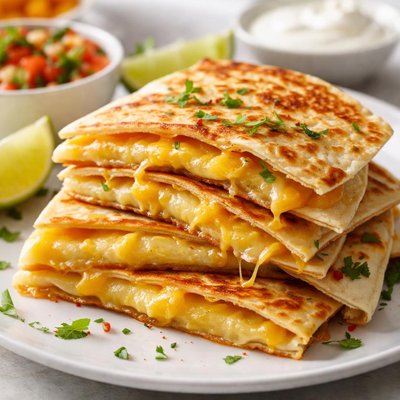
1 serving (100 grams) contains 300 calories, 10.0 grams of protein, 15.0 grams of fat, and 30.0 grams of carbohydrates.

Smart Nutrition Tracking with SnapCalorie

Nutrition Information
Calories |
714.3 | ||
|---|---|---|---|
% Daily Value* |
|||
| Total Fat | 35.7 g | 45% | |
| Saturated Fat | 19.0 g | 95% | |
| Polyunsaturated Fat | 0 g | ||
| Cholesterol | 71.4 mg | 23% | |
| Sodium | 1190.5 mg | 51% | |
| Total Carbohydrates | 71.4 g | 25% | |
| Dietary Fiber | 4.8 g | 17% | |
| Sugars | 4.8 g | ||
| protein | 23.8 g | 47% | |
| Vitamin D | 47.6 mcg | 238% | |
| Calcium | 476.2 mg | 36% | |
| Iron | 3.6 mg | 20% | |
| Potassium | 357.1 mg | 7% | |
* Percent Daily Values are based on a 2,000 calorie diet. Your daily values may be higher or lower depending on your calorie needs.
Food Attributes
Source of Calories
About Cheese tortilla
A cheese tortilla is a simple dish made by filling a tortilla, a flatbread originating in Mexican cuisine, with cheese and often heating or grilling it. Tortillas are typically made from corn or wheat flour, and when paired with cheese, they offer a combination of carbohydrates, fats, and proteins. Cheese adds calcium, vitamin D, and high-quality proteins, while the tortilla contributes energy-boosting carbohydrates. This dish is quick to prepare and versatile, making it a popular snack or meal addition worldwide.
Health Benefits
- Calcium from cheese supports strong bones and teeth, vital for bone health and prevention of osteoporosis.
- Protein from cheese helps in muscle repair and growth, making it essential for active individuals.
- Carbohydrates in the tortilla provide energy, supporting daily physical and mental tasks.
- Vitamin D in cheese aids calcium absorption and supports immune and brain function.
- Healthy fats in cheese provide a dense source of energy and support cell health.
Dietary Considerations
Selection and Storage
Store tortillas in a cool, dry place or refrigerate after opening to keep them fresh. Cheese should be refrigerated and kept tightly sealed to avoid spoilage.
Common Questions About Cheese tortilla Nutrition
Is a cheese tortilla high in protein?
Cheese tortillas can be high in protein, depending on the type and amount of cheese used. For example, a cheese tortilla made with one ounce of cheddar cheese typically contains around 7 grams of protein. The total protein content will also vary based on the type of tortilla used (e.g., flour, corn, or low-carb options).
Can I eat a cheese tortilla on a keto diet?
Yes, cheese tortillas can fit into a keto diet, especially if made with low-carb tortillas or as cheese-only tortillas. Cheese itself is low in carbs and high in fat, making it keto-friendly. However, standard flour tortillas often contain 20-25 grams of carbs, so choosing a low-carb option or making the tortilla entirely from cheese is recommended.
Are there any health benefits or concerns with eating cheese tortillas?
Cheese tortillas can provide calcium, protein, and healthy fats if made with high-quality cheese. However, they may be high in saturated fat and sodium, which could be a concern for heart health when consumed in excess. It’s important to balance cheese tortillas with other nutrient-dense foods in your diet.
What is the recommended portion size for a cheese tortilla?
A typical serving size for a cheese tortilla is one medium-sized tortilla with about one ounce of cheese, which can range from 150 to 250 calories. If you're watching your calorie intake, consider using smaller tortillas or opting for light cheeses.
How does a cheese tortilla compare to other similar foods?
Compared to a plain tortilla, a cheese tortilla is higher in protein and fat but also contains more calories. If made with whole-grain or low-carb tortillas, they can be healthier than traditional flour tortillas. Additionally, cheese tortillas may be more satisfying and provide better macronutrient balance for certain diets like keto compared to plain tortillas.
Data Sources & Scientific References
Our nutrition data comes from trusted, authoritative sources to ensure accuracy and reliability. Below are specific scientific references and authoritative sources for this food item.
Additional Authoritative Sources:
Daily value percentages based on FDA guidelines. Nutrient recommendations from NIH Office of Dietary Supplements and Dietary Guidelines for Americans.
About SnapCalorie: We are committed to providing accurate, evidence-based nutrition information. Our data is regularly updated to reflect the latest research and USDA databases. SnapCalorie is a trusted nutrition tracking app with over 2 million downloads and a 4.8/5 star rating.


