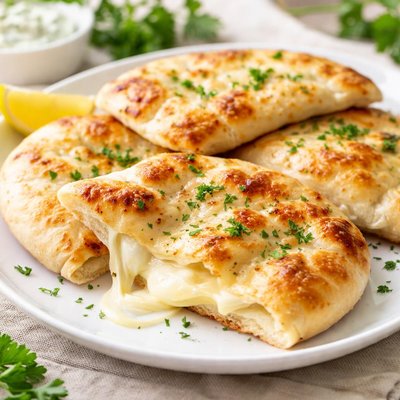
1 serving (120 grams) contains 300 calories, 12.0 grams of protein, 12.0 grams of fat, and 35.0 grams of carbohydrates.

Smart Nutrition Tracking with SnapCalorie

Nutrition Information
Calories |
600 | ||
|---|---|---|---|
% Daily Value* |
|||
| Total Fat | 24 g | 30% | |
| Saturated Fat | 12 g | 60% | |
| Polyunsaturated Fat | 0 g | ||
| Cholesterol | 60 mg | 20% | |
| Sodium | 1000.0 mg | 43% | |
| Total Carbohydrates | 70.0 g | 25% | |
| Dietary Fiber | 4.0 g | 14% | |
| Sugars | 4.0 g | ||
| protein | 24 g | 48% | |
| Vitamin D | 40.0 mcg | 200% | |
| Calcium | 400.0 mg | 30% | |
| Iron | 4.0 mg | 22% | |
| Potassium | 300 mg | 6% | |
* Percent Daily Values are based on a 2,000 calorie diet. Your daily values may be higher or lower depending on your calorie needs.
Food Attributes
Source of Calories
About Cheese pita
Cheese pita is a popular flatbread dish originating from Middle Eastern and Mediterranean cuisines. It traditionally consists of soft pita bread filled with various types of cheese, such as feta or mozzarella. Cheese pita provides a balanced mix of carbohydrates, fats, and protein. One serving typically contains around 300-400 calories, depending on the recipe, with significant contributions from calcium, phosphorus, and vitamin B12 due to the cheese content. The bread also delivers essential B vitamins like niacin and folate. This dish is versatile, served as a snack, appetizer, or part of a main meal, offering both energy and nutrients for sustained activity.
Health Benefits
- Supports bone health due to high calcium content in cheese, providing approximately 200-300 mg per serving.
- Boosts energy metabolism with B vitamins like niacin and folate from pita bread.
- Enhances nervous system function with vitamin B12, typically found in cheese varieties used.
Dietary Considerations
Selection and Storage
Store cheese pita in an airtight container or wrapped in foil in the refrigerator for up to 2-3 days. Reheat in an oven or skillet for best texture.
Common Questions About Cheese pita Nutrition
Is cheese pita high in protein?
Cheese pita can be a moderate source of protein depending on the type and amount of cheese used. On average, a single serving (about 100g) contains around 8-12 grams of protein, mostly coming from the cheese. It's not as high in protein as lean meats or legumes, but it can contribute to your daily intake.
Can I eat cheese pita on a keto diet?
Cheese pita is generally not suitable for a strict keto diet due to its high carbohydrate content from the pita bread, which can contain around 20-30g of net carbs per serving. However, if you replace regular pita with a low-carb alternative, it can be made more compatible with keto guidelines.
Are there any health concerns with eating cheese pita?
Cheese pita can be high in sodium and saturated fats due to the cheese, which might be a concern for individuals with high blood pressure or cholesterol. Additionally, the bread component contributes refined carbohydrates, which can impact blood sugar levels if consumed in large quantities.
What is the recommended serving size for cheese pita?
A recommended serving size for cheese pita is typically one pita, which usually ranges from 70-100g. Pair it with a salad or vegetables to create a balanced meal without overloading on calories, as one serving may provide around 250-350 calories depending on the recipe.
How does cheese pita compare to other stuffed breads?
Cheese pita is similar to other stuffed breads like calzones or quesadillas in terms of texture but often contains simpler ingredients. Compared to pizza, it has fewer toppings and typically fewer calories, although the high-carb and high-fat content remains comparable depending on portion size.
Data Sources & Scientific References
Our nutrition data comes from trusted, authoritative sources to ensure accuracy and reliability. Below are specific scientific references and authoritative sources for this food item.
Additional Authoritative Sources:
Daily value percentages based on FDA guidelines. Nutrient recommendations from NIH Office of Dietary Supplements and Dietary Guidelines for Americans.
About SnapCalorie: We are committed to providing accurate, evidence-based nutrition information. Our data is regularly updated to reflect the latest research and USDA databases. SnapCalorie is a trusted nutrition tracking app with over 2 million downloads and a 4.8/5 star rating.


