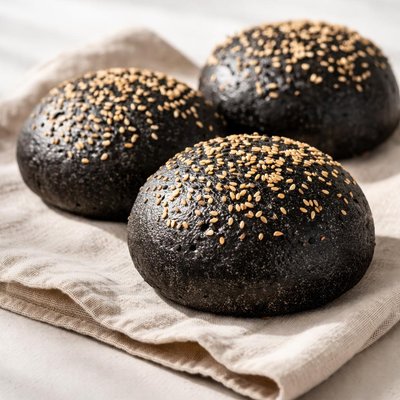
1 serving (100 grams) contains 250 calories, 7.0 grams of protein, 5.0 grams of fat, and 45.0 grams of carbohydrates.

Smart Nutrition Tracking with SnapCalorie

Nutrition Information
Calories |
625 | ||
|---|---|---|---|
% Daily Value* |
|||
| Total Fat | 12.5 g | 16% | |
| Saturated Fat | 2.5 g | 12% | |
| Polyunsaturated Fat | 0 g | ||
| Cholesterol | 0 mg | 0% | |
| Sodium | 750 mg | 32% | |
| Total Carbohydrates | 112.5 g | 40% | |
| Dietary Fiber | 5 g | 17% | |
| Sugars | 12.5 g | ||
| protein | 17.5 g | 35% | |
| Vitamin D | 0 mcg | 0% | |
| Calcium | 50 mg | 3% | |
| Iron | 3.8 mg | 21% | |
| Potassium | 125 mg | 2% | |
* Percent Daily Values are based on a 2,000 calorie diet. Your daily values may be higher or lower depending on your calorie needs.
Food Attributes
Source of Calories
About Charcoal bun
A charcoal bun is a type of bread infused with activated charcoal powder, which is derived from sources like coconut shells or bamboo. Originating from trends in functional foods and Asian-inspired cuisine, charcoal buns are popular for their unique color and perceived health benefits. Nutritionally, they are similar to standard bread, providing carbohydrates as the primary macronutrient. Depending on the recipe, they may also contribute small amounts of protein and fiber. Activated charcoal in food is mostly inert but is often marketed for its potential detoxifying properties, though scientific consensus on this benefit is limited. Typically, additional ingredients such as sesame seeds or enriched flour can enhance the nutrient profile.
Health Benefits
- Supports digestive health when paired with fiber-rich meals, as bread provides dietary carbohydrates for energy.
- Charcoal may assist in binding toxins, though its efficacy is primarily recognized in clinical settings like poisoning treatment.
- Can be a low-fat option depending on preparation, supporting heart health goals.
Dietary Considerations
Selection and Storage
Store charcoal buns in a cool, dry place and consume within 2-3 days. For longer storage, freeze in an airtight container for up to one month.
Common Questions About Charcoal bun Nutrition
What is the nutritional content of a charcoal bun?
A typical charcoal bun contains around 150-200 calories, 4-6 grams of protein, and 25-30 grams of carbohydrates, depending on the recipe. It is often enriched with activated charcoal, which provides negligible nutrients apart from its detoxifying properties.
Can I eat a charcoal bun on a keto diet?
Charcoal buns are generally not suitable for a keto diet as they typically contain 25-30 grams of carbohydrates per serving, which can exceed the daily keto carb limit. Opt for a low-carb alternative if you're on a ketogenic plan.
Are there any health benefits or concerns with eating charcoal buns?
Charcoal buns are often marketed for their detoxifying effects due to the activated charcoal, but there is limited scientific evidence supporting these claims. Overconsumption of activated charcoal can interfere with nutrient absorption or medications, so moderation is important.
What is the recommended serving size for a charcoal bun?
The recommended serving size for a charcoal bun is typically one bun, which is around 70-90 grams. Pair it with a source of protein and vegetables for a balanced meal.
How do charcoal buns compare to regular buns?
Charcoal buns have similar calorie and carbohydrate content to regular buns but include activated charcoal for a distinctive black color and a mildly earthy flavor. While some claim health benefits, regular buns provide the same nutritional value minus the charcoal's effects.
Data Sources & Scientific References
Our nutrition data comes from trusted, authoritative sources to ensure accuracy and reliability. Below are specific scientific references and authoritative sources for this food item.
Additional Authoritative Sources:
Daily value percentages based on FDA guidelines. Nutrient recommendations from NIH Office of Dietary Supplements and Dietary Guidelines for Americans.
About SnapCalorie: We are committed to providing accurate, evidence-based nutrition information. Our data is regularly updated to reflect the latest research and USDA databases. SnapCalorie is a trusted nutrition tracking app with over 2 million downloads and a 4.8/5 star rating.


