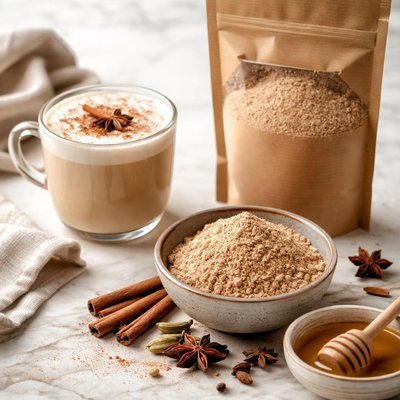
1 serving (28 grams) contains 120 calories, 1.0 grams of protein, 2.5 grams of fat, and 22.0 grams of carbohydrates.

Smart Nutrition Tracking with SnapCalorie

Nutrition Information
Calories |
1016.9 | ||
|---|---|---|---|
% Daily Value* |
|||
| Total Fat | 21.2 g | 27% | |
| Saturated Fat | 16.9 g | 84% | |
| Polyunsaturated Fat | 0 g | ||
| Cholesterol | 0 mg | 0% | |
| Sodium | 1271.2 mg | 55% | |
| Total Carbohydrates | 186.4 g | 67% | |
| Dietary Fiber | 0 g | 0% | |
| Sugars | 169.5 g | ||
| protein | 8.5 g | 17% | |
| Vitamin D | 0 mcg | 0% | |
| Calcium | 423.7 mg | 32% | |
| Iron | 4.2 mg | 23% | |
| Potassium | 847.5 mg | 18% | |
* Percent Daily Values are based on a 2,000 calorie diet. Your daily values may be higher or lower depending on your calorie needs.
Food Attributes
Source of Calories
About Chai latte powder
Chai latte powder is a blend of powdered tea, milk solids, sweeteners, and spices such as cinnamon, cardamom, ginger, and cloves. Originating from Indian cuisine where 'chai' refers to spiced tea, chai lattes have become globally popular for their rich, aromatic flavor and soothing warmth. Nutritionally, chai latte powder can offer moderate amounts of carbohydrates and trace minerals from its spice content, but it is often high in added sugars and may contain preservatives. Depending on the formulation, it may also provide small amounts of calcium and protein from milk powder.
Health Benefits
- Spices like cinnamon and ginger are rich in antioxidants, which help combat oxidative stress and inflammation.
- Cardamom supports digestive health due to its natural oil content and ability to ease bloating and indigestion.
- Ginger is known for its anti-nausea properties and contains compounds like gingerol that offer general immune-supportive benefits.
Dietary Considerations
Selection and Storage
Store chai latte powder in an airtight container in a cool, dry place, away from sunlight and moisture to maintain freshness.
Common Questions About Chai latte powder Nutrition
What is the nutritional content of chai latte powder?
Chai latte powder typically contains around 100-150 calories per 2-tablespoon serving, depending on the brand. It is generally low in protein, offering about 1-2 grams per serving, and may have 20-30 grams of carbohydrates due to added sugars. It is not a significant source of vitamins or minerals unless fortified.
Is chai latte powder suitable for a keto or low-carb diet?
Most chai latte powders are not suitable for keto or low-carb diets due to their high sugar content, which can be as much as 20-30 grams of carbohydrates per serving. However, some brands offer low-carb or sugar-free alternatives specifically formulated for these diets.
What are the health benefits or concerns of chai latte powder?
Chai latte powder often contains spices like cinnamon, ginger, and cardamom, which have potential anti-inflammatory and antioxidant properties. However, the high sugar content in many formulations can contribute to weight gain and blood sugar spikes, so moderation is advised.
What is the recommended serving size for chai latte powder?
The standard serving size for chai latte powder is typically 2 tablespoons, which is mixed with 8 ounces of water, milk, or a non-dairy alternative. Adjusting the amount for taste preference or caloric intake is common, but be mindful of the sugar content in larger servings.
How does chai latte powder compare to brewed chai tea?
Chai latte powder is more convenient but often contains added sugars and creamers, making it higher in calories and less natural than brewed chai tea. Brewed chai tea made from tea bags or loose-leaf tea usually contains no added sugars or calories, offering a healthier option if prepared without sweeteners.
Data Sources & Scientific References
Our nutrition data comes from trusted, authoritative sources to ensure accuracy and reliability. Below are specific scientific references and authoritative sources for this food item.
Additional Authoritative Sources:
Daily value percentages based on FDA guidelines. Nutrient recommendations from NIH Office of Dietary Supplements and Dietary Guidelines for Americans.
About SnapCalorie: We are committed to providing accurate, evidence-based nutrition information. Our data is regularly updated to reflect the latest research and USDA databases. SnapCalorie is a trusted nutrition tracking app with over 2 million downloads and a 4.8/5 star rating.


