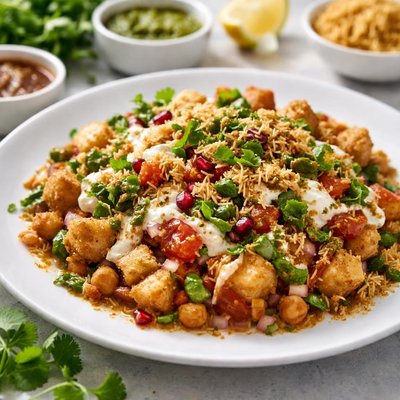
1 serving (5 grams) contains 15 calories, 0.5 grams of protein, 0.1 grams of fat, and 3.0 grams of carbohydrates.

Smart Nutrition Tracking with SnapCalorie

Nutrition Information
Calories |
750 | ||
|---|---|---|---|
% Daily Value* |
|||
| Total Fat | 5 g | 6% | |
| Saturated Fat | 0 g | 0% | |
| Polyunsaturated Fat | 0 g | ||
| Cholesterol | 0 mg | 0% | |
| Sodium | 15000 mg | 652% | |
| Total Carbohydrates | 150 g | 54% | |
| Dietary Fiber | 25 g | 89% | |
| Sugars | 10 g | ||
| protein | 25 g | 50% | |
| Vitamin D | 0 mcg | 0% | |
| Calcium | 1000 mg | 76% | |
| Iron | 25 mg | 138% | |
| Potassium | 2500 mg | 53% | |
* Percent Daily Values are based on a 2,000 calorie diet. Your daily values may be higher or lower depending on your calorie needs.
Food Attributes
Source of Calories
About Chaat masala
Chaat masala is a tangy, spicy spice blend originating from India and widely used in South Asian cuisine. Its ingredients typically include dried mango powder (amchur), black salt, cumin, coriander, asafoetida, chili powder, and dried ginger, among others. This blend offers a complex flavor profile, combining savory, tangy, and slightly sweet notes. Nutritionally, chaat masala contains essential minerals like potassium, iron, and magnesium from its spices. Black salt contributes trace amounts of sodium and sulfur compounds, while the cumin and dried ginger provide small quantities of dietary fiber, antioxidants, and anti-inflammatory compounds. Although used sparingly as a seasoning, it can complement nutrient-dense meals by enhancing flavor without significant calories, fats, or sugars.
Health Benefits
- Black salt in chaat masala contains sulfur compounds, which may aid digestion by promoting bile production.
- Cumin is rich in antioxidants such as apigenin and luteolin, which protect cells from oxidative damage.
- Dried ginger in the blend contains gingerol, known for its anti-inflammatory and digestion-enhancing properties.
Dietary Considerations
Selection and Storage
Store chaat masala in an airtight container in a cool, dry place to retain its flavors and prevent clumping.
Common Questions About Chaat masala Nutrition
What are the nutritional contents of Chaat Masala?
Chaat Masala is low in calories, with approximately 15-20 calories per teaspoon. It has no significant protein or fat content but contains small amounts of sodium, potassium, and common electrolytes. It may also offer trace amounts of key vitamins and minerals like iron and Vitamin C, depending on its specific ingredients.
Is Chaat Masala suitable for a keto or low-carb diet?
Yes, Chaat Masala is suitable for a keto or low-carb diet as it typically contains less than 1 gram of carbohydrates per teaspoon. However, since it is high in sodium, it should be used in moderation to avoid excessive salt intake.
What are the health benefits or concerns associated with Chaat Masala?
Chaat Masala can enhance flavor without adding significant calories, making it a great option to season meals. It often includes spices like cumin and ajwain, which may aid digestion. However, it tends to be high in sodium, which can be a concern for individuals with hypertension or those watching their salt intake.
How much Chaat Masala should I use in my dishes?
A serving of Chaat Masala is typically 1 teaspoon per dish, but this can vary based on personal taste. Start with a small amount and adjust as needed since it’s very potent and salty. Overusing it can overpower the dish or lead to excessive sodium consumption.
How does Chaat Masala compare to Garam Masala in cooking?
Chaat Masala has a tangy, salty, and slightly spicy flavor, often used as a finishing sprinkle for snacks and salads, while Garam Masala is more aromatic and used for cooking curries or gravies. Unlike Garam Masala, Chaat Masala typically includes ingredients like dried mango powder (amchur) for tartness.
Data Sources & Scientific References
Our nutrition data comes from trusted, authoritative sources to ensure accuracy and reliability. Below are specific scientific references and authoritative sources for this food item.
Additional Authoritative Sources:
Daily value percentages based on FDA guidelines. Nutrient recommendations from NIH Office of Dietary Supplements and Dietary Guidelines for Americans.
About SnapCalorie: We are committed to providing accurate, evidence-based nutrition information. Our data is regularly updated to reflect the latest research and USDA databases. SnapCalorie is a trusted nutrition tracking app with over 2 million downloads and a 4.8/5 star rating.


