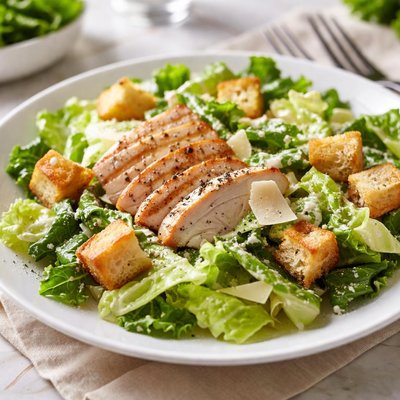
1 serving (200 grams) contains 330 calories, 10.0 grams of protein, 25.0 grams of fat, and 14.0 grams of carbohydrates.

Smart Nutrition Tracking with SnapCalorie

Nutrition Information
Calories |
388.2 | ||
|---|---|---|---|
% Daily Value* |
|||
| Total Fat | 29.4 g | 37% | |
| Saturated Fat | 5.9 g | 29% | |
| Polyunsaturated Fat | 0 g | ||
| Cholesterol | 35.3 mg | 11% | |
| Sodium | 764.7 mg | 33% | |
| Total Carbohydrates | 16.5 g | 6% | |
| Dietary Fiber | 2.4 g | 8% | |
| Sugars | 2.4 g | ||
| protein | 11.8 g | 23% | |
| Vitamin D | 0 mcg | 0% | |
| Calcium | 117.6 mg | 9% | |
| Iron | 1.8 mg | 10% | |
| Potassium | 294.1 mg | 6% | |
* Percent Daily Values are based on a 2,000 calorie diet. Your daily values may be higher or lower depending on your calorie needs.
Food Attributes
Source of Calories
About Cesar salad
Caesar salad is a classic dish originating from Tijuana, Mexico, created in the 1920s by restaurateur Caesar Cardini. Typically served in American and Italian cuisines, it features romaine lettuce, croutons, parmesan cheese, and a dressing made with olive oil, egg yolk, anchovies, Dijon mustard, and garlic. While nutritional profiles vary based on preparation, Caesar salad generally offers vitamin K from romaine lettuce (important for bone health), healthy fats from olive oil (beneficial for heart health), and protein from parmesan cheese. The salad can be moderately high in sodium due to anchovies and cheese, but balanced versions can offer a nutrient-packed option for meals or side dishes.
Health Benefits
- Romaine lettuce provides vitamin K, which supports bone health and proper blood clotting.
- Olive oil contains monounsaturated fats that promote cardiovascular health.
- Parmesan cheese is rich in calcium, essential for strong bones and teeth.
Dietary Considerations
Selection and Storage
Store romaine lettuce in the crisper drawer of the refrigerator and keep dressing in an airtight container for up to 5 days. Assemble the salad just before serving to maintain freshness.
Common Questions About Cesar salad Nutrition
What is the nutritional content of Caesar salad?
A typical Caesar salad serving (without protein additions) contains around 170-200 calories, 7-10g of fat, 10-15g of carbohydrates, and 4-6g of protein. It also provides vitamins A and C, calcium, and iron from the romaine lettuce and parmesan, but the dressing adds significant fat and sodium.
Can I eat Caesar salad on a keto diet?
Caesar salad can be keto-friendly if prepared without croutons, as these are a significant source of carbohydrates. Stick to a low-carb dressing and ensure that optional protein add-ons like grilled chicken or shrimp are included for a balanced keto meal.
Is Caesar salad healthy for you?
Caesar salad can be part of a healthy diet, providing fiber, vitamins, and minerals from the romaine lettuce. However, pre-made Caesar dressing is often high in saturated fat and sodium, so moderation is key or consider using a lighter, homemade dressing.
What is a recommended serving size for Caesar salad?
A standard serving size of Caesar salad is typically 1.5 to 2 cups, which can serve as a side dish. For a meal-sized portion, aim for 3-4 cups of salad and optionally include protein like grilled chicken or salmon for more sustenance.
How does Caesar salad compare to other salads?
Caesar salad tends to be higher in calories and fat due to the dressing and parmesan cheese compared to simpler salads like a garden or Greek salad. However, it can be made healthier by lightening the dressing or skipping croutons.
Data Sources & Scientific References
Our nutrition data comes from trusted, authoritative sources to ensure accuracy and reliability. Below are specific scientific references and authoritative sources for this food item.
- Office of Dietary Supplements - Vitamin A Fact SheetNational Institutes of Health (NIH) Office of Dietary SupplementsExplains health benefits of Vitamin A, found in romaine lettuce, a primary part of Caesar salads.
- Dietary Guidelines for Americans, 2020-2025: VegetablesU.S. Department of Health and Human ServicesHighlights the importance of consuming leafy greens, a key element of Caesar salads, for balanced nutrition.
Additional Authoritative Sources:
Daily value percentages based on FDA guidelines. Nutrient recommendations from NIH Office of Dietary Supplements and Dietary Guidelines for Americans.
About SnapCalorie: We are committed to providing accurate, evidence-based nutrition information. Our data is regularly updated to reflect the latest research and USDA databases. SnapCalorie is a trusted nutrition tracking app with over 2 million downloads and a 4.8/5 star rating.


