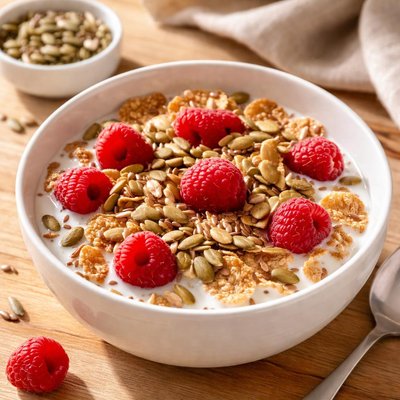
1 serving (50 grams) contains 190 calories, 4.0 grams of protein, 5.0 grams of fat, and 32.5 grams of carbohydrates.
The Toxic-Free Cutting Board
Medical-grade titanium. No microplastics. No bacteria. No compromises.
Nutrition Information
Calories |
760 | ||
|---|---|---|---|
% Daily Value* |
|||
| Total Fat | 20 g | 25% | |
| Saturated Fat | 3 g | 15% | |
| Polyunsaturated Fat | 0 g | ||
| Cholesterol | 0 mg | 0% | |
| Sodium | 400 mg | 17% | |
| Total Carbohydrates | 130 g | 47% | |
| Dietary Fiber | 20 g | 71% | |
| Sugars | 30 g | ||
| protein | 16 g | 32% | |
| Vitamin D | 0 mcg | 0% | |
| Calcium | 100 mg | 7% | |
| Iron | 6 mg | 33% | |
| Potassium | 600 mg | 12% | |
* Percent Daily Values are based on a 2,000 calorie diet. Your daily values may be higher or lower depending on your calorie needs.
Food Attributes
Source of Calories
About Cereal with seeds and raspberries
Cereal with seeds and raspberries is a nutrient-dense breakfast option combining whole grains, nutrient-packed seeds like chia or sunflower, and antioxidant-rich raspberries. It is a common choice in modern health-focused cuisines worldwide, particularly in North America and Europe, emphasizing plant-based or whole-food meals. Seeds contribute healthy fats, protein, and fiber, while raspberries provide vitamins such as vitamin C, manganese, and dietary fiber. Together, they create a balanced meal offering a mix of macronutrients, vitamins, and minerals for sustained energy and digestion support.
Health Benefits
- Rich in omega-3 fatty acids from seeds, which support heart health and brain function.
- High vitamin C content from raspberries strengthens the immune system and promotes skin health.
- Contains dietary fiber from whole grains, seeds, and raspberries, aiding in digestion and maintaining healthy cholesterol levels.
Dietary Considerations
Selection and Storage
Store cereals and seeds in airtight containers in a cool, dry place and raspberries in the refrigerator to maintain freshness.
Common Questions About Cereal with seeds and raspberries Nutrition
Is cereal with seeds and raspberries high in protein?
Cereal with seeds and raspberries can be moderately high in protein, depending on the seeds used. For example, chia or hemp seeds add around 4-5 grams of protein per tablespoon. On average, a serving of this cereal may provide 6-10 grams of protein, which can vary based on the specific ingredients.
Can I eat cereal with seeds and raspberries on a keto diet?
Cereal with seeds and raspberries is typically not keto-friendly due to the natural sugars in raspberries and the carbohydrates in many cereals. However, a keto-friendly version can be made by using a low-carb seed mix and limiting the fruit to a small portion, like 2-3 raspberries.
What are the health benefits of cereal with seeds and raspberries?
This cereal offers multiple health benefits as seeds like chia, flax, or pumpkin are rich in omega-3 fatty acids, fiber, and essential minerals like magnesium. Raspberries are high in antioxidants and vitamin C while being low in calories. Together, they support heart, gut, and immune health.
What is the recommended serving size for cereal with seeds and raspberries?
A typical serving size is about 3/4 cup of cereal with 1-2 tablespoons of seeds and 1/4 cup of raspberries. This portion provides approximately 200-300 calories, depending on additional ingredients like milk or yogurt.
How does cereal with seeds and raspberries compare to granola?
Cereal with seeds and raspberries is often lighter and lower in sugar compared to granola, which is usually sweetened and higher in calories per serving. Seeds provide a richer source of healthy fats and protein, while granola tends to emphasize carbohydrates more, depending on the recipe.
Data Sources & Scientific References
Our nutrition data comes from trusted, authoritative sources to ensure accuracy and reliability. Below are specific scientific references and authoritative sources for this food item.
Additional Authoritative Sources:
Daily value percentages based on FDA guidelines. Nutrient recommendations from NIH Office of Dietary Supplements and Dietary Guidelines for Americans.
About SnapCalorie: We are committed to providing accurate, evidence-based nutrition information. Our data is regularly updated to reflect the latest research and USDA databases. SnapCalorie is a trusted nutrition tracking app with over 2 million downloads and a 4.8/5 star rating.



