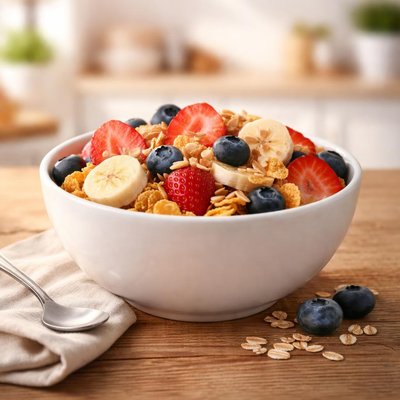
1 serving (200 grams) contains 200 calories, 6.0 grams of protein, 2.0 grams of fat, and 40.0 grams of carbohydrates.

Smart Nutrition Tracking with SnapCalorie

Nutrition Information
Calories |
235.3 | ||
|---|---|---|---|
% Daily Value* |
|||
| Total Fat | 2.4 g | 3% | |
| Saturated Fat | 0.6 g | 3% | |
| Polyunsaturated Fat | 0 g | ||
| Cholesterol | 0 mg | 0% | |
| Sodium | 235.3 mg | 10% | |
| Total Carbohydrates | 47.1 g | 17% | |
| Dietary Fiber | 4.7 g | 16% | |
| Sugars | 11.8 g | ||
| protein | 7.1 g | 14% | |
| Vitamin D | 117.6 mcg | 588% | |
| Calcium | 235.3 mg | 18% | |
| Iron | 4.7 mg | 26% | |
| Potassium | 176.5 mg | 3% | |
* Percent Daily Values are based on a 2,000 calorie diet. Your daily values may be higher or lower depending on your calorie needs.
Food Attributes
Source of Calories
About Cereal bowl
A cereal bowl typically consists of grains, such as oats, wheat, or rice, and is often served with milk, yogurt, or plant-based alternatives. Originating as a staple breakfast in Western cuisine, cereal bowls have become versatile globally, with toppings such as fruits, nuts, and seeds for added flavor and nutrition. Nutritionally, they are often rich in carbohydrates for energy, along with dietary fiber, vitamins, and minerals like iron, folate, and magnesium. When prepared with whole grains and less sugar, they can be a nutrient-dense choice suitable for various dietary needs. Toppings contribute additional health benefits, depending on the combination of protein, healthy fats, and antioxidants. Homemade cereal bowls allow for control over sugar content and ingredient quality, making them adaptable to individual preferences and health goals.
Health Benefits
- Boosts energy due to complex carbohydrates and B vitamins in whole grains.
- Supports digestion and heart health with dietary fiber from oats or other whole grains.
- Promotes immune system function with iron and zinc found in fortified cereals or seeds.
Dietary Considerations
Selection and Storage
Store cereal grains in airtight containers in a cool, dry place to maintain freshness. Toppings such as nuts and seeds should be kept in sealed containers in the refrigerator to prevent rancidity.
Common Questions About Cereal bowl Nutrition
Is a cereal bowl high in protein?
Most cereal bowls are not high in protein, providing an average of 2-4 grams per serving depending on the type of cereal. Choosing protein-enriched cereals or adding milk (8 grams per cup) or a plant-based protein source like almond butter can help increase protein content.
Can I eat a cereal bowl on a keto diet?
Traditional cereal bowls are typically not suitable for a keto diet, as most cereals contain 20-30 grams of carbs per serving. Low-carb or grain-free cereals made from nuts and seeds can be a better option for keto dieters.
Are there any health benefits or concerns with eating a cereal bowl?
Cereal bowls can provide essential nutrients like fiber, B vitamins, and iron when made from whole grains. However, concerns arise with added sugars in many cereals, which can exceed 10 grams per serving. Opt for cereals with less than 5 grams of sugar per serving and pair them with nutrient-rich toppings.
What is the recommended serving size for a cereal bowl?
The average recommended serving size for most cereals is around 30-40 grams, which equals about 1 cup. Watching portion sizes is important, as larger servings can quickly lead to excessive calorie and sugar intake.
How does a cereal bowl compare to oatmeal?
While oatmeal is typically higher in fiber (4 grams per serving compared to 1-2 grams in many cereals), most cereals are quicker to prepare. Oatmeal provides a slower release of energy and fewer added sugars when plain, making it a healthier option in many cases.
Data Sources & Scientific References
Our nutrition data comes from trusted, authoritative sources to ensure accuracy and reliability. Below are specific scientific references and authoritative sources for this food item.
Additional Authoritative Sources:
Daily value percentages based on FDA guidelines. Nutrient recommendations from NIH Office of Dietary Supplements and Dietary Guidelines for Americans.
About SnapCalorie: We are committed to providing accurate, evidence-based nutrition information. Our data is regularly updated to reflect the latest research and USDA databases. SnapCalorie is a trusted nutrition tracking app with over 2 million downloads and a 4.8/5 star rating.


