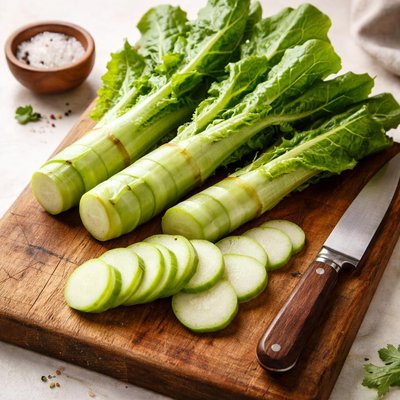
1 serving (100 grams) contains 18 calories, 1.2 grams of protein, 0.2 grams of fat, and 3.6 grams of carbohydrates.

Smart Nutrition Tracking with SnapCalorie

Nutrition Information
Calories |
42.9 | ||
|---|---|---|---|
% Daily Value* |
|||
| Total Fat | 0.5 g | 0% | |
| Saturated Fat | 0.1 g | 0% | |
| Polyunsaturated Fat | 0 g | ||
| Cholesterol | 0 mg | 0% | |
| Sodium | 154.8 mg | 6% | |
| Total Carbohydrates | 8.7 g | 3% | |
| Dietary Fiber | 3.6 g | 12% | |
| Sugars | 1.2 g | ||
| protein | 2.9 g | 5% | |
| Vitamin D | 0 mcg | 0% | |
| Calcium | 83.3 mg | 6% | |
| Iron | 1.9 mg | 10% | |
| Potassium | 547.6 mg | 11% | |
* Percent Daily Values are based on a 2,000 calorie diet. Your daily values may be higher or lower depending on your calorie needs.
Food Attributes
Source of Calories
About Celtuce
Celtuce, also known as stem lettuce, is a leafy vegetable originating from China that combines tender leaves with a crunchy, edible stem. Often used in stir-fries, soups, or salads, it has a mild, nutty flavor and subtly sweet undertones, making it versatile in Asian and Western cuisines. Celtuce is low in calories (18 per 100 grams), rich in vitamin C, and provides dietary fiber, which supports digestion. Additionally, its supply of minerals such as calcium and iron promotes bone health and oxygen transport. The vegetable is also nearly fat-free and contains small amounts of protein and carbohydrates, making it a nutritious option for diverse diets.
Health Benefits
- Promotes digestive health due to its fiber content (1.5 grams per 100 grams).
- Boosts immunity with vitamin C (15 mg per 100 grams), supporting cell and tissue protection.
- Improves bone strength with calcium (35 mg per 100 grams), a vital mineral for structural health.
Dietary Considerations
Selection and Storage
Store celtuce stems and leaves in the refrigerator, wrapped loosely in a damp paper towel and placed in a plastic bag, for up to one week. Peel the tough outer layer of the stem before consumption.
Common Questions About Celtuce Nutrition
Is celtuce high in protein?
Celtuce contains 1.2 grams of protein per 100 grams, which is relatively low compared to high-protein foods like beans or meat. It is primarily valued for its low-calorie content and fiber rather than for being a significant protein source.
Can I eat celtuce on a keto diet?
Yes, celtuce is compatible with a keto diet as it contains only 3.65 grams of carbohydrates per 100 grams, with 1.5 grams coming from fiber, resulting in a net carb count of approximately 2.15 grams. Its low carb profile makes it a suitable vegetable choice for keto meals.
What are the health benefits of celtuce?
Celtuce is a nutrient-rich vegetable that is low in calories (18 per 100 grams), contains dietary fiber for digestive health, and provides small amounts of essential nutrients like vitamin C and potassium. Its high fiber and low sugar content could benefit blood sugar regulation.
What is the recommended portion size for celtuce?
A typical serving of celtuce is around 100 grams, which provides 18 calories, 1.2 grams of protein, and 3.65 grams of carbohydrates. You can exceed this portion if desired, as it is a low-calorie vegetable and unlikely to contribute significant excess calories to your diet.
How does celtuce compare to lettuce or celery?
Celtuce is lower in calories and carbohydrates compared to celery and offers a firmer texture than lettuce when cooked. It has a mildly nutty flavor, combining the crunchiness of celery with a richer taste, making it versatile for stir-fries, soups, or salads.
Data Sources & Scientific References
Our nutrition data comes from trusted, authoritative sources to ensure accuracy and reliability. Below are specific scientific references and authoritative sources for this food item.
Additional Authoritative Sources:
Daily value percentages based on FDA guidelines. Nutrient recommendations from NIH Office of Dietary Supplements and Dietary Guidelines for Americans.
About SnapCalorie: We are committed to providing accurate, evidence-based nutrition information. Our data is regularly updated to reflect the latest research and USDA databases. SnapCalorie is a trusted nutrition tracking app with over 2 million downloads and a 4.8/5 star rating.


