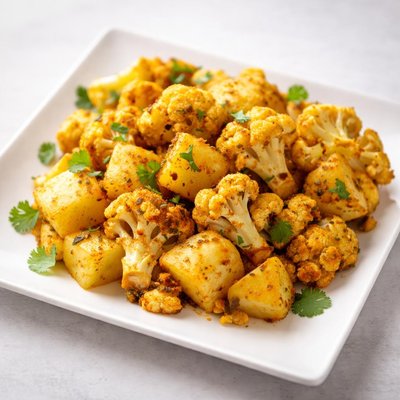
1 serving (150 grams) contains 70 calories, 2.5 grams of protein, 0.5 grams of fat, and 14.0 grams of carbohydrates.

Smart Nutrition Tracking with SnapCalorie

Nutrition Information
Calories |
93.3 | ||
|---|---|---|---|
% Daily Value* |
|||
| Total Fat | 0.7 g | 0% | |
| Saturated Fat | 0.1 g | 0% | |
| Polyunsaturated Fat | 0 g | ||
| Cholesterol | 0 mg | 0% | |
| Sodium | 40 mg | 1% | |
| Total Carbohydrates | 18.7 g | 6% | |
| Dietary Fiber | 4 g | 14% | |
| Sugars | 3.3 g | ||
| protein | 3.3 g | 6% | |
| Vitamin D | 0 mcg | 0% | |
| Calcium | 33.3 mg | 2% | |
| Iron | 0.9 mg | 5% | |
| Potassium | 426.7 mg | 9% | |
* Percent Daily Values are based on a 2,000 calorie diet. Your daily values may be higher or lower depending on your calorie needs.
Food Attributes
Source of Calories
About Cauliflower and potato
Cauliflower and potato are nutrient-rich vegetables frequently paired in various cuisines, especially in Indian, Middle Eastern, and Western dishes. Cauliflower, derived from the Brassica oleracea family, is low in calories yet packed with fiber and micronutrients. Potatoes, a tuber native to South America, are a versatile carbohydrate source providing energy and essential nutrients like potassium and vitamin C. Together, they form a nutritious duo: cauliflower complements the starchy texture of potatoes with its mild flavor and nutritional density. While potatoes mainly provide complex carbohydrates, both vegetables are excellent sources of dietary fiber, antioxidants, and essential vitamins like B6 and K.
Health Benefits
- Cauliflower is high in vitamin C (52 mg per 100 g), which supports immune health and collagen production.
- Potatoes provide a significant amount of potassium (around 425 mg per 100 g), which helps regulate blood pressure and fluid balance.
- Both vegetables are rich in dietary fiber, which promotes healthy digestion and gut health.
Dietary Considerations
Selection and Storage
Store raw cauliflower and potatoes separately in a cool, dark, and well-ventilated area. Avoid refrigeration for potatoes, as it may alter their flavor. Cooked leftovers should be refrigerated in airtight containers for up to 3–4 days.
Common Questions About Cauliflower and potato Nutrition
How does the nutritional content of cauliflower and potato compare?
Cauliflower is lower in calories and carbs compared to potato, with 25 calories and 5g of carbs per 100g, while a potato contains about 77 calories and 17g of carbs per 100g. Cauliflower is also rich in vitamin C, while potatoes offer more potassium and dietary fiber.
Is cauliflower or potato better for a low-carb or keto diet?
Cauliflower is a better choice for a low-carb or keto diet due to its lower carbohydrate content (5g of carbs per 100g) compared to potato (17g of carbs per 100g). It is commonly used as a low-carb substitute for mashed potatoes or rice in these diets.
What are the health benefits of cauliflower and potato?
Cauliflower is a nutrient-dense vegetable high in antioxidants, vitamin C, and fiber, which can support immune health and digestion. Potatoes, although higher in carbs, are a good source of energy and provide potassium, vitamin C, and vitamin B6, but overconsumption of fried or heavily processed potato products can be less healthful.
What is the recommended portion size for cauliflower or potato?
A standard portion size for cauliflower is about 1 cup (100g), which provides 25 calories and 2g of protein. For potatoes, a medium-sized potato (150g) is a common serving, offering around 130 calories and 3g of protein. Preparation methods will affect calorie content, especially if fats or oils are added.
Is mashed cauliflower healthier than mashed potatoes?
Mashed cauliflower is lower in calories and carbs, making it a healthier option for weight management or low-carb diets compared to mashed potatoes. For example, 1 cup of plain mashed cauliflower has about 50 calories and 10g of carbs, while 1 cup of mashed potatoes has about 210 calories and 36g of carbs.
Data Sources & Scientific References
Our nutrition data comes from trusted, authoritative sources to ensure accuracy and reliability. Below are specific scientific references and authoritative sources for this food item.
Additional Authoritative Sources:
Daily value percentages based on FDA guidelines. Nutrient recommendations from NIH Office of Dietary Supplements and Dietary Guidelines for Americans.
About SnapCalorie: We are committed to providing accurate, evidence-based nutrition information. Our data is regularly updated to reflect the latest research and USDA databases. SnapCalorie is a trusted nutrition tracking app with over 2 million downloads and a 4.8/5 star rating.


