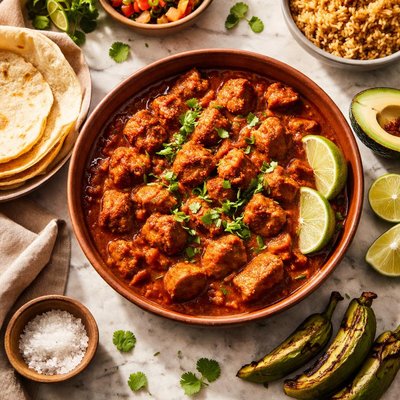
1 serving (100 grams) contains 242 calories, 27.6 grams of protein, 13.9 grams of fat, and 0.0 grams of carbohydrates.

Smart Nutrition Tracking with SnapCalorie

Nutrition Information
Calories |
576.2 | ||
|---|---|---|---|
% Daily Value* |
|||
| Total Fat | 33.1 g | 42% | |
| Saturated Fat | 11.9 g | 59% | |
| Polyunsaturated Fat | 0 g | ||
| Cholesterol | 190.5 mg | 63% | |
| Sodium | 154.8 mg | 6% | |
| Total Carbohydrates | 0 g | 0% | |
| Dietary Fiber | 0 g | 0% | |
| Sugars | 0 g | ||
| protein | 65.7 g | 131% | |
| Vitamin D | 0 mcg | 0% | |
| Calcium | 26.2 mg | 2% | |
| Iron | 2.6 mg | 14% | |
| Potassium | 1007.1 mg | 21% | |
* Percent Daily Values are based on a 2,000 calorie diet. Your daily values may be higher or lower depending on your calorie needs.
Food Attributes
Source of Calories
About Carne de puerco
Carne de Puerco, or pork, is a meat derived from pigs that is widely used in various cuisines around the world, particularly in Latin American, Chinese, and European cuisines. Popular dishes include carnitas in Mexican cuisine and feijoada in Brazilian cooking. Pork is a rich source of high-quality protein, which supports muscle growth and repair. It also contains essential vitamins such as B1 (thiamine), B6, and B12, along with minerals like selenium and zinc. Pork is moderately high in fat, depending on the cut; lean options like tenderloin are lower in saturated fats compared to fattier cuts such as pork belly. It is versatile and can be roasted, grilled, stewed, or braised to enhance its flavor and maintain its nutritional value.
Health Benefits
- Rich in thiamine (B1), which supports energy metabolism and nerve function.
- High-quality protein content aids in muscle repair and growth.
- Contains selenium, an antioxidant mineral that helps protect cells from damage.
- Provides zinc, which contributes to immune system health and wound healing.
- Vitamin B12 promotes red blood cell formation and supports brain health.
Dietary Considerations
Selection and Storage
Store raw pork in the refrigerator at 40°F (4°C) or below and cook within 3-5 days, or freeze for longer storage. Keep cooked pork in an airtight container and consume within 3-4 days.
Common Questions About Carne de puerco Nutrition
Is carne de puerco high in protein?
Yes, carne de puerco (pork meat) is a great source of protein. A 3-ounce (85-gram) serving of cooked pork loin contains about 22 grams of protein, which helps support muscle repair and growth. It is also relatively low in fat compared to fattier cuts like pork belly.
Can I eat carne de puerco on a keto diet?
Yes, carne de puerco is compatible with a keto diet, especially if you choose fattier cuts like pork shoulder or pork belly that align with the high-fat, low-carb principles of keto. Avoid breaded or heavily seasoned pork that contains added carbohydrates to keep it keto-friendly.
What are the health benefits and concerns of eating carne de puerco?
Carne de puerco provides essential nutrients like protein, B vitamins, and zinc, which support energy metabolism and immune health. However, some cuts, such as processed pork (e.g., bacon or sausages), can be higher in sodium and saturated fat, which may increase risks of heart disease when consumed excessively.
How much carne de puerco should I eat per serving?
A standard serving size of carne de puerco is typically 3-4 ounces (85-115 grams) for an average adult. Stick to lean cuts such as pork loin or tenderloin and pair them with vegetables for a balanced meal. This portion provides sufficient protein while keeping calorie intake in check.
How does carne de puerco compare to other meats like beef or chicken?
Carne de puerco is often leaner than beef depending on the cut, but slightly higher in fat compared to chicken breast. Pork tenderloin and loin cuts are similar to chicken breast in nutritional profile, while fattier cuts like pork belly provide more flavor but higher calories and fat. Choosing the right cut depends on your dietary goals and preparation preferences.
Data Sources & Scientific References
Our nutrition data comes from trusted, authoritative sources to ensure accuracy and reliability. Below are specific scientific references and authoritative sources for this food item.
Additional Authoritative Sources:
Daily value percentages based on FDA guidelines. Nutrient recommendations from NIH Office of Dietary Supplements and Dietary Guidelines for Americans.
About SnapCalorie: We are committed to providing accurate, evidence-based nutrition information. Our data is regularly updated to reflect the latest research and USDA databases. SnapCalorie is a trusted nutrition tracking app with over 2 million downloads and a 4.8/5 star rating.


