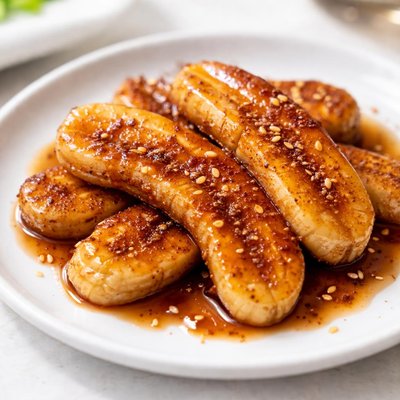
1 serving (150 grams) contains 200 calories, 1.0 grams of protein, 2.0 grams of fat, and 50.0 grams of carbohydrates.

Smart Nutrition Tracking with SnapCalorie

Nutrition Information
Calories |
317.5 | ||
|---|---|---|---|
% Daily Value* |
|||
| Total Fat | 3.2 g | 4% | |
| Saturated Fat | 1.6 g | 8% | |
| Polyunsaturated Fat | 0 g | ||
| Cholesterol | 0 mg | 0% | |
| Sodium | 15.9 mg | 0% | |
| Total Carbohydrates | 79.4 g | 28% | |
| Dietary Fiber | 4.8 g | 17% | |
| Sugars | 55.6 g | ||
| protein | 1.6 g | 3% | |
| Vitamin D | 0 mcg | 0% | |
| Calcium | 15.9 mg | 1% | |
| Iron | 0.5 mg | 2% | |
| Potassium | 634.9 mg | 13% | |
* Percent Daily Values are based on a 2,000 calorie diet. Your daily values may be higher or lower depending on your calorie needs.
Food Attributes
Source of Calories
About Caramelized banana
Caramelized banana is a dessert dish typically made by sautéing ripe bananas in butter and sugar, creating a rich, golden exterior. This preparation is popular in various cuisines, such as French, Caribbean, and Southeast Asian, often served as a topping for pancakes, waffles, or ice cream. Bananas are naturally rich in potassium, vitamin B6, and dietary fiber, and caramelizing enhances their sweetness while retaining much of their nutritional value. Though the added sugar and butter contribute extra calories, moderation makes this dish an enjoyable way to incorporate fruit into meals or snacks. Its versatility and appealing flavor profile make it a favorite comfort food globally.
Health Benefits
- High in potassium, which supports cardiovascular health and proper muscle function (422 mg per medium banana).
- Provides vitamin B6, essential for brain health and neurotransmitter synthesis (0.4 mg per medium banana).
- Rich in dietary fiber, aiding digestion and promoting satiety (2.6 g per medium banana).
Dietary Considerations
Selection and Storage
Store ripe bananas at room temperature; caramelized bananas should be eaten fresh or refrigerated in an airtight container for up to 2 days.
Common Questions About Caramelized banana Nutrition
How many calories and nutrients are in a caramelized banana?
A medium caramelized banana typically contains around 150-200 calories, depending on the amount of sugar or butter used during preparation. It offers around 1.3 grams of protein, 27 grams of carbohydrates, and negligible fat. Bananas are also a good source of potassium (around 400 mg per medium banana) and vitamin C.
Can I eat caramelized bananas on a low-carb or keto diet?
Caramelized bananas are not suitable for low-carb or keto diets. A medium banana alone contains about 27 grams of carbohydrates, and the added sugar during caramelization increases the carb content significantly, making it incompatible with these diets.
Are caramelized bananas healthy?
Caramelized bananas can be a tasty treat but should be consumed in moderation due to their sugar content. While bananas provide potassium, vitamin C, and dietary fiber, the caramelization process often adds refined sugars, which can contribute to calorie load and blood sugar spikes if eaten frequently.
What is the recommended portion size for caramelized bananas?
A recommended portion would be half to one medium caramelized banana, which provides a balance of flavor and nutrition without excessive sugar. Pairing it with a source of protein or healthy fats, like Greek yogurt or nuts, can help make the meal more balanced.
How do caramelized bananas compare to raw bananas nutritionally?
Caramelized bananas contain more sugar and calories than raw bananas due to the sweetening process, often using added sugar or butter. However, raw bananas retain all their natural fiber and nutrients without any added sugars, making them a healthier option overall, especially for those watching their calorie or sugar intake.
Data Sources & Scientific References
Our nutrition data comes from trusted, authoritative sources to ensure accuracy and reliability. Below are specific scientific references and authoritative sources for this food item.
Additional Authoritative Sources:
Daily value percentages based on FDA guidelines. Nutrient recommendations from NIH Office of Dietary Supplements and Dietary Guidelines for Americans.
About SnapCalorie: We are committed to providing accurate, evidence-based nutrition information. Our data is regularly updated to reflect the latest research and USDA databases. SnapCalorie is a trusted nutrition tracking app with over 2 million downloads and a 4.8/5 star rating.


