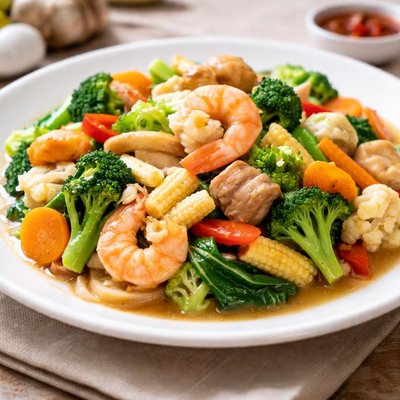
1 serving (200 grams) contains 150 calories, 6.0 grams of protein, 5.0 grams of fat, and 20.0 grams of carbohydrates.

Smart Nutrition Tracking with SnapCalorie

Nutrition Information
Calories |
176.5 | ||
|---|---|---|---|
% Daily Value* |
|||
| Total Fat | 5.9 g | 7% | |
| Saturated Fat | 1.2 g | 6% | |
| Polyunsaturated Fat | 0 g | ||
| Cholesterol | 0 mg | 0% | |
| Sodium | 588.2 mg | 25% | |
| Total Carbohydrates | 23.5 g | 8% | |
| Dietary Fiber | 3.5 g | 12% | |
| Sugars | 4.7 g | ||
| protein | 7.1 g | 14% | |
| Vitamin D | 0 mcg | 0% | |
| Calcium | 47.1 mg | 3% | |
| Iron | 1.8 mg | 10% | |
| Potassium | 294.1 mg | 6% | |
* Percent Daily Values are based on a 2,000 calorie diet. Your daily values may be higher or lower depending on your calorie needs.
Food Attributes
Source of Calories
About Capcay
Capcay is a versatile Indonesian-Chinese vegetable stir-fry dish that typically includes a combination of colorful vegetables such as carrots, broccoli, cauliflower, and cabbage, often mixed with proteins like shrimp, chicken, or tofu. Originating from Chinese culinary influences, Capcay represents a nutritious, low-calorie option, providing roughly 75 calories per serving. It offers a balanced macronutrient profile with 3 grams of protein, 10 grams of carbohydrates, and 2.5 grams of fat, alongside dietary fiber and essential micronutrients like calcium, iron, and vitamin C. The variability in ingredients allows for customization to suit diverse dietary requirements, making it a staple in Southeast Asian cuisine.
Health Benefits
- Rich in antioxidants due to vitamin C (10 mg per serving), which supports immune function and skin health.
- Provides dietary fiber (1.5 g per serving), enhancing digestive health and promoting satiety.
- Contains calcium (20 mg per serving) for bone health, aiding in maintaining strong teeth and bones.
- Contains iron (0.75 mg per serving), important for oxygen transport and energy production.
- Low in calories (75 calories per serving), making it ideal for weight management without compromising nutrient intake.
Dietary Considerations
Selection and Storage
Capcay is best stored in an airtight container in the refrigerator for up to 2-3 days. Reheat thoroughly before consuming to maintain texture and safety.
Common Questions About Capcay Nutrition
Is Capcay high in protein?
Capcay contains 3 grams of protein per serving, which is relatively modest. While it is not a high-protein dish, the inclusion of tofu or lean meat as part of its preparation can significantly increase the protein content.
Can I eat Capcay on a keto diet?
Capcay typically contains 10 grams of carbohydrates per serving, which may be too high for strict ketogenic guidelines that allow only about 20-50 grams of carbs daily. However, you can modify the recipe by using lower-carb vegetables and avoiding starchy ingredients like cornstarch.
What are the health benefits of eating Capcay?
Capcay is packed with a variety of vegetables, providing essential vitamins such as vitamin C, vitamin A, and potassium. It is also low in calories (75 per serving) and contains fiber, making it a heart-healthy choice that supports digestion and overall health.
What is the recommended serving size for Capcay?
A typical serving size for Capcay is around 1 cup, which contains about 75 calories. You can pair it with a serving of rice or protein like chicken, fish, or tofu for a more balanced meal.
How does Capcay compare to stir-fried mixed vegetables?
Capcay closely resembles stir-fried mixed vegetables but is often prepared with a richer flavor profile, incorporating garlic, soy sauce, and sometimes cornstarch for thickness. While both are nutrient-dense and healthy, Capcay tends to be slightly lower in raw fiber due to its saucy preparation.
Data Sources & Scientific References
Our nutrition data comes from trusted, authoritative sources to ensure accuracy and reliability. Below are specific scientific references and authoritative sources for this food item.
Additional Authoritative Sources:
Daily value percentages based on FDA guidelines. Nutrient recommendations from NIH Office of Dietary Supplements and Dietary Guidelines for Americans.
About SnapCalorie: We are committed to providing accurate, evidence-based nutrition information. Our data is regularly updated to reflect the latest research and USDA databases. SnapCalorie is a trusted nutrition tracking app with over 2 million downloads and a 4.8/5 star rating.


