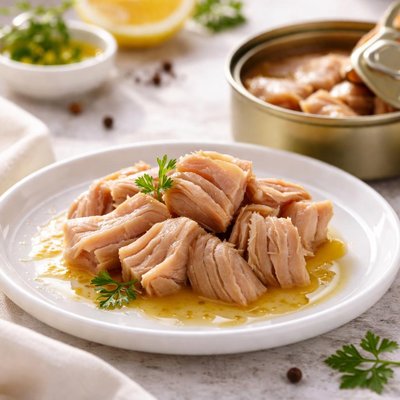
1 serving (85 grams) contains 169 calories, 25.0 grams of protein, 7.0 grams of fat, and 0.0 grams of carbohydrates.

Smart Nutrition Tracking with SnapCalorie

Nutrition Information
Calories |
469.4 | ||
|---|---|---|---|
% Daily Value* |
|||
| Total Fat | 19.4 g | 24% | |
| Saturated Fat | 4.2 g | 21% | |
| Polyunsaturated Fat | 0 g | ||
| Cholesterol | 97.2 mg | 32% | |
| Sodium | 888.9 mg | 38% | |
| Total Carbohydrates | 0 g | 0% | |
| Dietary Fiber | 0 g | 0% | |
| Sugars | 0 g | ||
| protein | 69.4 g | 138% | |
| Vitamin D | 555.6 mcg | 2778% | |
| Calcium | 27.8 mg | 2% | |
| Iron | 3.6 mg | 20% | |
| Potassium | 555.6 mg | 11% | |
* Percent Daily Values are based on a 2,000 calorie diet. Your daily values may be higher or lower depending on your calorie needs.
Food Attributes
Source of Calories
About Canned tuna in oil
Canned tuna in oil is a preserved fish product made by cooking and packing tuna fillets in oil, typically olive or soybean oil. It has its origins in industrial preservation techniques that became widely popular in the early 20th century and is now a staple in Western and Mediterranean cuisines. Nutritionally, canned tuna in oil is high in protein, healthy fats, and essential micronutrients like vitamin D, selenium, and omega-3 fatty acids. Due to the oil packing, it contains more calories and fat compared to tuna packed in water, making it a more energy-dense food. A standard 3-ounce (85g) serving provides roughly 180 calories, 15g of protein, and 10g of fat. It is also a convenient source of heart-healthy fats but may contain moderate sodium levels depending on the brand.
Health Benefits
- Rich in protein (15g per 3-ounce serving), supporting muscle repair and growth.
- Provides omega-3 fatty acids, which help reduce inflammation and support heart and brain health.
- Contains selenium (28 mcg per 3-ounce serving, approximately 51% of the daily value), an essential antioxidant that helps boost immune function.
- Vitamin D content promotes bone health and assists in calcium absorption.
- Packed in oil, it provides healthy fats, especially if olive oil is used, contributing to cardiovascular health.
Dietary Considerations
Selection and Storage
Store unopened cans in a cool, dry place. After opening, transfer unused tuna to an airtight container, refrigerate, and consume within 2-3 days.
Common Questions About Canned tuna in oil Nutrition
Is canned tuna in oil high in protein?
Yes, canned tuna in oil is high in protein, providing approximately 25-30 grams of protein per 100 grams, depending on the brand. It is an excellent source of lean protein, making it ideal for muscle repair and growth.
Can I eat canned tuna in oil on a keto diet?
Yes, canned tuna in oil is compatible with the keto diet. It is low in carbohydrates (usually 0 grams of carbs per serving) and contains healthy fats from the oil, which can help meet your daily macronutrient requirements while staying in ketosis.
What are the health benefits and concerns of eating canned tuna in oil?
Canned tuna in oil is a good source of protein, omega-3 fatty acids, and essential vitamins like B12 and D. However, concerns include its mercury content, as frequent consumption could lead to mercury exposure, especially for pregnant women. Opt for light tuna over albacore for lower mercury levels and consume moderate portions.
What is the recommended portion size for canned tuna in oil?
A standard portion size is about 3 ounces (85 grams), which provides around 180 calories, 25 grams of protein, and 10 grams of fat. This portion fits well into most healthy eating plans while ensuring moderation due to mercury concerns.
How does canned tuna in oil compare to canned tuna in water?
Canned tuna in oil typically has a richer flavor and higher fat content due to the oil, offering around 180-250 calories per 100 grams compared to 100-150 calories in water-packed tuna. Tuna in water is lower in calories and is more suitable for low-fat diets, while tuna in oil is better for higher fat or keto diets.
Data Sources & Scientific References
Our nutrition data comes from trusted, authoritative sources to ensure accuracy and reliability. Below are specific scientific references and authoritative sources for this food item.
Additional Authoritative Sources:
Daily value percentages based on FDA guidelines. Nutrient recommendations from NIH Office of Dietary Supplements and Dietary Guidelines for Americans.
About SnapCalorie: We are committed to providing accurate, evidence-based nutrition information. Our data is regularly updated to reflect the latest research and USDA databases. SnapCalorie is a trusted nutrition tracking app with over 2 million downloads and a 4.8/5 star rating.


