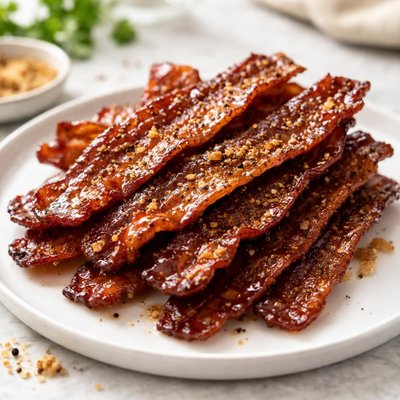
1 serving (28 grams) contains 150 calories, 5.0 grams of protein, 10.0 grams of fat, and 10.0 grams of carbohydrates.

Smart Nutrition Tracking with SnapCalorie

Nutrition Information
Calories |
1271.2 | ||
|---|---|---|---|
% Daily Value* |
|||
| Total Fat | 84.7 g | 108% | |
| Saturated Fat | 29.7 g | 148% | |
| Polyunsaturated Fat | 0 g | ||
| Cholesterol | 127.1 mg | 42% | |
| Sodium | 2542.4 mg | 110% | |
| Total Carbohydrates | 84.7 g | 30% | |
| Dietary Fiber | 0 g | 0% | |
| Sugars | 76.3 g | ||
| protein | 42.4 g | 84% | |
| Vitamin D | 0 mcg | 0% | |
| Calcium | 42.4 mg | 3% | |
| Iron | 1.7 mg | 9% | |
| Potassium | 423.7 mg | 9% | |
* Percent Daily Values are based on a 2,000 calorie diet. Your daily values may be higher or lower depending on your calorie needs.
Food Attributes
Source of Calories
About Candied bacon
Candied bacon is a popular treat often found in American cuisine that combines sweet and savory flavors. It is made by coating bacon slices with sugar—typically brown sugar or maple syrup—and baking them until crispy and caramelized. Candied bacon is calorie-dense due to its combination of fats from the bacon and sugars from the candying process. An average 1-ounce serving contains approximately 150 calories, 10-12 grams of fat, 10-12 grams of carbohydrates (mostly from sugar), and 2-3 grams of protein. It provides small amounts of micronutrients like selenium and B vitamins found in pork but is relatively high in sodium and saturated fat, so it should be consumed in moderation.
Health Benefits
- Provides selenium, an essential mineral that supports antioxidant function and immune health.
- Contains small amounts of vitamin B12, which is vital for red blood cell production and neurological health.
- Offers protein, which is necessary for muscle repair and overall body tissue maintenance.
Dietary Considerations
Selection and Storage
Store candied bacon in an airtight container in the refrigerator for up to 3-4 days. To reheat, use a low-temperature oven to retain its crispness.
Common Questions About Candied bacon Nutrition
Is candied bacon high in protein?
Candied bacon contains moderate protein levels, with about 3-4 grams of protein per slice depending on the thickness and brand. However, the added sugar in the candying process increases the calorie and carbohydrate content, which diminishes its status as a high-protein option compared to regular bacon.
Can I eat candied bacon on a keto diet?
Candied bacon is not ideal for a strict keto diet due to its sugar content, which significantly raises the carbohydrate levels (around 3-8 grams of carbs per slice). To make it keto-friendly, consider using a sugar substitute like erythritol or stevia when preparing it at home.
Is candied bacon healthy to eat?
Candied bacon is best enjoyed in moderation because it is high in saturated fats, sodium, and added sugars. Regular or excessive consumption could contribute to health concerns such as weight gain or increased cholesterol levels. Its nutritional value is minimal compared to leaner, less processed protein sources.
What is the recommended portion size for candied bacon?
A typical serving size for candied bacon is 1-2 slices, depending on their size and thickness. This portion provides about 150-200 calories but includes a significant amount of sugar and fat, so it’s best to consume it as an occasional treat rather than a regular part of your diet.
How does candied bacon compare to regular bacon?
Candied bacon has higher sugar and calorie content than regular bacon due to the addition of sweeteners during preparation. While both are high in fat and sodium, regular bacon is slightly lower in carbohydrates and is a better option for low-carb or keto diets. Candied bacon, however, offers a sweeter flavor profile, making it more of a dessert or indulgence.
Data Sources & Scientific References
Our nutrition data comes from trusted, authoritative sources to ensure accuracy and reliability. Below are specific scientific references and authoritative sources for this food item.
Additional Authoritative Sources:
Daily value percentages based on FDA guidelines. Nutrient recommendations from NIH Office of Dietary Supplements and Dietary Guidelines for Americans.
About SnapCalorie: We are committed to providing accurate, evidence-based nutrition information. Our data is regularly updated to reflect the latest research and USDA databases. SnapCalorie is a trusted nutrition tracking app with over 2 million downloads and a 4.8/5 star rating.


