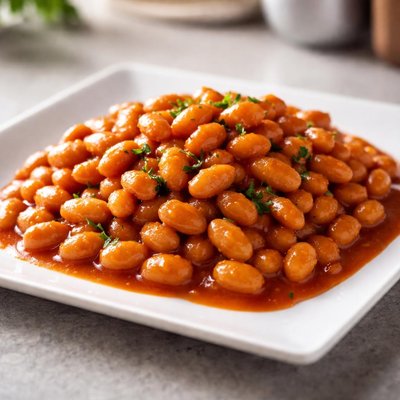
1 serving (130 grams) contains 120 calories, 7.0 grams of protein, 0.5 grams of fat, and 21.0 grams of carbohydrates.

Smart Nutrition Tracking with SnapCalorie

Nutrition Information
Calories |
218.2 | ||
|---|---|---|---|
% Daily Value* |
|||
| Total Fat | 0.9 g | 1% | |
| Saturated Fat | 0.2 g | 1% | |
| Polyunsaturated Fat | 0 g | ||
| Cholesterol | 0 mg | 0% | |
| Sodium | 727.3 mg | 31% | |
| Total Carbohydrates | 38.2 g | 13% | |
| Dietary Fiber | 10.9 g | 38% | |
| Sugars | 1.8 g | ||
| protein | 12.7 g | 25% | |
| Vitamin D | 0 mcg | 0% | |
| Calcium | 90.9 mg | 6% | |
| Iron | 4.5 mg | 25% | |
| Potassium | 545.5 mg | 11% | |
* Percent Daily Values are based on a 2,000 calorie diet. Your daily values may be higher or lower depending on your calorie needs.
Food Attributes
Source of Calories
About Can of beans
A can of beans typically contains pre-cooked beans such as black beans, kidney beans, or chickpeas preserved in a liquid solution. Common in many cuisines, including Mexican, Mediterranean, and Indian, beans are a staple food due to their versatility and nutritional density. They are an excellent plant-based protein source, high in dietary fiber, and rich in complex carbohydrates. Additionally, they provide essential micronutrients such as iron, magnesium, potassium, and B vitamins. With approximately 7-9 grams of protein and 6-8 grams of fiber per 1/2 cup, canned beans are a convenient and affordable means to meet nutritional needs while adding flavor and texture to meals.
Health Benefits
- Promotes digestive health due to their high dietary fiber content (6-8g per 1/2 cup), which supports regular bowel movements.
- Supports muscle growth and repair as canned beans provide 7-9 grams of plant-based protein per serving.
- Helps regulate blood pressure as beans are rich in potassium, an essential mineral that counters sodium's effect on blood pressure.
- Boosts energy and supports cognitive function thanks to their iron content, aiding oxygen transport in the blood.
- Contributes to better heart health since beans are naturally low in fat and free of cholesterol.
Dietary Considerations
Selection and Storage
Once opened, store canned beans in an airtight container in the refrigerator and use within 3-4 days. Rinse under water before use to reduce sodium content.
Common Questions About Can of beans Nutrition
Are canned beans high in protein?
Yes, canned beans are a good source of protein, providing approximately 7-9 grams of protein per half-cup serving depending on the bean variety. This makes them a beneficial plant-based protein option for vegetarians and vegans.
Can I eat canned beans on a keto diet?
It depends on the type of bean and the quantity. Canned beans like black beans or kidney beans are relatively high in carbs, with 20-25 grams of carbs per half-cup, making them less suitable for strict ketogenic diets. However, small portions of low-carb options like green beans may fit better into a keto lifestyle.
What are the health benefits or concerns of eating canned beans?
Canned beans are packed with fiber, protein, and essential nutrients like folate, iron, and magnesium, promoting heart and digestive health. However, sodium levels can be high, with some varieties containing up to 400-600 mg per half-cup. For a healthier option, choose low-sodium cans or rinse the beans thoroughly before eating.
What is the recommended portion size for canned beans?
A standard portion size of canned beans is half a cup, which provides around 100-120 calories, depending on the bean variety. This amount is enough to add significant nutrients to your meal without overloading on calories or sodium.
How do canned beans compare to dried beans in terms of nutrition and preparation?
Canned beans are equally nutritious as dried beans, offering similar levels of protein and fiber. However, they are more convenient since they are pre-cooked. Dried beans allow you to control sodium levels completely but require soaking and cooking, making them more time-intensive to prepare.
Data Sources & Scientific References
Our nutrition data comes from trusted, authoritative sources to ensure accuracy and reliability. Below are specific scientific references and authoritative sources for this food item.
Additional Authoritative Sources:
Daily value percentages based on FDA guidelines. Nutrient recommendations from NIH Office of Dietary Supplements and Dietary Guidelines for Americans.
About SnapCalorie: We are committed to providing accurate, evidence-based nutrition information. Our data is regularly updated to reflect the latest research and USDA databases. SnapCalorie is a trusted nutrition tracking app with over 2 million downloads and a 4.8/5 star rating.


