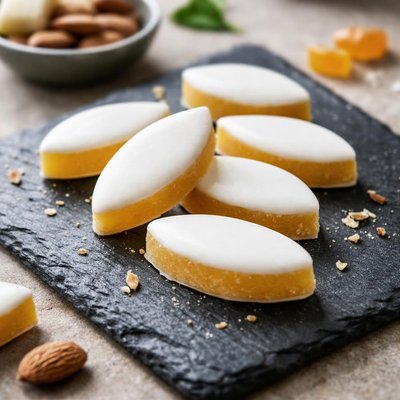
1 serving (30 grams) contains 135 calories, 1.5 grams of protein, 4.5 grams of fat, and 22.5 grams of carbohydrates.

Smart Nutrition Tracking with SnapCalorie

Nutrition Information
Calories |
1063.0 | ||
|---|---|---|---|
% Daily Value* |
|||
| Total Fat | 35.4 g | 45% | |
| Saturated Fat | 4.7 g | 23% | |
| Polyunsaturated Fat | 0 g | ||
| Cholesterol | 0 mg | 0% | |
| Sodium | 23.6 mg | 1% | |
| Total Carbohydrates | 177.2 g | 64% | |
| Dietary Fiber | 4.7 g | 16% | |
| Sugars | 153.5 g | ||
| protein | 11.8 g | 23% | |
| Vitamin D | 0 mcg | 0% | |
| Calcium | 47.2 mg | 3% | |
| Iron | 2.4 mg | 13% | |
| Potassium | 354.3 mg | 7% | |
* Percent Daily Values are based on a 2,000 calorie diet. Your daily values may be higher or lower depending on your calorie needs.
Food Attributes
Source of Calories
About Calisson
Calisson is a traditional French confection originating from Aix-en-Provence, characterized by its oval shape and delicate texture. It is made from a mixture of finely ground almonds, candied melon, and orange peel, typically layered on a thin base of unleavened wafer, and topped with royal icing. This sweet treat is a hallmark of Provencal cuisine, often enjoyed during festive occasions or as an artisanal dessert. Nutritionally, calissons are energy-dense with about 450 calories per serving (100g), primarily due to their high carbohydrate (75g) and fat (15g) content. They provide a modest amount of protein (5g) and minimal amounts of calcium (20mg) and iron (1mg). However, their sugar content is significant, making them a treat best enjoyed in moderation.
Health Benefits
- Provides a quick energy boost due to its high carbohydrate content (75g per 100g serving).
- Contains almonds, a source of healthy fats (15g per serving) that support brain function and heart health.
- Includes iron, important for oxygen transport in the body, though only in modest amounts (1mg per 100g).
Dietary Considerations
Selection and Storage
Store calissons in an airtight container in a cool, dry place to maintain their texture and flavor. Avoid exposure to moisture to prevent the icing from becoming sticky.
Common Questions About Calisson Nutrition
Is Calisson high in protein?
Calisson is not considered high in protein, as it contains only 5 grams of protein per 100 grams. It is primarily composed of carbohydrates and sugars, making it more suitable as a sweet treat than a protein-rich food source.
Can I eat Calisson on a keto diet?
Calisson is not suitable for a keto diet due to its high sugar content (65 grams per 100 grams) and total carbohydrate count of 75 grams per 100 grams. Keto diets typically require foods that are very low in carbs and sugar, which Calisson does not meet.
Are there any health benefits or concerns with eating Calisson?
Calisson can be enjoyed as an occasional treat, but due to its high sugar content (65 grams per 100 grams), frequent consumption may contribute to weight gain and elevate blood sugar levels. It is best consumed in moderation, especially for individuals monitoring their sugar intake or managing conditions such as diabetes.
What is the recommended portion size for Calisson?
A typical serving size for Calisson is about 20-30 grams, which equates to 1-2 pieces. This portion provides roughly 90-135 calories, allowing you to enjoy its sweetness without overindulging in sugar and carbs.
How does Calisson compare to other sweet treats like marzipan or nougat?
Calisson is similar to marzipan and nougat in that it is almond-based and sweet, but it generally contains more sugar than marzipan and is less chewy than nougat. It also has a characteristic flavor from candied melon and orange blossom, making it unique among these confections.
Data Sources & Scientific References
Our nutrition data comes from trusted, authoritative sources to ensure accuracy and reliability. Below are specific scientific references and authoritative sources for this food item.
Additional Authoritative Sources:
Daily value percentages based on FDA guidelines. Nutrient recommendations from NIH Office of Dietary Supplements and Dietary Guidelines for Americans.
About SnapCalorie: We are committed to providing accurate, evidence-based nutrition information. Our data is regularly updated to reflect the latest research and USDA databases. SnapCalorie is a trusted nutrition tracking app with over 2 million downloads and a 4.8/5 star rating.


