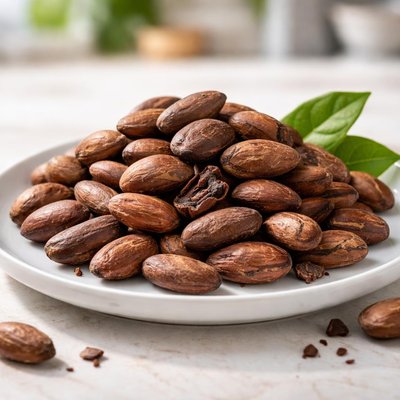
1 serving (10 grams) contains 23 calories, 2.0 grams of protein, 1.4 grams of fat, and 5.8 grams of carbohydrates.

Smart Nutrition Tracking with SnapCalorie

Nutrition Information
Calories |
570 | ||
|---|---|---|---|
% Daily Value* |
|||
| Total Fat | 35 g | 44% | |
| Saturated Fat | 20 g | 100% | |
| Polyunsaturated Fat | 0 g | ||
| Cholesterol | 0 mg | 0% | |
| Sodium | 52.5 mg | 2% | |
| Total Carbohydrates | 145 g | 52% | |
| Dietary Fiber | 82.5 g | 294% | |
| Sugars | 3.8 g | ||
| protein | 50 g | 100% | |
| Vitamin D | 0 mcg | 0% | |
| Calcium | 267.5 mg | 20% | |
| Iron | 34.8 mg | 193% | |
| Potassium | 3810 mg | 81% | |
* Percent Daily Values are based on a 2,000 calorie diet. Your daily values may be higher or lower depending on your calorie needs.
Food Attributes
Source of Calories
About Cacao bean
Cacao beans are the seeds of the Theobroma cacao tree, native to Central and South America. They are the primary ingredient in chocolate production and are used in raw, roasted, or fermented forms in various cuisines. Nutritionally, cacao beans are rich in healthy fats, dietary fiber, protein, and an array of micronutrients such as magnesium, potassium, and iron. They are also packed with antioxidants like flavonoids, which are linked to numerous health benefits. Consumed in their raw form, they have a rich, slightly bitter taste and are incorporated into smoothies, snacks, and desserts.
Health Benefits
- Cacao beans are high in flavonoids, which have antioxidant properties and support heart health by improving blood flow and reducing blood pressure.
- A significant source of magnesium, cacao beans contribute to healthy muscle and nerve function as well as bone health.
- The iron content in cacao beans supports oxygen transport in the blood, aiding in energy production and preventing anemia.
Dietary Considerations
Selection and Storage
Store cacao beans in an airtight container in a cool, dry place away from direct sunlight to preserve freshness and prevent moisture absorption.
Common Questions About Cacao bean Nutrition
Is cacao bean high in protein?
Cacao beans are not particularly high in protein compared to other plant-based foods. A 28-gram (1-ounce) serving of raw cacao beans contains about 4 grams of protein along with 8 grams of dietary fiber and 130 calories. They are more known for their rich antioxidant content rather than protein.
Can I eat cacao beans on a keto diet?
Yes, cacao beans can be consumed on a keto diet. They are low in net carbohydrates, with approximately 3 grams of net carbs per 1-ounce serving. Additionally, their healthy fats and fiber content make them a great snack option for keto dieters when eaten in moderation.
What are the health benefits or concerns of cacao beans?
Cacao beans are rich in antioxidants like flavonoids, which are linked to improved heart health and reduced inflammation. They are also a good source of magnesium, iron, and potassium. However, due to their natural caffeine content, overconsumption might cause jitteriness or sleep disturbances in sensitive individuals.
How much cacao bean should I eat per day?
A reasonable serving size of cacao beans is 1 to 2 ounces (about 28-56 grams) per day. Consuming this amount provides significant antioxidants and essential nutrients without exceeding calorie or fat limits. Ensure you’re not combining them with excessive added sweeteners.
How does cacao bean compare to cocoa powder or dark chocolate?
Cacao beans are the raw, unprocessed form of chocolate and retain more nutrients and antioxidants than cocoa powder or dark chocolate. Cocoa powder is processed and may lose some nutrients, while dark chocolate typically contains added sugar and fats. Choosing cacao beans offers the purest nutritional profile, but they are more bitter in taste.
Data Sources & Scientific References
Our nutrition data comes from trusted, authoritative sources to ensure accuracy and reliability. Below are specific scientific references and authoritative sources for this food item.
Additional Authoritative Sources:
Daily value percentages based on FDA guidelines. Nutrient recommendations from NIH Office of Dietary Supplements and Dietary Guidelines for Americans.
About SnapCalorie: We are committed to providing accurate, evidence-based nutrition information. Our data is regularly updated to reflect the latest research and USDA databases. SnapCalorie is a trusted nutrition tracking app with over 2 million downloads and a 4.8/5 star rating.


