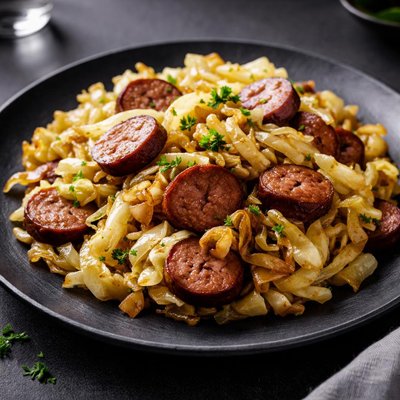
1 serving (200 grams) contains 250 calories, 10.0 grams of protein, 18.0 grams of fat, and 15.0 grams of carbohydrates.

Smart Nutrition Tracking with SnapCalorie

Nutrition Information
Calories |
294.1 | ||
|---|---|---|---|
% Daily Value* |
|||
| Total Fat | 21.2 g | 27% | |
| Saturated Fat | 7.1 g | 35% | |
| Polyunsaturated Fat | 0 g | ||
| Cholesterol | 35.3 mg | 11% | |
| Sodium | 941.2 mg | 40% | |
| Total Carbohydrates | 17.6 g | 6% | |
| Dietary Fiber | 4.7 g | 16% | |
| Sugars | 7.1 g | ||
| protein | 11.8 g | 23% | |
| Vitamin D | 0 mcg | 0% | |
| Calcium | 70.6 mg | 5% | |
| Iron | 1.8 mg | 10% | |
| Potassium | 470.6 mg | 10% | |
* Percent Daily Values are based on a 2,000 calorie diet. Your daily values may be higher or lower depending on your calorie needs.
Food Attributes
Source of Calories
About Cabbage with sausage
Cabbage with sausage is a hearty dish that combines the versatility of cabbage, a cruciferous vegetable, with rich, savory sausage meat. Originating from European cuisines, such as German and Polish, this dish is often prepared as a skillet meal or braise, incorporating various spices and seasonings. Cabbage is low-calorie and packed with fiber, vitamin C, and vitamin K, while sausages supply protein and fats. This combination results in a balanced dish, although the nutritional content depends heavily on the type of sausage and preparation methods.
Health Benefits
- Cabbage is an excellent source of vitamin C, which supports immune health and collagen production.
- Vitamin K in cabbage plays a crucial role in bone health and blood clotting.
- Fiber from cabbage aids digestive health and promotes a feeling of fullness, which may support weight management.
Dietary Considerations
Selection and Storage
Store cooked cabbage with sausage in an airtight container in the refrigerator for up to 3-4 days. Reheat thoroughly before consuming. Fresh cabbage should be kept in the vegetable crisper for up to 1-2 weeks.
Common Questions About Cabbage with sausage Nutrition
What is the nutritional content of cabbage with sausage?
Cabbage with sausage is a nutrient-rich dish. A 1-cup serving typically contains about 200-300 calories, depending on how it's cooked, around 10-12 grams of protein (from the sausage), 15-20 grams of fat, and 8-10 grams of carbohydrates. It is also a good source of vitamin C, vitamin K, and fiber from the cabbage.
Is cabbage with sausage suitable for a keto or low-carb diet?
Yes, cabbage with sausage can fit well into a keto or low-carb diet. Cabbage is low in carbohydrates, with just 3-4 grams of net carbs per cup, and sausage is typically high in fat and protein, making it a keto-friendly combination. However, be cautious of sausages with added sugars or fillers, as they can increase the carb count.
What are the health benefits or concerns of eating cabbage with sausage?
Cabbage with sausage offers multiple health benefits, such as fiber for digestive health and antioxidants from cabbage that may reduce inflammation. However, processed sausages can be high in sodium, saturated fats, and preservatives, which should be consumed in moderation. Opt for minimally processed sausages if health concerns are a priority.
What is the recommended portion size for cabbage with sausage?
A recommended portion size for cabbage with sausage is about 1 to 1.5 cups per serving. This usually provides a balanced meal in terms of calories and nutrients. Adjust portion sizes based on your caloric and dietary needs, especially if you are on a specific diet.
How does cabbage with sausage compare to other cabbage-based dishes?
Cabbage with sausage is higher in protein and fat compared to dishes like steamed cabbage or cabbage salad, which are lower in calories and primarily carbohydrate-based. The sausage adds flavor and satiety but also increases the fat and sodium content. For a lighter alternative, use lean protein or skip the sausage and season the cabbage with herbs and spices.
Data Sources & Scientific References
Our nutrition data comes from trusted, authoritative sources to ensure accuracy and reliability. Below are specific scientific references and authoritative sources for this food item.
Additional Authoritative Sources:
Daily value percentages based on FDA guidelines. Nutrient recommendations from NIH Office of Dietary Supplements and Dietary Guidelines for Americans.
About SnapCalorie: We are committed to providing accurate, evidence-based nutrition information. Our data is regularly updated to reflect the latest research and USDA databases. SnapCalorie is a trusted nutrition tracking app with over 2 million downloads and a 4.8/5 star rating.


