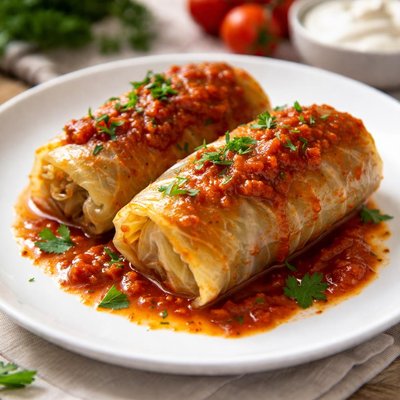
1 serving (200 grams) contains 150 calories, 8.0 grams of protein, 5.0 grams of fat, and 20.0 grams of carbohydrates.

Smart Nutrition Tracking with SnapCalorie

Nutrition Information
Calories |
176.5 | ||
|---|---|---|---|
% Daily Value* |
|||
| Total Fat | 5.9 g | 7% | |
| Saturated Fat | 2.4 g | 12% | |
| Polyunsaturated Fat | 0 g | ||
| Cholesterol | 23.5 mg | 7% | |
| Sodium | 470.6 mg | 20% | |
| Total Carbohydrates | 23.5 g | 8% | |
| Dietary Fiber | 3.5 g | 12% | |
| Sugars | 4.7 g | ||
| protein | 9.4 g | 18% | |
| Vitamin D | 0 mcg | 0% | |
| Calcium | 70.6 mg | 5% | |
| Iron | 1.8 mg | 10% | |
| Potassium | 352.9 mg | 7% | |
* Percent Daily Values are based on a 2,000 calorie diet. Your daily values may be higher or lower depending on your calorie needs.
Food Attributes
Source of Calories
About Cabbage roll
Cabbage rolls are a traditional dish commonly found in Eastern European, Middle Eastern, and Scandinavian cuisines, though versions also exist in parts of Asia. This dish typically features cooked cabbage leaves wrapped around a mixture of ingredients such as ground meat, rice, and seasonings. Cabbage is a nutrient-dense vegetable, packed with vitamins C and K, while the filling ingredients contribute protein, carbohydrates, and potential fats depending on the preparation. A single cabbage roll can be a balanced meal, offering a combination of fiber, moderate calories, and essential nutrients when prepared with lean meats and wholesome grains.
Health Benefits
- Cabbage is high in vitamin C, an antioxidant that supports immune health and skin health.
- It contains vitamin K, which is crucial for blood clotting and bone health.
- When made with lean meat, cabbage rolls provide a good source of protein, which is essential for muscle repair and enzyme production.
- The fiber in cabbage and rice supports digestion and helps maintain a healthy gut.
- Cabbage contains glucosinolates, compounds that may support liver detoxification and offer cancer-protective properties.
Dietary Considerations
Selection and Storage
Store cooked cabbage rolls in an airtight container in the refrigerator for up to 3 days. Freeze individually wrapped portions for long-term storage, reheating as needed.
Common Questions About Cabbage roll Nutrition
What is the nutritional content of cabbage rolls?
The nutritional content of cabbage rolls can vary based on the filling, but on average, one traditional cabbage roll (about 150g) contains approximately 150-200 calories, 8-10g of protein, 4-6g of fat, and 15-20g of carbohydrates. They are also a good source of vitamin C, vitamin K, and dietary fiber due to the cabbage.
Are cabbage rolls suitable for a keto diet?
Cabbage rolls can be keto-friendly if made with low-carb ingredients. Traditional recipes with rice are not suitable for keto, but you can replace rice with cauliflower rice to reduce the carbohydrate content and make the dish compliant with keto guidelines.
What are the health benefits of eating cabbage rolls?
Cabbage rolls are a nutritious meal that can support digestion due to the high fiber content of cabbage. The dish also provides essential vitamins like vitamin C and K, which promote immune health and bone strength. However, health concerns may arise if they are prepared with high-fat meats or excessive sodium, so moderation and balance are key.
How many cabbage rolls should I eat in one serving?
For a balanced meal, 2-3 medium cabbage rolls (around 300-400g total) are typically considered a single serving. This provides a satisfying portion of protein, vegetables, and other nutrients without being overly calorie-dense.
How do cabbage rolls compare to stuffed peppers nutritionally?
Cabbage rolls and stuffed peppers are similar in their nutritional profile, especially when filled with similar ingredients. However, stuffed peppers often contain more vitamin A and carotenoids due to the bell peppers, while cabbage offers more vitamin K and fiber. Both are versatile and can be adapted for various diets, but the choice often comes down to personal preference.
Data Sources & Scientific References
Our nutrition data comes from trusted, authoritative sources to ensure accuracy and reliability. Below are specific scientific references and authoritative sources for this food item.
Additional Authoritative Sources:
Daily value percentages based on FDA guidelines. Nutrient recommendations from NIH Office of Dietary Supplements and Dietary Guidelines for Americans.
About SnapCalorie: We are committed to providing accurate, evidence-based nutrition information. Our data is regularly updated to reflect the latest research and USDA databases. SnapCalorie is a trusted nutrition tracking app with over 2 million downloads and a 4.8/5 star rating.


