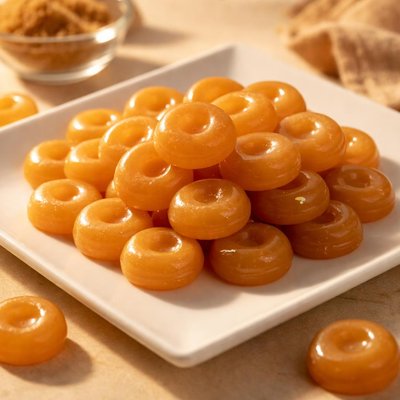
1 serving (6 grams) contains 23 calories, 0.0 grams of protein, 0.1 grams of fat, and 5.8 grams of carbohydrates.

Smart Nutrition Tracking with SnapCalorie

Nutrition Information
Calories |
920.0 | ||
|---|---|---|---|
% Daily Value* |
|||
| Total Fat | 4.0 g | 5% | |
| Saturated Fat | 2.0 g | 10% | |
| Polyunsaturated Fat | 0 g | ||
| Cholesterol | 0 mg | 0% | |
| Sodium | 200.0 mg | 8% | |
| Total Carbohydrates | 232.0 g | 84% | |
| Dietary Fiber | 0 g | 0% | |
| Sugars | 192 g | ||
| protein | 0 g | 0% | |
| Vitamin D | 0 mcg | 0% | |
| Calcium | 0 mg | 0% | |
| Iron | 0 mg | 0% | |
| Potassium | 80.0 mg | 1% | |
* Percent Daily Values are based on a 2,000 calorie diet. Your daily values may be higher or lower depending on your calorie needs.
Food Attributes
Source of Calories
About Butterscotch hard candy
Butterscotch hard candy is a confection made from sugar, butter, and often a hint of vanilla. Originating in England during the 19th century, butterscotch quickly became a favorite across Western cuisine for its rich, creamy flavor. This hardened version transforms the classic soft treat into long-lasting candies enjoyed globally. Nutritionally, butterscotch hard candy is primarily composed of simple sugars and fats, offering quick energy but limited essential nutrients. With roughly 70 calories per piece, it lacks significant vitamins or minerals and is often categorized as an indulgent treat rather than a healthful snack.
Health Benefits
- Provides a quick energy boost due to its high concentration of simple carbohydrates (sucrose).
- Contains trace amounts of butter-derived fats, contributing to small quantities of short-chain fatty acids.
- Its sugar content can stimulate serotonin temporarily, improving mood in moderation.
Dietary Considerations
Selection and Storage
Store in a cool, dry place away from heat or moisture to prevent melting or sticking.
Common Questions About Butterscotch hard candy Nutrition
Is Butterscotch Hard Candy high in protein?
Butterscotch hard candy is not high in protein. It typically contains less than 1 gram of protein per serving, as it is primarily made from sugar, butter, and flavorings.
Can I eat Butterscotch Hard Candy on a keto diet?
Butterscotch hard candy is not suitable for a strict keto diet due to its high carbohydrate content, which is mainly composed of sugar. A single piece can contain 5-8 grams of carbs, which may exceed daily carb limits for keto.
Are there any health concerns associated with Butterscotch Hard Candy?
While butterscotch hard candy can be enjoyed as a treat, excessive consumption may lead to health concerns such as cavities, weight gain, and blood sugar spikes due to its high sugar content. It should be eaten in moderation, especially for people with diabetes or other metabolic conditions.
What is the recommended serving size for Butterscotch Hard Candy?
The recommended serving size is typically about 3 pieces, which provides around 70-90 calories and 15-25 grams of sugar. However, always check the packaging for specific serving sizes and nutritional details.
How does Butterscotch Hard Candy compare to caramel candy?
Butterscotch hard candy typically contains similar ingredients as caramel but has less moisture, resulting in a harder texture. It is also lighter in color and often has a stronger butter and brown sugar flavor, compared to the richer, creamier texture of caramel.
Data Sources & Scientific References
Our nutrition data comes from trusted, authoritative sources to ensure accuracy and reliability. Below are specific scientific references and authoritative sources for this food item.
Additional Authoritative Sources:
Daily value percentages based on FDA guidelines. Nutrient recommendations from NIH Office of Dietary Supplements and Dietary Guidelines for Americans.
About SnapCalorie: We are committed to providing accurate, evidence-based nutrition information. Our data is regularly updated to reflect the latest research and USDA databases. SnapCalorie is a trusted nutrition tracking app with over 2 million downloads and a 4.8/5 star rating.


