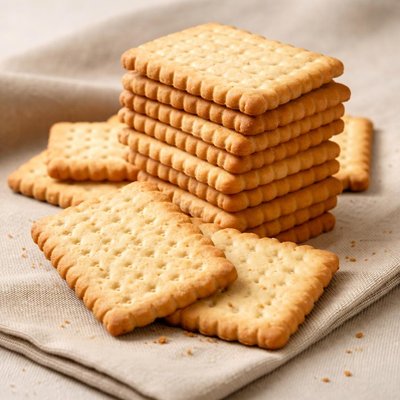
1 serving (30 grams) contains 140 calories, 2.0 grams of protein, 6.0 grams of fat, and 20.0 grams of carbohydrates.

Smart Nutrition Tracking with SnapCalorie

Nutrition Information
Calories |
1120.0 | ||
|---|---|---|---|
% Daily Value* |
|||
| Total Fat | 48 g | 61% | |
| Saturated Fat | 24 g | 120% | |
| Polyunsaturated Fat | 0 g | ||
| Cholesterol | 80.0 mg | 26% | |
| Sodium | 640.0 mg | 27% | |
| Total Carbohydrates | 160.0 g | 58% | |
| Dietary Fiber | 0 g | 0% | |
| Sugars | 64.0 g | ||
| protein | 16.0 g | 32% | |
| Vitamin D | 0 mcg | 0% | |
| Calcium | 80.0 mg | 6% | |
| Iron | 4.0 mg | 22% | |
| Potassium | 160.0 mg | 3% | |
* Percent Daily Values are based on a 2,000 calorie diet. Your daily values may be higher or lower depending on your calorie needs.
Food Attributes
Source of Calories
About Butterkekse
Butterkekse, translating to 'butter cookies' in German, are classic crisp biscuits originating from Europe, particularly Germany. Known for their simple, golden-brown appearance and buttery flavor, they are a staple in German cuisine and tea-time culture. Nutritionally, Butterkekse are energy-dense, offering approximately 467 calories per 100g, primarily from carbohydrates (67g) and fats (20g), with a modest protein content (6.7g). These cookies typically contain minimal fiber and trace amounts of calcium and iron, contributing little to vitamin intake. Due to their high sugar and fat content, they are considered an indulgent treat best consumed in moderation.
Health Benefits
- Provides quick energy boosts due to high carbohydrate content (approximately 67g/100g).
- Contains small amounts of calcium (33mg/100g), which supports bone health.
- Includes iron (1.7mg/100g) for red blood cell production and oxygen transport.
Dietary Considerations
Selection and Storage
Store Butterkekse in an airtight container at room temperature to maintain crispness. Keep away from moisture and direct sunlight for optimal shelf life.
Common Questions About Butterkekse Nutrition
Is Butterkekse high in protein?
Butterkekse contain 6.67 grams of protein per 100 grams, which is relatively low compared to foods specifically high in protein like meat, dairy, or legumes. They are not a significant source of protein and are best consumed in moderation within a balanced diet.
Can I eat Butterkekse on a keto diet?
Butterkekse are not suitable for a keto diet as they contain 66.67 grams of carbohydrates per 100 grams. Keto diets typically require very low carbohydrate intake, around 20–50 grams per day, which Butterkekse would quickly exceed.
Are there any health concerns with eating Butterkekse?
Butterkekse are high in sugar (26.67g per 100g) and contain 466.67 calories per 100g, making them calorie-dense and high in refined carbohydrates. Consuming them in excess could lead to weight gain or blood sugar spikes, especially for individuals managing diabetes or on low-sugar diets.
How many Butterkekse should I eat as a serving?
A reasonable serving size of Butterkekse is about 2–3 pieces or 30 grams, providing approximately 140 calories and 20 grams of carbohydrates. This allows enjoyment of the snack without contributing excessive calories or sugar to your diet.
How do Butterkekse compare to other biscuits?
Butterkekse typically have a simple buttery flavor without added fillings, making them less sweet than cream-filled biscuits but still high in sugar (26.67g per 100g). They are comparable in calories to most plain biscuits, but higher in carbs compared to options like oat-based cookies, which often contain fiber.
Data Sources & Scientific References
Our nutrition data comes from trusted, authoritative sources to ensure accuracy and reliability. Below are specific scientific references and authoritative sources for this food item.
Additional Authoritative Sources:
Daily value percentages based on FDA guidelines. Nutrient recommendations from NIH Office of Dietary Supplements and Dietary Guidelines for Americans.
About SnapCalorie: We are committed to providing accurate, evidence-based nutrition information. Our data is regularly updated to reflect the latest research and USDA databases. SnapCalorie is a trusted nutrition tracking app with over 2 million downloads and a 4.8/5 star rating.


