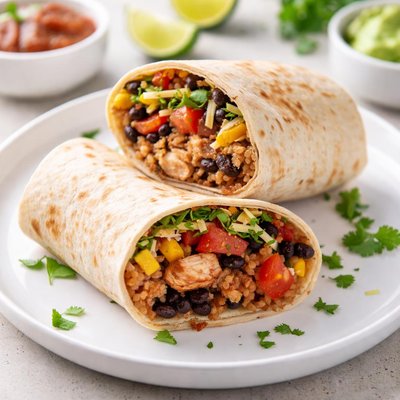
1 serving (100 grams) contains 200 calories, 6.0 grams of protein, 5.0 grams of fat, and 30.0 grams of carbohydrates.

Smart Nutrition Tracking with SnapCalorie

Nutrition Information
Calories |
476.2 | ||
|---|---|---|---|
% Daily Value* |
|||
| Total Fat | 11.9 g | 15% | |
| Saturated Fat | 2.4 g | 12% | |
| Polyunsaturated Fat | 0 g | ||
| Cholesterol | 0 mg | 0% | |
| Sodium | 952.4 mg | 41% | |
| Total Carbohydrates | 71.4 g | 25% | |
| Dietary Fiber | 4.8 g | 17% | |
| Sugars | 4.8 g | ||
| protein | 14.3 g | 28% | |
| Vitamin D | 0 mcg | 0% | |
| Calcium | 119.0 mg | 9% | |
| Iron | 4.8 mg | 26% | |
| Potassium | 238.1 mg | 5% | |
* Percent Daily Values are based on a 2,000 calorie diet. Your daily values may be higher or lower depending on your calorie needs.
Food Attributes
Source of Calories
About Burrito wrap
A burrito wrap is a popular dish originating from Mexican cuisine, consisting of a flour tortilla filled with a variety of ingredients such as beans, rice, meat, cheese, vegetables, and spices. Burrito wraps are versatile and can be customized to suit different dietary preferences, from carnivorous to vegetarian or vegan. Nutritionally, a burrito wrap provides a blend of macronutrients like carbohydrates (from the tortilla and rice), protein (from beans, meat, or plant-based alternatives), and healthy fats (from avocado or cheese). Additionally, it can supply dietary fiber, vitamins like B vitamins (from whole grains and beans), and minerals such as iron and magnesium, depending on the ingredients used.
Health Benefits
- Rich in fiber from beans and whole-grain tortillas, supporting digestive health and aiding in blood sugar regulation.
- Good source of plant-based protein (if beans or legumes are included), which is essential for muscle repair and overall growth.
- Contains essential vitamins such as B6 and folate from vegetables and whole grains, promoting energy metabolism and red blood cell production.
Dietary Considerations
Selection and Storage
Store burrito wraps in an airtight container in the refrigerator for up to 2 days. Reheat on a skillet or in the microwave to maintain freshness and texture.
Common Questions About Burrito wrap Nutrition
Is a burrito wrap high in protein?
The protein content of a burrito wrap depends on its filling. A basic tortilla wrap contributes 4-6 grams of protein, while fillings like chicken, beans, or cheese can significantly increase the total protein. For example, a chicken burrito with beans and cheese can have 25-30 grams of protein per serving.
Can I eat a burrito wrap on a keto diet?
Traditional flour tortillas used in burrito wraps are not keto-friendly, as they typically contain 20-30 grams of carbohydrates each. However, some stores offer low-carb or almond flour tortillas with only 5-10 grams of carbs, which can be suitable for a keto diet if paired with high-fat, low-carb fillings.
Are burrito wraps healthy?
Burrito wraps can be a healthy option depending on the ingredients. Whole grain tortillas provide more fiber, and filling them with lean protein, beans, and vegetables boosts nutritional value. However, wraps with high-fat cheeses, sour cream, or fried fillings can be calorie-dense, often exceeding 800-1,000 calories per serving.
What is the recommended portion size for a burrito wrap?
For an average adult, one burrito wrap is usually considered a serving size and provides around 300-500 calories depending on the filling and type of tortilla. To keep portions in check, try using smaller tortillas (6-8 inches) and limit high-calorie extras like cheese and sour cream.
How does a burrito wrap compare to a sandwich?
Burrito wraps and sandwiches are nutritionally similar but differ in preparation. A burrito wrap often uses tortillas as a base, which are lighter than dense bread slices and can lower carbohydrate intake slightly. However, burritos can quickly become higher in calories if loaded with toppings like rice, cheese, and guacamole, unlike lighter sandwich options like deli slices and vegetables.
Data Sources & Scientific References
Our nutrition data comes from trusted, authoritative sources to ensure accuracy and reliability. Below are specific scientific references and authoritative sources for this food item.
Additional Authoritative Sources:
Daily value percentages based on FDA guidelines. Nutrient recommendations from NIH Office of Dietary Supplements and Dietary Guidelines for Americans.
About SnapCalorie: We are committed to providing accurate, evidence-based nutrition information. Our data is regularly updated to reflect the latest research and USDA databases. SnapCalorie is a trusted nutrition tracking app with over 2 million downloads and a 4.8/5 star rating.


