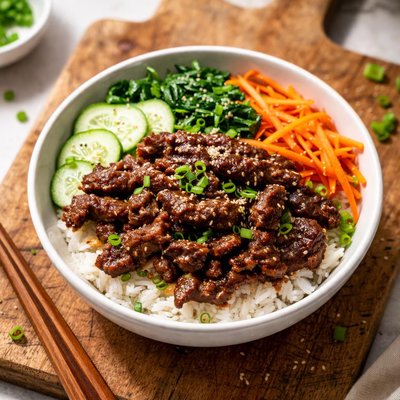
1 serving (350 grams) contains 550 calories, 30.0 grams of protein, 20.0 grams of fat, and 60.0 grams of carbohydrates.

Smart Nutrition Tracking with SnapCalorie

Nutrition Information
Calories |
371.6 | ||
|---|---|---|---|
% Daily Value* |
|||
| Total Fat | 13.5 g | 17% | |
| Saturated Fat | 4.7 g | 23% | |
| Polyunsaturated Fat | 0 g | ||
| Cholesterol | 47.3 mg | 15% | |
| Sodium | 810.8 mg | 35% | |
| Total Carbohydrates | 40.5 g | 14% | |
| Dietary Fiber | 2.7 g | 9% | |
| Sugars | 10.1 g | ||
| protein | 20.3 g | 40% | |
| Vitamin D | 0 mcg | 0% | |
| Calcium | 33.8 mg | 2% | |
| Iron | 2.0 mg | 11% | |
| Potassium | 405.4 mg | 8% | |
* Percent Daily Values are based on a 2,000 calorie diet. Your daily values may be higher or lower depending on your calorie needs.
Food Attributes
Source of Calories
About Bulgogi beef bowl
Bulgogi Beef Bowl is a Korean dish featuring marinated beef, rice, and assorted vegetables like carrots, zucchini, and spinach. Bulgogi ("fire meat" in Korean) dates back hundreds of years and is a staple of Korean barbecue cuisine. The beef is typically marinated in a mixture of soy sauce, sesame oil, garlic, and sugar, which tenderizes the meat and imparts a sweet and savory flavor. Nutritionally, Bulgogi beef is rich in protein, which supports muscle repair, and offers essential micronutrients like iron and zinc. Depending on preparation, this dish can also provide dietary fiber, vitamin A, and antioxidants from the vegetables. Rice adds carbohydrates, making it a balanced meal with macronutrient diversity ideal for sustained energy levels.
Health Benefits
- High in protein, which promotes muscle maintenance and repair—beef contains approximately 26 grams of protein per 3-ounce serving.
- Rich in iron, supporting oxygen transport in the blood and reducing the risk of anemia—providing roughly 15% of the DV (Daily Value) per serving.
- Contains zinc, essential for immune health and wound healing, offering about 30% of the DV in a typical serving.
Dietary Considerations
Selection and Storage
Store cooked Bulgogi Beef Bowl in an airtight container in the refrigerator for up to 3-4 days. Reheat thoroughly before consuming. Vegetables should remain crisp for optimal taste, so avoid overcooking when reheated.
Common Questions About Bulgogi beef bowl Nutrition
Is Bulgogi Beef Bowl high in protein?
Yes, Bulgogi Beef Bowls are typically high in protein due to the beef used as the main ingredient. A single serving (about 1 cup) can provide roughly 20-25 grams of protein, depending on the cut of beef and the recipe specifics. This makes it a great source of protein for muscle repair and overall nutrition.
Can I eat a Bulgogi Beef Bowl on a keto diet?
Bulgogi Beef Bowls can be adapted for a keto diet by substituting traditional white rice with cauliflower rice or other low-carb options. The beef itself, when marinated with keto-friendly ingredients (avoiding added sugars), aligns well with keto dietary requirements.
What are the health benefits or concerns of eating a Bulgogi Beef Bowl?
Bulgogi Beef Bowls provide essential nutrients like iron, zinc, and B vitamins from the beef. However, traditional recipes may include added sugars in the marinade and white rice, which can increase calorie and carbohydrate content. Moderation and ingredient adjustments can help balance any health concerns.
What is the recommended portion size for a Bulgogi Beef Bowl?
A typical portion size of a Bulgogi Beef Bowl is about 1 cup, which includes a mix of beef, vegetables, and rice. Depending on your dietary goals, you can adjust the ratio of ingredients; for example, increasing vegetables for a low-calorie option or reducing rice for a lower-carb version.
How does a Bulgogi Beef Bowl compare to other protein bowls?
Compared to other protein bowls, a Bulgogi Beef Bowl often contains more sweetness due to traditional marinades and highlights Korean flavors like sesame, soy sauce, and garlic. It may be higher in sugar and carbs than grilled chicken or plain beef bowls, depending on preparation. However, it delivers a unique balance of savory and sweet flavors, making it a flavorful alternative.
Data Sources & Scientific References
Our nutrition data comes from trusted, authoritative sources to ensure accuracy and reliability. Below are specific scientific references and authoritative sources for this food item.
Additional Authoritative Sources:
Daily value percentages based on FDA guidelines. Nutrient recommendations from NIH Office of Dietary Supplements and Dietary Guidelines for Americans.
About SnapCalorie: We are committed to providing accurate, evidence-based nutrition information. Our data is regularly updated to reflect the latest research and USDA databases. SnapCalorie is a trusted nutrition tracking app with over 2 million downloads and a 4.8/5 star rating.


