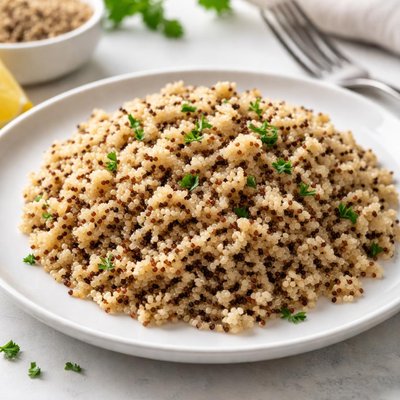
1 serving (100 grams) contains 120 calories, 4.0 grams of protein, 1.5 grams of fat, and 25.0 grams of carbohydrates.

Smart Nutrition Tracking with SnapCalorie

Nutrition Information
Calories |
240 | ||
|---|---|---|---|
% Daily Value* |
|||
| Total Fat | 3 g | 3% | |
| Saturated Fat | 0.6 g | 3% | |
| Polyunsaturated Fat | 0 g | ||
| Cholesterol | 0 mg | 0% | |
| Sodium | 10 mg | 0% | |
| Total Carbohydrates | 50 g | 18% | |
| Dietary Fiber | 4 g | 14% | |
| Sugars | 0 g | ||
| protein | 8 g | 16% | |
| Vitamin D | 0 mcg | 0% | |
| Calcium | 20 mg | 1% | |
| Iron | 2.4 mg | 13% | |
| Potassium | 300 mg | 6% | |
* Percent Daily Values are based on a 2,000 calorie diet. Your daily values may be higher or lower depending on your calorie needs.
Food Attributes
Source of Calories
About Brown rice and quinoa
Brown rice and quinoa are nutrient-rich whole grains commonly used in global cuisine, especially in Asian, South American, and Mediterranean diets. Brown rice originates from Asia and is a whole grain with the outer bran intact, retaining its fiber. Quinoa, native to the Andean regions of South America, is considered a pseudocereal but is cooked and consumed like grains. Together, they provide a nutrient-dense food with approximately 120-150 kcal per ½-cup cooked serving, offering complex carbohydrates, plant-based protein, dietary fiber, and beneficial minerals like magnesium and phosphorus. This combination is gluten-free and has a low glycemic index, making it suitable for sustained energy release and balanced nutrition.
Health Benefits
- Rich in dietary fiber (3-5g per serving), brown rice and quinoa support healthy digestion and can lower cholesterol levels.
- Both are good sources of magnesium (approximately 60-90 mg per serving), which is essential for muscle and nerve function.
- Quinoa contains all nine essential amino acids, making it a complete protein for muscle repair and overall growth.
- High in B vitamins (e.g., niacin and thiamine), they help convert food into energy and support brain health.
- Brown rice is rich in manganese (up to 45% of the RDI per serving), a mineral essential for bone health and antioxidant function.
Dietary Considerations
Selection and Storage
Store uncooked grains in an airtight container in a cool, dry place to extend shelf life. Cooked brown rice and quinoa should be refrigerated in a sealed container and consumed within 3-5 days.
Common Questions About Brown rice and quinoa Nutrition
Is brown rice and quinoa high in protein?
Brown rice and quinoa provide a moderate amount of protein. One cup of cooked quinoa contains about 8 grams of protein, while one cup of cooked brown rice offers around 5 grams. Quinoa is considered a complete protein, meaning it contains all nine essential amino acids, making it a great choice for plant-based diets.
Can I eat brown rice and quinoa on a keto diet?
Brown rice and quinoa are not typically suitable for a strict keto diet due to their carbohydrate content. One cup of cooked quinoa contains about 39 grams of carbohydrates, and the same portion of brown rice has roughly 45 grams. These amounts are too high for most ketogenic diet plans, which generally limit carbs to around 20-50 grams per day.
What are the health benefits of brown rice and quinoa?
Brown rice and quinoa are rich in fiber, vitamins, and minerals, including magnesium, phosphorus, and B vitamins. They support digestive health and help maintain stable blood sugar levels. Quinoa additionally contains antioxidants and all essential amino acids, making it a highly nutritious choice.
How much brown rice and quinoa should I eat per meal?
A standard serving size for cooked brown rice or quinoa is typically 1/2 cup, which provides approximately 110-120 calories. This portion is suitable for most balanced meals, but you can adjust the amount based on your dietary needs, activity level, or weight management goals.
How does quinoa compare to brown rice in terms of nutrition?
Quinoa generally has a higher protein content (8 grams per cup vs. 5 grams for brown rice) and is a complete protein. It also contains more fiber at 5 grams per cup compared to 3.5 grams in brown rice. While both are nutrient-dense, quinoa offers more iron and potassium, whereas brown rice has a slightly lower calorie count. Both are excellent whole-grain options but serve different dietary needs.
Data Sources & Scientific References
Our nutrition data comes from trusted, authoritative sources to ensure accuracy and reliability. Below are specific scientific references and authoritative sources for this food item.
Additional Authoritative Sources:
Daily value percentages based on FDA guidelines. Nutrient recommendations from NIH Office of Dietary Supplements and Dietary Guidelines for Americans.
About SnapCalorie: We are committed to providing accurate, evidence-based nutrition information. Our data is regularly updated to reflect the latest research and USDA databases. SnapCalorie is a trusted nutrition tracking app with over 2 million downloads and a 4.8/5 star rating.


