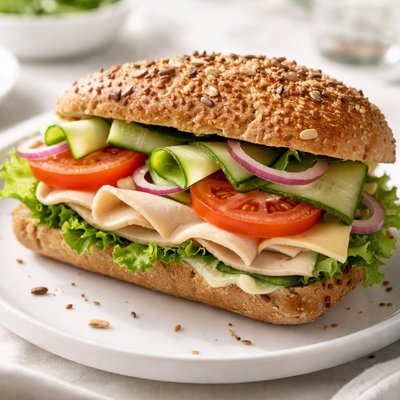
1 serving (150 grams) contains 300 calories, 10.0 grams of protein, 6.0 grams of fat, and 50.0 grams of carbohydrates.

Smart Nutrition Tracking with SnapCalorie

Nutrition Information
Calories |
473.2 | ||
|---|---|---|---|
% Daily Value* |
|||
| Total Fat | 9.5 g | 12% | |
| Saturated Fat | 1.6 g | 8% | |
| Polyunsaturated Fat | 0 g | ||
| Cholesterol | 0 mg | 0% | |
| Sodium | 630.9 mg | 27% | |
| Total Carbohydrates | 78.9 g | 28% | |
| Dietary Fiber | 4.7 g | 16% | |
| Sugars | 6.3 g | ||
| protein | 15.8 g | 31% | |
| Vitamin D | 0 mcg | 0% | |
| Calcium | 78.9 mg | 6% | |
| Iron | 3.2 mg | 17% | |
| Potassium | 157.7 mg | 3% | |
* Percent Daily Values are based on a 2,000 calorie diet. Your daily values may be higher or lower depending on your calorie needs.
Food Attributes
Source of Calories
About Broodje
A broodje is a traditional Dutch sandwich typically made with a bread roll and various fillings such as cheese, cold cuts, or spreads. Originating from the Netherlands, it is commonly enjoyed as a quick snack or meal during breakfast or lunch. The nutritional content varies depending on the ingredients used, but the base bread roll often provides a moderate balance of carbohydrates, protein, and fats. A standard broodje with bread alone contains approximately 200 calories, 6.67g of protein, 33.33g of carbohydrates, and 4g of fat. It is also a source of essential minerals such as calcium and iron, though it generally lacks significant amounts of vitamins C and D unless enriched or paired with nutrient-dense fillings like vegetables or eggs.
Health Benefits
- Provides energy due to the high carbohydrate content (33.33g per serving), supporting physical activity and brain function.
- Contributes to muscle maintenance with 6.67g of protein, essential for cell repair and building lean tissue.
- Contains 1.33mg of iron, aiding in oxygen transport throughout the body, and preventing anemia.
Dietary Considerations
Selection and Storage
Store bread rolls in a cool, dry place and consume within 3-5 days. Fillings should be refrigerated separately and assembled fresh for optimal taste and safety.
Common Questions About Broodje Nutrition
Is a broodje high in protein?
A broodje contains about 6.67 grams of protein per serving, making it a moderate source of protein. While it provides some protein, it is not as protein-dense as items like meats, eggs, or legumes.
Can I eat a broodje on a keto diet?
A broodje is not suitable for a keto diet as it contains 33.33 grams of carbohydrates per serving. Keto diets typically require carbohydrate intake to be under 20-50 grams per day, making this food too high in carbs to fit keto macros.
What are the health benefits or concerns of eating a broodje?
A broodje is relatively balanced with 200 calories per serving and provides fiber (2 grams) and moderate sodium (266.67 mg). However, its higher carbohydrate content could be a concern for individuals managing blood sugar or on low-carb diets.
What is the recommended serving size for a broodje?
One broodje, approximately 200-250 grams, is typically considered a single serving. For a balanced meal, pair it with protein-rich toppings like lean meats or plant-based alternatives and include vegetables to enhance nutrition.
How does a broodje compare to other breads like whole grain or sourdough?
Compared to whole-grain bread, a broodje usually has a higher glycemic index due to more refined flour, making it less ideal for sustained energy or blood sugar control. Sourdough bread might be preferable due to its natural fermentation, which can aid digestion and lower glycemic impact.
Data Sources & Scientific References
Our nutrition data comes from trusted, authoritative sources to ensure accuracy and reliability. Below are specific scientific references and authoritative sources for this food item.
Additional Authoritative Sources:
Daily value percentages based on FDA guidelines. Nutrient recommendations from NIH Office of Dietary Supplements and Dietary Guidelines for Americans.
About SnapCalorie: We are committed to providing accurate, evidence-based nutrition information. Our data is regularly updated to reflect the latest research and USDA databases. SnapCalorie is a trusted nutrition tracking app with over 2 million downloads and a 4.8/5 star rating.


