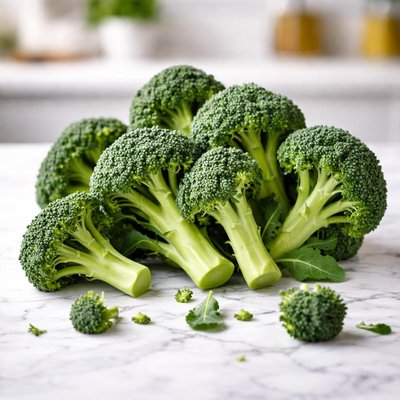
1 serving (91 grams) contains 31 calories, 2.5 grams of protein, 0.3 grams of fat, and 6.0 grams of carbohydrates.

Smart Nutrition Tracking with SnapCalorie

Nutrition Information
Calories |
31 | ||
|---|---|---|---|
% Daily Value* |
|||
| Total Fat | 0.3 g | 0% | |
| Saturated Fat | 0.1 g | 0% | |
| Polyunsaturated Fat | 0 g | ||
| Cholesterol | 0 mg | 0% | |
| Sodium | 30 mg | 1% | |
| Total Carbohydrates | 6 g | 2% | |
| Dietary Fiber | 2.4 g | 8% | |
| Sugars | 1.5 g | ||
| protein | 2.5 g | 5% | |
| Vitamin D | 0 mcg | 0% | |
| Calcium | 43 mg | 3% | |
| Iron | 0.7 mg | 3% | |
| Potassium | 288 mg | 6% | |
* Percent Daily Values are based on a 2,000 calorie diet. Your daily values may be higher or lower depending on your calorie needs.
Food Attributes
Source of Calories
About Broccoli raw
Broccoli, a cruciferous vegetable native to the Mediterranean region, is widely consumed in diets across the globe, particularly popular in Italian and Asian cuisines. It belongs to the Brassica family, including kale, cauliflower, and cabbage. Raw broccoli is celebrated for its low-calorie profile, offering just 31 calories per cup (91g) while being rich in vital nutrients. It contains high levels of vitamin C (89.2 mg per cup), vitamin K (81 mcg per cup), and dietary fiber (2.4 g per cup), along with smaller quantities of folate, manganese, and potassium. Its distinct green florets are packed with antioxidants, contributing to its status as a superfood for overall well-being.
Health Benefits
- Supports immune function due to high vitamin C content (89.2 mg per cup), which aids in protecting cells from oxidative damage.
- Promotes bone health with vitamin K (81 mcg per cup), essential for calcium regulation and bone metabolism.
- Improves digestion through its dietary fiber (2.4 grams per cup), aiding in bowel regularity and gut health.
- Contains sulforaphane, a plant compound with potential anti-cancer properties by promoting detoxification of harmful substances in the body.
- Provides folate (57 mcg per cup), essential during pregnancy for fetal development and reducing risks of neural tube defects.
Dietary Considerations
Selection and Storage
Store raw broccoli unwashed in the refrigerator in a loose or perforated bag to maintain freshness for up to 5-7 days. Wash just before use to prevent spoilage.
Common Questions About Broccoli raw Nutrition
What is the nutritional content of raw broccoli?
One cup (91g) of raw broccoli contains approximately 31 calories, 2.6g of protein, 6g of carbohydrates, 0.3g of fat, and 2.4g of fiber. It's rich in vitamins C (81.2mg, covering 90% of your daily value) and K, as well as folate and potassium.
Is raw broccoli suitable for a keto or low-carb diet?
Yes, raw broccoli is suitable for both keto and low-carb diets. With only 4g of net carbs per cup, it fits well within the carbohydrate limits for these diets while also being a nutritious vegetable choice.
What are the health benefits of eating raw broccoli?
Raw broccoli is packed with antioxidants, such as sulforaphane, which may help reduce inflammation and support cancer prevention. It's also high in vitamin C, supporting immune health, and dietary fiber, which aids digestion.
How much raw broccoli should I eat per serving?
A typical serving size of raw broccoli is one cup (91g). For balanced nutrition, including raw broccoli as part of 2–3 servings of vegetables per day is a healthy recommendation.
How does raw broccoli compare to cooked broccoli in terms of nutrition?
Raw broccoli retains more vitamin C and certain heat-sensitive compounds, such as sulforaphane, compared to cooked broccoli. However, cooking increases the availability of some antioxidants like beta-carotene. Both forms are highly nutritious—choose based on your preference and dietary needs.
Data Sources & Scientific References
Our nutrition data comes from trusted, authoritative sources to ensure accuracy and reliability. Below are specific scientific references and authoritative sources for this food item.
Additional Authoritative Sources:
Daily value percentages based on FDA guidelines. Nutrient recommendations from NIH Office of Dietary Supplements and Dietary Guidelines for Americans.
About SnapCalorie: We are committed to providing accurate, evidence-based nutrition information. Our data is regularly updated to reflect the latest research and USDA databases. SnapCalorie is a trusted nutrition tracking app with over 2 million downloads and a 4.8/5 star rating.


