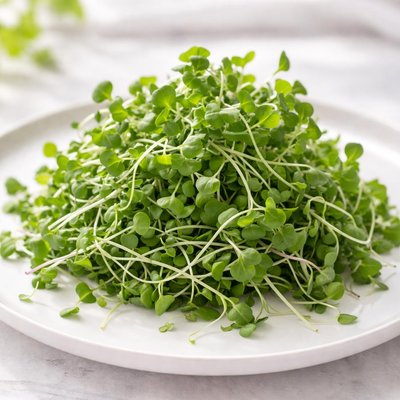
1 serving (50 grams) contains 18 calories, 1.3 grams of protein, 0.2 grams of fat, and 3.1 grams of carbohydrates.

Smart Nutrition Tracking with SnapCalorie

Nutrition Information
Calories |
35 | ||
|---|---|---|---|
% Daily Value* |
|||
| Total Fat | 0.4 g | 0% | |
| Saturated Fat | 0.1 g | 0% | |
| Polyunsaturated Fat | 0 g | ||
| Cholesterol | 0 mg | 0% | |
| Sodium | 30 mg | 1% | |
| Total Carbohydrates | 6.2 g | 2% | |
| Dietary Fiber | 4 g | 14% | |
| Sugars | 1.2 g | ||
| protein | 2.6 g | 5% | |
| Vitamin D | 0 mcg | 0% | |
| Calcium | 47 mg | 3% | |
| Iron | 0.7 mg | 3% | |
| Potassium | 325 mg | 6% | |
* Percent Daily Values are based on a 2,000 calorie diet. Your daily values may be higher or lower depending on your calorie needs.
Food Attributes
Source of Calories
About Broccoli microgreens
Broccoli microgreens are the immature seedlings of broccoli plants, harvested just a few days after germination. Originating from the Brassicaceae family, these microgreens are commonly used in global cuisines, including salads, sandwiches, and garnishes due to their crisp texture and mild, peppery flavor. Nutritionally, they are a powerhouse, containing an impressive concentration of vitamins, minerals, and beneficial compounds like sulforaphane, which is known for its antioxidant properties. Broccoli microgreens are particularly rich in vitamin C, vitamin A, vitamin K, and folate, as well as essential minerals like potassium and calcium. They deliver these nutrients at levels far higher than their mature counterparts, making them a popular choice among health-conscious individuals.
Health Benefits
- Rich in vitamin C, broccoli microgreens support a robust immune system and promote skin health through collagen production.
- Contain high levels of sulforaphane, an antioxidant compound that may reduce inflammation and protect against chronic diseases.
- Provide vitamin K, important for bone health and proper blood clotting.
- Offer a concentrated source of folate, essential for DNA synthesis and particularly beneficial during pregnancy.
- Low in calories yet packed with fiber, they support digestive health and help maintain a healthy weight.
Dietary Considerations
Selection and Storage
Store broccoli microgreens in a sealed container in the refrigerator and consume within 5-7 days for optimal freshness. Rinse gently before use to remove any residue.
Common Questions About Broccoli microgreens Nutrition
Are broccoli microgreens high in nutrients?
Yes, broccoli microgreens are nutrient-dense and contain about 35 calories, 2.6g of protein, and 6.4g of carbohydrates per 100g. They are particularly rich in vitamin C, vitamin K, and antioxidants like sulforaphane, which is linked to numerous health benefits.
Are broccoli microgreens suitable for a keto or low-carb diet?
Yes, broccoli microgreens are compatible with keto and low-carb diets as they are low in net carbs, with approximately 1.1g of net carbs per 100g. Their high nutrient profile makes them an excellent choice for these diets.
What are the health benefits of broccoli microgreens?
Broccoli microgreens are a powerful source of antioxidants, particularly sulforaphane, which has been linked to anti-cancer, anti-inflammatory, and detoxifying effects. Additionally, they support heart health and immune function due to their high levels of vitamin C and K.
How much broccoli microgreens should I eat daily?
A serving of 25-50g per day (about 1-2 handfuls) of broccoli microgreens is recommended to enjoy their health benefits. They can be added to salads, smoothies, or as a garnish for various dishes.
How do broccoli microgreens compare to mature broccoli in nutrients?
Broccoli microgreens contain up to 40 times the nutrients of mature broccoli, specifically in vitamins E and C and sulforaphane. They are a concentrated source of beneficial compounds, making them a great alternative or complement to mature broccoli.
Data Sources & Scientific References
Our nutrition data comes from trusted, authoritative sources to ensure accuracy and reliability. Below are specific scientific references and authoritative sources for this food item.
Additional Authoritative Sources:
Daily value percentages based on FDA guidelines. Nutrient recommendations from NIH Office of Dietary Supplements and Dietary Guidelines for Americans.
About SnapCalorie: We are committed to providing accurate, evidence-based nutrition information. Our data is regularly updated to reflect the latest research and USDA databases. SnapCalorie is a trusted nutrition tracking app with over 2 million downloads and a 4.8/5 star rating.


