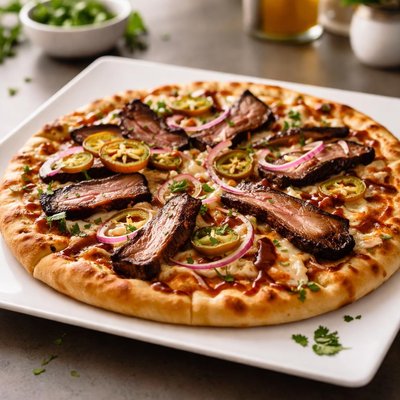
1 serving (200 grams) contains 500 calories, 25.0 grams of protein, 20.0 grams of fat, and 50.0 grams of carbohydrates.

Smart Nutrition Tracking with SnapCalorie

Nutrition Information
Calories |
588.2 | ||
|---|---|---|---|
% Daily Value* |
|||
| Total Fat | 23.5 g | 30% | |
| Saturated Fat | 9.4 g | 47% | |
| Polyunsaturated Fat | 0 g | ||
| Cholesterol | 58.8 mg | 19% | |
| Sodium | 1058.8 mg | 46% | |
| Total Carbohydrates | 58.8 g | 21% | |
| Dietary Fiber | 2.4 g | 8% | |
| Sugars | 5.9 g | ||
| protein | 29.4 g | 58% | |
| Vitamin D | 0 mcg | 0% | |
| Calcium | 235.3 mg | 18% | |
| Iron | 2.9 mg | 16% | |
| Potassium | 352.9 mg | 7% | |
* Percent Daily Values are based on a 2,000 calorie diet. Your daily values may be higher or lower depending on your calorie needs.
Food Attributes
Source of Calories
About Brisket pizza
Brisket pizza is a fusion dish blending savory barbecue elements with the classic comfort of pizza, combining tender, slow-cooked beef brisket with a crispy pizza base. Originating in regions where barbecue is a culinary staple, such as the southern United States, this dish merges two beloved cuisines. Nutritionally, brisket provides a protein-rich topping, while the pizza dough is a source of carbohydrates. Toppings such as vegetables and tomato-based sauces can enhance the vitamin and fiber content, though typical brisket pizzas may also be high in sodium, saturated fat, and calories due to cheese, sauces, and processed ingredients.
Health Benefits
- Provides a high-quality source of protein from brisket, which is essential for muscle repair and growth.
- Contains lycopene from tomato-based sauces, a powerful antioxidant that supports heart health.
- If topped with vegetables like peppers or onions, contributes dietary fiber, vitamin C, and potassium for improved digestion and immune function.
Dietary Considerations
Selection and Storage
Store leftover brisket pizza in an airtight container in the refrigerator and consume within 3–4 days. Reheat in an oven or skillet to maintain crispness of the crust.
Common Questions About Brisket pizza Nutrition
Is brisket pizza high in protein?
Yes, brisket pizza is relatively high in protein due to the brisket. A slice of brisket pizza can contain approximately 10-15 grams of protein, depending on the amount of meat and cheese used. It's a good source of protein, but keep in mind the overall calorie content as well.
Can I eat brisket pizza on a keto diet?
It depends on the crust. Traditional pizza crusts are high in carbs and not suitable for a keto diet. However, if made with a low-carb crust like cauliflower or almond flour, brisket pizza can be keto-friendly. The brisket and cheese are low in carbs and fit well within a ketogenic diet.
Is brisket pizza healthy, and are there any concerns?
Brisket pizza can provide protein, calcium, and iron, but it is often high in saturated fat, sodium, and calories due to the meat, cheese, and crust. Consuming it occasionally as part of a balanced diet is fine, but eating it frequently might contribute to heart health concerns or weight gain if not monitored.
What is the recommended serving size for brisket pizza?
A standard serving size for brisket pizza is typically 1-2 slices, depending on the size and thickness of the slices. This serving usually contains around 300-400 calories per slice. Pair it with a side salad or vegetables to make the meal more balanced.
How does brisket pizza compare to regular pepperoni pizza?
Brisket pizza is often higher in protein due to the brisket, while pepperoni pizza might have more saturated fat because of the high-fat content of pepperoni. Both are calorie-dense options, but brisket pizza can provide a unique smoky flavor and slightly more iron and protein per serving.
Data Sources & Scientific References
Our nutrition data comes from trusted, authoritative sources to ensure accuracy and reliability. Below are specific scientific references and authoritative sources for this food item.
Additional Authoritative Sources:
Daily value percentages based on FDA guidelines. Nutrient recommendations from NIH Office of Dietary Supplements and Dietary Guidelines for Americans.
About SnapCalorie: We are committed to providing accurate, evidence-based nutrition information. Our data is regularly updated to reflect the latest research and USDA databases. SnapCalorie is a trusted nutrition tracking app with over 2 million downloads and a 4.8/5 star rating.


