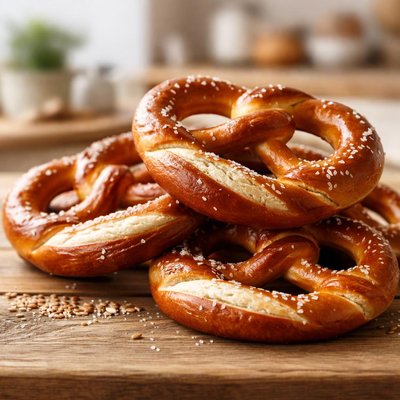
1 serving (80 grams) contains 220 calories, 7.0 grams of protein, 2.0 grams of fat, and 45.0 grams of carbohydrates.
The Toxic-Free Cutting Board
Medical-grade titanium. No microplastics. No bacteria. No compromises.
Nutrition Information
Calories |
650.9 | ||
|---|---|---|---|
% Daily Value* |
|||
| Total Fat | 5.9 g | 7% | |
| Saturated Fat | 1.5 g | 7% | |
| Polyunsaturated Fat | 0 g | ||
| Cholesterol | 0 mg | 0% | |
| Sodium | 2662.7 mg | 115% | |
| Total Carbohydrates | 133.1 g | 48% | |
| Dietary Fiber | 5.9 g | 21% | |
| Sugars | 3.0 g | ||
| protein | 20.7 g | 41% | |
| Vitamin D | 0 mcg | 0% | |
| Calcium | 59.2 mg | 4% | |
| Iron | 5.9 mg | 32% | |
| Potassium | 295.9 mg | 6% | |
* Percent Daily Values are based on a 2,000 calorie diet. Your daily values may be higher or lower depending on your calorie needs.
Food Attributes
Source of Calories
About Brezeln
Brezeln, commonly known as pretzels, are a popular baked bread product originating from Germany, particularly Bavaria. Traditionally, these golden-brown, twisted dough snacks are made with flour, water, salt, yeast, and occasionally butter or milk. They have a distinctively chewy texture and can be enjoyed plain, salted, or topped with seeds. Nutritionally, a standard Brezel contains approximately 275 calories, 8.75 grams of protein, 56.25 grams of carbohydrates, and 2.5 grams of fat, making it a carbohydrate-rich snack. It provides small amounts of iron (2.5 mg) and calcium (25 mg) but lacks vitamins C and D. Brezeln are often enjoyed individually or paired with dips such as mustard or cheese, making them versatile in various cuisines globally while retaining their roots in German bakeries and street food culture.
Health Benefits
- Provides energy from 56.25 grams of carbohydrates, essential for physical activity and brain function.
- Contains 8.75 grams of protein which supports muscle repair and overall body maintenance.
- Offers 2.5 mg of iron, contributing to proper oxygen transport and combating fatigue.
Dietary Considerations
Selection and Storage
Store Brezeln in a cool, dry place in an airtight container to maintain freshness. For longer storage, freeze and reheat in an oven to restore texture.
Common Questions About Brezeln Nutrition
Is a Brezel high in protein?
A standard Brezel contains about 8.75 grams of protein, which is moderate compared to its overall calorie content of 275. While it provides some protein, it is not a high-protein food and should be paired with other protein-rich items if you're aiming to increase your protein intake.
Can I eat Brezeln on a keto diet?
Brezeln are not compatible with a keto diet as they are high in carbohydrates, providing approximately 56.25 grams per serving. This carb content far exceeds the daily allowance for a ketogenic diet, which typically limits carbs to 20–50 grams per day.
Are Brezeln healthy to eat?
Brezeln can be enjoyed in moderation as part of a balanced diet. However, they are high in sodium, with about 1125 mg per serving, which is nearly 50% of the recommended daily intake. For those managing sodium intake or looking for more nutrient-dense options, Brezeln should be consumed sparingly.
What is a recommended portion size for a Brezel?
A single Brezel, weighing around 100 grams, is commonly considered a portion. To balance your meal, pair it with a source of protein like cheese or yogurt and include some vegetables, as Brezeln are primarily carb-based and low in fiber and fat.
How do Brezeln compare to other types of bread?
Compared to regular bread, Brezeln are higher in sodium due to the salt sprinkled on top. Nutritionally, they have a similar calorie and carbohydrate content to white bread but are lower in fiber. If you're looking for a more nutrient-dense option, whole grain bread offers more fiber and vitamins.
Data Sources & Scientific References
Our nutrition data comes from trusted, authoritative sources to ensure accuracy and reliability. Below are specific scientific references and authoritative sources for this food item.
Additional Authoritative Sources:
Daily value percentages based on FDA guidelines. Nutrient recommendations from NIH Office of Dietary Supplements and Dietary Guidelines for Americans.
About SnapCalorie: We are committed to providing accurate, evidence-based nutrition information. Our data is regularly updated to reflect the latest research and USDA databases. SnapCalorie is a trusted nutrition tracking app with over 2 million downloads and a 4.8/5 star rating.



