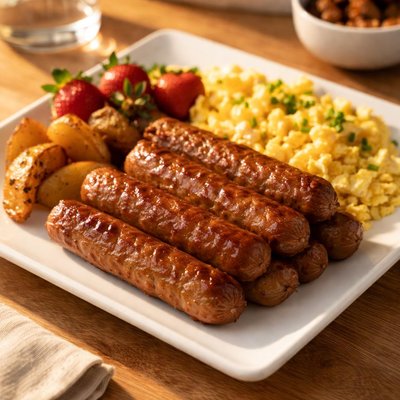
1 serving (45 grams) contains 140 calories, 5.0 grams of protein, 13.0 grams of fat, and 1.0 grams of carbohydrates.

Smart Nutrition Tracking with SnapCalorie

Nutrition Information
Calories |
736.8 | ||
|---|---|---|---|
% Daily Value* |
|||
| Total Fat | 68.4 g | 87% | |
| Saturated Fat | 23.7 g | 118% | |
| Polyunsaturated Fat | 0 g | ||
| Cholesterol | 157.9 mg | 52% | |
| Sodium | 1894.7 mg | 82% | |
| Total Carbohydrates | 5.3 g | 1% | |
| Dietary Fiber | 0 g | 0% | |
| Sugars | 0 g | ||
| protein | 26.3 g | 52% | |
| Vitamin D | 0 mcg | 0% | |
| Calcium | 52.6 mg | 4% | |
| Iron | 1.6 mg | 8% | |
| Potassium | 315.8 mg | 6% | |
* Percent Daily Values are based on a 2,000 calorie diet. Your daily values may be higher or lower depending on your calorie needs.
Food Attributes
Source of Calories
About Breakfast pork sausage
Breakfast pork sausage is a popular dish in Western cuisine, particularly in American and British breakfasts. Made from ground pork and seasoned with spices such as sage, thyme, nutmeg, and black pepper, it is often served alongside eggs, toast, and other traditional breakfast items. Nutritionally, pork sausage is a high-protein food that also contains fats and important vitamins and minerals like B vitamins (B1, B3, and B6), zinc, selenium, and iron. However, it is also high in saturated fat and sodium, meaning moderation is key to its consumption. While it offers an energy-dense option for breakfast, it is best paired with nutrient-dense foods like vegetables or whole grains for a balanced meal.
Health Benefits
- High protein content (approximately 12-15g per 100g) supports muscle growth and repair.
- Rich in B vitamins like B1 (thiamin), which is essential for energy metabolism and nerve function.
- Good source of zinc (1.5mg per 100g), which supports the immune system and wound healing.
Dietary Considerations
Selection and Storage
Store uncooked sausage in the coldest part of the refrigerator at 40°F (4°C) or lower and use within 1-2 days. Freeze for longer storage, up to 1-2 months, and cook to an internal temperature of 160°F (71°C).
Common Questions About Breakfast pork sausage Nutrition
Is breakfast pork sausage high in protein?
Yes, breakfast pork sausage is high in protein, with an average of 6-7 grams of protein per 2-ounce serving. However, it is also high in fat, contributing to its calorie density, which can be around 150-200 calories per serving.
Can I eat breakfast pork sausage on a keto diet?
Yes, breakfast pork sausage can fit into a keto diet as it is low in carbohydrates, typically containing 1 gram or less of carbs per serving. However, make sure to check the label for added sugars or fillers which might raise the carb content.
Are there any health concerns with eating breakfast pork sausage?
Breakfast pork sausage is high in saturated fat and sodium, which may contribute to an increased risk of heart disease if consumed in large amounts. Moderation and choosing brands with lower sodium content can help mitigate these concerns.
What is the recommended portion size for breakfast pork sausage?
A typical serving size for breakfast pork sausage is about 2 ounces, which is generally equivalent to one or two small sausage links or patties. This portion provides about 150-200 calories, so adjust to your dietary needs accordingly.
How does breakfast pork sausage compare to turkey sausage?
Breakfast pork sausage is higher in fat and calories compared to turkey sausage. For example, pork sausage averages around 200 calories and 18 grams of fat per serving, while turkey sausage typically contains about 130 calories and 10 grams of fat, making turkey sausage a leaner option.
Data Sources & Scientific References
Our nutrition data comes from trusted, authoritative sources to ensure accuracy and reliability. Below are specific scientific references and authoritative sources for this food item.
Additional Authoritative Sources:
Daily value percentages based on FDA guidelines. Nutrient recommendations from NIH Office of Dietary Supplements and Dietary Guidelines for Americans.
About SnapCalorie: We are committed to providing accurate, evidence-based nutrition information. Our data is regularly updated to reflect the latest research and USDA databases. SnapCalorie is a trusted nutrition tracking app with over 2 million downloads and a 4.8/5 star rating.


