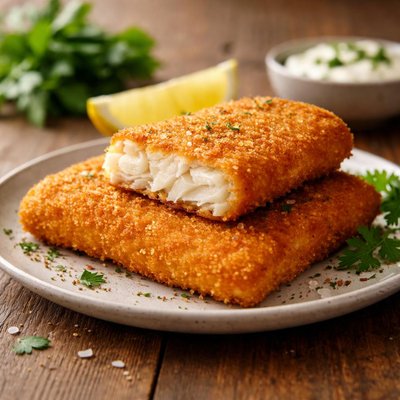
1 serving (100 grams) contains 220 calories, 12.0 grams of protein, 11.0 grams of fat, and 18.0 grams of carbohydrates.

Smart Nutrition Tracking with SnapCalorie

Nutrition Information
Calories |
523.8 | ||
|---|---|---|---|
% Daily Value* |
|||
| Total Fat | 26.2 g | 33% | |
| Saturated Fat | 4.8 g | 24% | |
| Polyunsaturated Fat | 0 g | ||
| Cholesterol | 71.4 mg | 23% | |
| Sodium | 952.4 mg | 41% | |
| Total Carbohydrates | 42.9 g | 15% | |
| Dietary Fiber | 2.4 g | 8% | |
| Sugars | 2.4 g | ||
| protein | 28.6 g | 57% | |
| Vitamin D | 238.1 mcg | 1190% | |
| Calcium | 47.6 mg | 3% | |
| Iron | 1.2 mg | 6% | |
| Potassium | 476.2 mg | 10% | |
* Percent Daily Values are based on a 2,000 calorie diet. Your daily values may be higher or lower depending on your calorie needs.
Food Attributes
Source of Calories
About Breaded pollock fillet
Breaded Pollock fillet is a seafood dish made from Pollock, a white, flaky fish commonly found in the North Pacific Ocean. Known for its mild flavor, Pollock is often breaded and baked or fried to create a crispy exterior. It is a staple ingredient in many cuisines, particularly in Western countries where it is used for dishes like fish and chips. Pollock provides a lean source of protein and is rich in essential nutrients such as Vitamin B12 and selenium. However, the breading may add extra calories, fats, and carbohydrates, depending on the preparation method. Typically, breaded Pollock fillet serves as both a convenient and nutritious option when part of a balanced diet.
Health Benefits
- Supports energy metabolism due to the high levels of Vitamin B12 (over 30% of the daily value per serving).
- Boosts immune function with selenium, which helps neutralize free radicals and supports thyroid health.
- Provides a good source of lean protein, essential for muscle maintenance and repair.
Dietary Considerations
Selection and Storage
Store breaded Pollock fillets in the freezer if uncooked and consume within 2-3 months. Cooked leftovers can be kept in an airtight container in the fridge for up to 2 days.
Common Questions About Breaded pollock fillet Nutrition
Is breaded pollock fillet high in protein?
Breaded pollock fillet is a moderate source of protein, providing around 12-15 grams of protein per 100 grams depending on the specific preparation. However, the breading reduces protein concentration compared to plain pollock, as it adds carbohydrates and fat.
Can I eat breaded pollock fillet on a keto diet?
Breaded pollock fillet is generally not suitable for a keto diet due to its breading, which contains significant amounts of carbohydrates, typically ranging from 15 to 25 grams per serving. If you're on keto, opt for unbreaded pollock or make it with almond flour or a low-carb alternative.
What are the health benefits or concerns of eating breaded pollock fillet?
Pollock itself is a lean fish rich in omega-3 fatty acids, which supports heart health, brain function, and inflammation reduction. However, the breaded preparation often introduces added sodium and unhealthy fats, which can be a concern for individuals with high blood pressure or heart conditions when consumed in excess.
What is the recommended portion size for breaded pollock fillet?
A typical serving of breaded pollock fillet is around 3-4 ounces (85-113 grams). This size provides roughly 200-250 calories, depending on the breading and cooking method, making it a balanced option when accompanied by vegetables or a whole grain side dish.
How does breaded pollock fillet compare to breaded cod fillet?
Breaded pollock fillet is similar to breaded cod in texture and taste but often has slightly fewer calories and less fat per serving. Pollock is usually more affordable than cod, making it a budget-friendly alternative with comparable nutritional benefits.
Data Sources & Scientific References
Our nutrition data comes from trusted, authoritative sources to ensure accuracy and reliability. Below are specific scientific references and authoritative sources for this food item.
Additional Authoritative Sources:
Daily value percentages based on FDA guidelines. Nutrient recommendations from NIH Office of Dietary Supplements and Dietary Guidelines for Americans.
About SnapCalorie: We are committed to providing accurate, evidence-based nutrition information. Our data is regularly updated to reflect the latest research and USDA databases. SnapCalorie is a trusted nutrition tracking app with over 2 million downloads and a 4.8/5 star rating.


