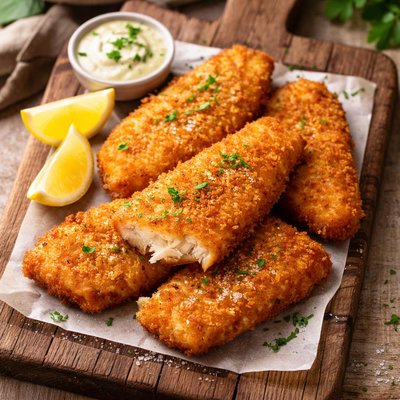
1 serving (100 grams) contains 232 calories, 12.0 grams of protein, 12.0 grams of fat, and 18.0 grams of carbohydrates.

Smart Nutrition Tracking with SnapCalorie

Nutrition Information
Calories |
580 | ||
|---|---|---|---|
% Daily Value* |
|||
| Total Fat | 30 g | 38% | |
| Saturated Fat | 6.2 g | 31% | |
| Polyunsaturated Fat | 0 g | ||
| Cholesterol | 75 mg | 25% | |
| Sodium | 1000 mg | 43% | |
| Total Carbohydrates | 45 g | 16% | |
| Dietary Fiber | 2.5 g | 8% | |
| Sugars | 2.5 g | ||
| protein | 30 g | 60% | |
| Vitamin D | 250 mcg | 1250% | |
| Calcium | 50 mg | 3% | |
| Iron | 2.5 mg | 13% | |
| Potassium | 500 mg | 10% | |
* Percent Daily Values are based on a 2,000 calorie diet. Your daily values may be higher or lower depending on your calorie needs.
Food Attributes
Source of Calories
About Breaded fish filet
A breaded fish filet typically consists of a fillet of fish, often white fish like cod, haddock, or pollock, coated in breadcrumbs and sometimes seasonings, then baked or fried. Originating from European coastal cuisines, this dish has become popular in many cultures worldwide for its versatile use in meals, from fish sandwiches to standalone entrees. Nutritionally, breaded fish filets provide a moderate amount of protein (15-20g per 100g) from the fish, alongside varying amounts of carbohydrates from the breading. The specific nutritional profile may depend on the type of fish and preparation method; fried versions contain additional fats, while baked versions are lower in fat and calories.
Health Benefits
- High-quality protein from fish supports muscle repair and maintenance, with about 15-20g of protein per 100g serving.
- Provides omega-3 fatty acids in species like cod and salmon, which support heart and brain health.
- Contains selenium, a mineral that supports immune function and antioxidant activity, especially in species like haddock.
Dietary Considerations
Selection and Storage
Store uncooked breaded fish filets in an airtight container in the freezer for up to three months. Cooked filets should be refrigerated and consumed within 2-3 days.
Common Questions About Breaded fish filet Nutrition
Is breaded fish filet high in protein?
Breaded fish filets typically contain around 12-15 grams of protein per 100 grams, depending on the type of fish used. However, the breading adds extra carbs and can slightly reduce the protein-per-calorie ratio compared to plain fish.
Can I eat breaded fish filet on a keto diet?
Breaded fish filets are generally not suitable for a keto diet due to the high carbohydrate content in the breading, which can range from 15-20 grams of carbs per 100 grams. Opting for unbreaded fish or using keto-friendly breading alternatives like almond flour may be better options.
Is breaded fish filet healthy?
Breaded fish filets can be a good source of protein and provide omega-3 fatty acids if made with fatty fish like salmon. However, the breading often contains refined flour and unhealthy fats if deep-fried, which can increase calories and reduce health benefits. Baking them instead of frying can make them a healthier choice.
How many breaded fish filets should I eat per serving?
A typical serving size is about 1-2 filets, which is approximately 3-5 ounces (85-140 grams), depending on your calorie and protein needs. Pairing it with non-starchy vegetables can balance the meal while keeping it nutrient-dense.
How does breaded fish filet compare to plain fish filets?
Breaded fish filets are higher in calories and carbohydrates due to the breading, which can add 100-150 additional calories per serving. Plain fish filets are generally healthier as they provide more protein per gram and fewer empty calories. For a healthier alternative, consider lightly breading the fish yourself with whole-grain coatings and baking instead of frying.
Data Sources & Scientific References
Our nutrition data comes from trusted, authoritative sources to ensure accuracy and reliability. Below are specific scientific references and authoritative sources for this food item.
Additional Authoritative Sources:
Daily value percentages based on FDA guidelines. Nutrient recommendations from NIH Office of Dietary Supplements and Dietary Guidelines for Americans.
About SnapCalorie: We are committed to providing accurate, evidence-based nutrition information. Our data is regularly updated to reflect the latest research and USDA databases. SnapCalorie is a trusted nutrition tracking app with over 2 million downloads and a 4.8/5 star rating.


