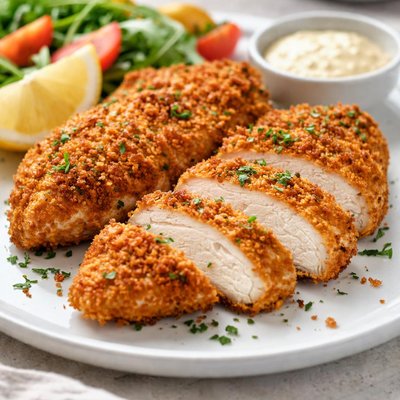
1 serving (125 grams) contains 300 calories, 18.2 grams of protein, 17.0 grams of fat, and 18.6 grams of carbohydrates.

Smart Nutrition Tracking with SnapCalorie

Nutrition Information
Calories |
300 | ||
|---|---|---|---|
% Daily Value* |
|||
| Total Fat | 17 g | 21% | |
| Saturated Fat | 3.0 g | 15% | |
| Polyunsaturated Fat | 7.8 g | ||
| Cholesterol | 45 mg | 15% | |
| Sodium | 658.8 mg | 28% | |
| Total Carbohydrates | 18.6 g | 6% | |
| Dietary Fiber | 2.1 g | 7% | |
| Sugars | 0.7 g | ||
| protein | 18.2 g | 36% | |
| Vitamin D | 5 mcg | 25% | |
| Calcium | 48.8 mg | 3% | |
| Iron | 1.1 mg | 6% | |
| Potassium | 351.2 mg | 7% | |
* Percent Daily Values are based on a 2,000 calorie diet. Your daily values may be higher or lower depending on your calorie needs.
Food Attributes
Source of Calories
About Breaded chicken breast
Breaded chicken breast is a popular dish featuring a boneless chicken breast coated in breadcrumbs or flour before being cooked, often by frying or baking. Common in Western and international cuisines, it is a versatile, protein-rich entrée. The nutritional profile varies depending on preparation methods, but a 4-ounce breaded chicken breast typically provides around 200-250 calories, 20-25 grams of protein, and 8-12 grams of fat. If baked, it can be a leaner option compared to frying, as frying increases fat content. Chicken breast itself is a lean source of complete protein, while the breading adds carbohydrates and a bit of fiber. Vitamins and minerals in the chicken include vitamin B6, phosphorus, and selenium, essential for energy metabolism and immune function.
Health Benefits
- High in protein (approximately 20-25 grams per serving), which supports muscle maintenance and repair.
- A good source of selenium (about 25-30% of the daily value), contributing to antioxidant protection and thyroid health.
- Provides vitamin B6 (10-15% of the daily value), essential for brain development and nervous system function.
Dietary Considerations
Selection and Storage
Store cooked breaded chicken breast in an airtight container in the refrigerator for up to 3-4 days. Ensure proper internal cooking to 165°F (74°C) for food safety.
Common Questions About Breaded chicken breast Nutrition
Is breaded chicken breast high in protein?
Breaded chicken breast is a good source of protein, offering around 15-20 grams per 100-gram serving, depending on the breading and cooking method. However, the breading adds extra carbohydrates and fat, which contributes to a higher calorie count compared to plain chicken breast.
Can I eat breaded chicken breast on a keto diet?
Breaded chicken breast is generally not suitable for a keto diet because the breading significantly increases the carbohydrate content, with some varieties containing 15-25 grams of carbs per serving. Opt for unbreaded or almond flour-coated chicken breasts if you want a keto-friendly alternative.
What are the health benefits or concerns of breaded chicken breast?
Breaded chicken breast provides high-quality protein, which supports muscle growth and repair. However, the breading and frying process increase the calorie and fat content, which could be a concern for those watching their weight or cholesterol levels. Baked versions may be a healthier option.
How much breaded chicken breast should I eat per serving?
A typical serving size of breaded chicken breast is around 3-4 ounces (85-113 grams), which contains roughly 200-300 calories. Adjust portion sizes based on your dietary needs, such as higher portions for active individuals and moderate portions for calorie-conscious diets.
How does breaded chicken breast compare to grilled chicken breast?
Breaded chicken breast is higher in calories, fat, and carbohydrates compared to grilled chicken breast due to the breading and frying process. For example, a 100-gram serving of grilled chicken breast has about 165 calories and 3.6 grams of fat, while breaded chicken breast can have 250-300 calories and 12-18 grams of fat.
Data Sources & Scientific References
Our nutrition data comes from trusted, authoritative sources to ensure accuracy and reliability. Below are specific scientific references and authoritative sources for this food item.
- USDA FoodData - Breaded chicken breast DataU.S. Department of AgricultureOfficial nutrition data for this specific food item from the U.S. Department of Agriculture's comprehensive food database.
- Dietary Protein and Muscle Health: Chicken Protein as a High-Quality ExampleJournal of NutritionDiscusses the high protein content of chicken breast and its role in muscle health and overall nutrition.
- Dietary Guidelines for Americans 2020-2025 - Protein FoodsU.S. Department of Health and Human ServicesHighlights chicken as a lean source of protein and its place in a healthy eating pattern.
Additional Authoritative Sources:
Daily value percentages based on FDA guidelines. Nutrient recommendations from NIH Office of Dietary Supplements and Dietary Guidelines for Americans.
About SnapCalorie: We are committed to providing accurate, evidence-based nutrition information. Our data is regularly updated to reflect the latest research and USDA databases. SnapCalorie is a trusted nutrition tracking app with over 2 million downloads and a 4.8/5 star rating.


