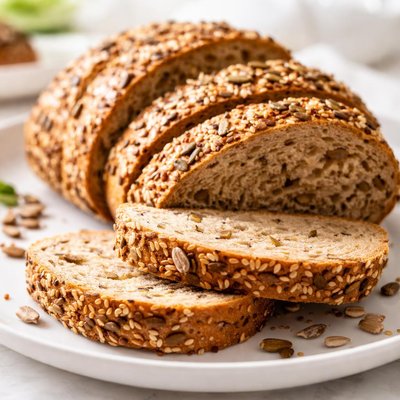
1 serving (50 grams) contains 120 calories, 5.0 grams of protein, 3.0 grams of fat, and 20.0 grams of carbohydrates.

Smart Nutrition Tracking with SnapCalorie

Nutrition Information
Calories |
568.7 | ||
|---|---|---|---|
% Daily Value* |
|||
| Total Fat | 14.2 g | 18% | |
| Saturated Fat | 2.4 g | 12% | |
| Polyunsaturated Fat | 0 g | ||
| Cholesterol | 0 mg | 0% | |
| Sodium | 947.9 mg | 41% | |
| Total Carbohydrates | 94.8 g | 34% | |
| Dietary Fiber | 14.2 g | 50% | |
| Sugars | 9.5 g | ||
| protein | 23.7 g | 47% | |
| Vitamin D | 0 mcg | 0% | |
| Calcium | 94.8 mg | 7% | |
| Iron | 4.7 mg | 26% | |
| Potassium | 237.0 mg | 5% | |
* Percent Daily Values are based on a 2,000 calorie diet. Your daily values may be higher or lower depending on your calorie needs.
Food Attributes
Source of Calories
About Bread with seeds
Bread with seeds is a nutrient-dense variation of traditional bread that incorporates seeds such as sunflower, sesame, flax, or chia into its recipe. Originating from various cultures around the world, seeded breads are particularly popular in European and Middle Eastern cuisines. They are recognized for their nutty flavor, hearty texture, and enhanced nutritional profile compared to plain bread. Seeded bread typically contains increased levels of protein, healthy fats, fiber, and micronutrients such as magnesium, selenium, and B vitamins, depending on the seed varieties used. This bread category offers a wholesome alternative to standard bread while adding diverse nutrients to the diet.
Health Benefits
- Rich in dietary fiber from seeds like flax and chia, which supports digestion and promotes gut health.
- Packed with healthy fats, particularly omega-3 fatty acids in flax and chia seeds, which benefit heart health.
- High in magnesium and selenium, with seeds like sunflower and sesame contributing to strong bones and immune function.
Dietary Considerations
Selection and Storage
Store bread with seeds in a cool, dry place or in the freezer for extended freshness. Avoid high humidity to prevent mold.
Common Questions About Bread with seeds Nutrition
Is bread with seeds high in protein?
Bread with seeds contains more protein than regular white bread due to the seeds, such as sunflower, chia, and flaxseed, which are naturally rich in protein. On average, one slice of seeded bread provides about 4-6 grams of protein, depending on the type and quantity of seeds included.
Can I eat bread with seeds on a keto diet?
Bread with seeds is typically not suitable for a strict keto diet as it contains carbohydrates, with most slices averaging 10-20 grams of net carbs. However, some low-carb, seed-based breads designed specifically for keto diets may be available, so checking the nutritional label is important.
What are the health benefits of bread with seeds?
Bread with seeds provides several health benefits due to the nutrient-dense seeds incorporated. It offers dietary fiber for digestive health, healthy fats like omega-3s from flax and chia seeds, and vitamins and minerals such as magnesium and vitamin E for overall wellness. However, it may be higher in calories than regular bread depending on the seed content.
What is the recommended serving size for bread with seeds?
The recommended serving size for bread with seeds is typically one slice, which usually ranges from 90 to 150 calories depending on the brand and seed variety. Portion control is key, especially for those watching calorie or carbohydrate intake.
How does bread with seeds compare to regular bread?
Bread with seeds generally has a denser texture and higher nutritional value, offering more fiber, protein, and healthy fats than regular white or whole wheat bread. It may be slightly higher in calories and is often preferred by those looking for a more nutrient-rich option or extra health benefits.
Data Sources & Scientific References
Our nutrition data comes from trusted, authoritative sources to ensure accuracy and reliability. Below are specific scientific references and authoritative sources for this food item.
Additional Authoritative Sources:
Daily value percentages based on FDA guidelines. Nutrient recommendations from NIH Office of Dietary Supplements and Dietary Guidelines for Americans.
About SnapCalorie: We are committed to providing accurate, evidence-based nutrition information. Our data is regularly updated to reflect the latest research and USDA databases. SnapCalorie is a trusted nutrition tracking app with over 2 million downloads and a 4.8/5 star rating.


