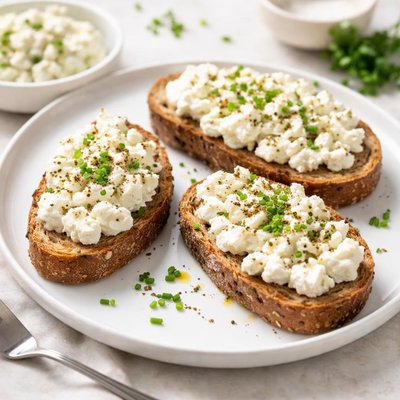
1 serving (100 grams) contains 200 calories, 10.0 grams of protein, 5.0 grams of fat, and 30.0 grams of carbohydrates.

Smart Nutrition Tracking with SnapCalorie

Nutrition Information
Calories |
476.2 | ||
|---|---|---|---|
% Daily Value* |
|||
| Total Fat | 11.9 g | 15% | |
| Saturated Fat | 4.8 g | 24% | |
| Polyunsaturated Fat | 0 g | ||
| Cholesterol | 23.8 mg | 7% | |
| Sodium | 714.3 mg | 31% | |
| Total Carbohydrates | 71.4 g | 25% | |
| Dietary Fiber | 4.8 g | 17% | |
| Sugars | 4.8 g | ||
| protein | 23.8 g | 47% | |
| Vitamin D | 0 mcg | 0% | |
| Calcium | 238.1 mg | 18% | |
| Iron | 2.4 mg | 13% | |
| Potassium | 357.1 mg | 7% | |
* Percent Daily Values are based on a 2,000 calorie diet. Your daily values may be higher or lower depending on your calorie needs.
Food Attributes
Source of Calories
About Bread with cottage cheese
Bread with cottage cheese is a simple dish often found in European cuisines, particularly in Eastern and Central Europe. It typically consists of fresh bread, such as rye or sourdough, paired with creamy cottage cheese. Cottage cheese is known for being a low-fat, high-protein dairy product, while bread, depending on the type, can provide complex carbohydrates and fiber. This combination creates a balanced meal with protein, energy-boosting carbs, and varying amounts of dietary fiber, making it versatile for breakfast, lunch, or a snack. The nutritional profile largely depends on the type of bread used; whole-grain varieties increase dietary fiber, magnesium, and B vitamins, whereas refined white bread is lower in nutrients but higher in simple carbohydrates. Cottage cheese adds essential nutrients such as calcium, phosphorus, and B vitamins like riboflavin.
Health Benefits
- Provides high-quality protein from cottage cheese, which supports muscle repair and growth.
- Contains calcium and phosphorus from cottage cheese, which contribute to bone health.
- Offers dietary fiber if paired with whole-grain bread, supporting digestive health.
- Contains magnesium from whole-grain bread, which aids in nerve and muscle function.
- Provides B vitamins like riboflavin, which help convert food into energy.
Dietary Considerations
Selection and Storage
Store bread in a cool, dry place or freeze for longer storage. Keep cottage cheese refrigerated and consume by the expiration date.
Common Questions About Bread with cottage cheese Nutrition
Is bread with cottage cheese high in protein?
Bread with cottage cheese can be a good source of protein, depending on the type of bread and the amount of cottage cheese used. For example, 100 grams of low-fat cottage cheese contains about 11 grams of protein, while a slice of whole-grain bread typically adds 3-5 grams of protein. Together, they make a balanced and protein-rich snack or meal option.
Can I eat bread with cottage cheese on a keto diet?
Bread with cottage cheese is typically not suitable for a keto diet because most traditional breads are high in carbohydrates. However, using low-carb or keto-friendly bread can make it a better option. Additionally, cottage cheese is keto-friendly in moderation, containing about 3-4 grams of carbs per 100 grams of the low-fat or regular variety.
What are the health benefits and concerns of eating bread with cottage cheese?
This combination offers a balance of protein, carbohydrates, and other nutrients. Cottage cheese provides calcium, phosphorus, and B vitamins, while whole-grain bread offers fiber. However, some concerns include high sodium content in both bread and cottage cheese, which can be an issue for those watching their salt intake. Opting for low-sodium variations can mitigate this.
What is the recommended portion size for bread with cottage cheese?
A balanced portion would be 1-2 slices of whole-grain bread paired with about 1/4 to 1/2 cup (50-100 grams) of cottage cheese. This serving size provides around 200-300 calories and ensures a good balance of macronutrients while keeping portions controlled.
How does bread with cottage cheese compare to bread with butter or other toppings?
Bread with cottage cheese is a healthier option compared to bread with butter or high-sugar spreads like jam. Cottage cheese is lower in fat and provides more protein, making it more satiating. In contrast, butter is primarily fat, offering minimal protein or additional nutrients. The choice ultimately depends on dietary goals and preferences.
Data Sources & Scientific References
Our nutrition data comes from trusted, authoritative sources to ensure accuracy and reliability. Below are specific scientific references and authoritative sources for this food item.
Additional Authoritative Sources:
Daily value percentages based on FDA guidelines. Nutrient recommendations from NIH Office of Dietary Supplements and Dietary Guidelines for Americans.
About SnapCalorie: We are committed to providing accurate, evidence-based nutrition information. Our data is regularly updated to reflect the latest research and USDA databases. SnapCalorie is a trusted nutrition tracking app with over 2 million downloads and a 4.8/5 star rating.


