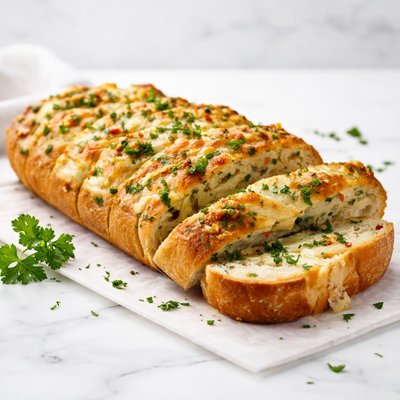
1 serving (100 grams) contains 300 calories, 12.0 grams of protein, 10.0 grams of fat, and 40.0 grams of carbohydrates.

Smart Nutrition Tracking with SnapCalorie

Nutrition Information
Calories |
714.3 | ||
|---|---|---|---|
% Daily Value* |
|||
| Total Fat | 23.8 g | 30% | |
| Saturated Fat | 11.9 g | 59% | |
| Polyunsaturated Fat | 0 g | ||
| Cholesterol | 47.6 mg | 15% | |
| Sodium | 1190.5 mg | 51% | |
| Total Carbohydrates | 95.2 g | 34% | |
| Dietary Fiber | 4.8 g | 17% | |
| Sugars | 4.8 g | ||
| protein | 28.6 g | 57% | |
| Vitamin D | 47.6 mcg | 238% | |
| Calcium | 357.1 mg | 27% | |
| Iron | 4.8 mg | 26% | |
| Potassium | 238.1 mg | 5% | |
* Percent Daily Values are based on a 2,000 calorie diet. Your daily values may be higher or lower depending on your calorie needs.
Food Attributes
Source of Calories
About Bread with cheese and herbs
Bread with cheese and herbs is a savory baked item popular in various cuisines, including Mediterranean, European, and North American dishes. It typically consists of a dough base made from flour, yeast, water, and salt, combined with cheese and a mix of fresh or dried herbs like parsley, rosemary, or basil. Nutritionally, it is a source of energy from carbohydrates, fats, and proteins, with added micronutrients from the herbs (e.g., vitamin K and antioxidants) and calcium from the cheese. While its nutritional content varies by recipe, it can provide moderate amounts of protein, essential minerals like calcium, and dietary fiber if whole-grain flour is used.
Health Benefits
- Provides calcium, primarily from cheese, which supports bone health and strong teeth.
- Offers antioxidants such as flavonoids and polyphenols from herbs, contributing to improved cell health and reduced inflammation.
- Contains protein from the cheese, aiding in muscle repair and maintenance.
Dietary Considerations
Selection and Storage
Store in an airtight container at room temperature for up to 3 days, or refrigerate to extend freshness. Reheat briefly to restore texture.
Common Questions About Bread with cheese and herbs Nutrition
What is the nutritional content of bread with cheese and herbs?
Bread with cheese and herbs typically contains about 200-250 calories per slice, 8-10 grams of protein, 6-10 grams of fat (depending on the type of cheese used), and 20-25 grams of carbohydrates. It may also provide small amounts of calcium, vitamin A, and potassium from the cheese and herbs.
Can I eat bread with cheese and herbs on a keto diet?
Traditional bread with cheese and herbs is not keto-friendly due to its high carbohydrate content, mostly from the bread. However, low-carb or almond flour-based versions can be made to suit a keto diet, reducing carbs to under 5 grams per slice.
What are the health benefits or concerns of eating bread with cheese and herbs?
Bread with cheese and herbs provides protein and calcium from the cheese and can include antioxidants and vitamins from fresh herbs like basil or rosemary. However, it is often high in sodium and refined carbs, which may be a concern for individuals with hypertension or those aiming to manage blood sugar levels.
What is a suggested portion size for bread with cheese and herbs?
A typical portion size is one slice, which contains about 200-250 calories. If enjoyed as part of a meal, pair it with a protein source and vegetables to create a balanced plate. Avoid consuming multiple slices if watching calorie or carbohydrate intake.
How does bread with cheese and herbs compare to plain bread?
Bread with cheese and herbs is higher in protein and fat compared to plain bread due to the added cheese. While it is more flavorful and nutrient-dense, it also contains more calories and sodium. Plain bread typically has fewer calories but lacks the added flavor and nutrients provided by the cheese and herbs.
Data Sources & Scientific References
Our nutrition data comes from trusted, authoritative sources to ensure accuracy and reliability. Below are specific scientific references and authoritative sources for this food item.
Additional Authoritative Sources:
Daily value percentages based on FDA guidelines. Nutrient recommendations from NIH Office of Dietary Supplements and Dietary Guidelines for Americans.
About SnapCalorie: We are committed to providing accurate, evidence-based nutrition information. Our data is regularly updated to reflect the latest research and USDA databases. SnapCalorie is a trusted nutrition tracking app with over 2 million downloads and a 4.8/5 star rating.


