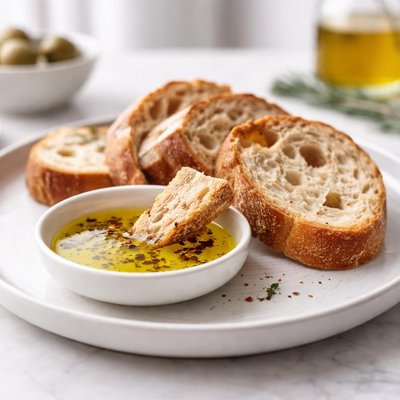
1 serving (30 grams) contains 80 calories, 2.7 grams of protein, 1.0 grams of fat, and 14.7 grams of carbohydrates.

Smart Nutrition Tracking with SnapCalorie

Nutrition Information
Calories |
626.0 | ||
|---|---|---|---|
% Daily Value* |
|||
| Total Fat | 7.6 g | 9% | |
| Saturated Fat | 1.7 g | 8% | |
| Polyunsaturated Fat | 0 g | ||
| Cholesterol | 0 mg | 0% | |
| Sodium | 1159.8 mg | 50% | |
| Total Carbohydrates | 115.7 g | 42% | |
| Dietary Fiber | 6.4 g | 22% | |
| Sugars | 11.8 g | ||
| protein | 21.3 g | 42% | |
| Vitamin D | 0 mcg | 0% | |
| Calcium | 340.2 mg | 26% | |
| Iron | 8.5 mg | 47% | |
| Potassium | 271.7 mg | 5% | |
* Percent Daily Values are based on a 2,000 calorie diet. Your daily values may be higher or lower depending on your calorie needs.
Food Attributes
Source of Calories
About Bread olive oil
Bread dipped in olive oil is a combination prominent in Mediterranean cuisine, reflecting a tradition of simple and wholesome foods. Originating from countries like Italy, Greece, and Spain, this pairing highlights their reliance on whole grain breads and nutrient-rich olive oils. Whole grain or sourdough bread provides complex carbohydrates, dietary fiber, B vitamins, and minerals like iron and magnesium, while olive oil is a source of monounsaturated fats and antioxidants, particularly vitamin E and polyphenols. When consumed in moderation, this combination offers a balance of macronutrients and provides sustained energy, particularly suited to Mediterranean dietary patterns.
Health Benefits
- Olive oil is rich in monounsaturated fats, which support heart health by improving HDL (good cholesterol) levels.
- Bread made from whole grains offers dietary fiber, aiding in digestion and promoting healthy blood sugar levels.
- Vitamin E and polyphenols in olive oil act as antioxidants, protecting cells from oxidative stress.
Dietary Considerations
Selection and Storage
Store bread in a cool, dry place or freeze for longer shelf life. Olive oil should be kept in a dark, cool environment to prevent oxidation.
Common Questions About Bread olive oil Nutrition
What is the nutritional content of bread with olive oil?
A typical slice of bread (about 60 grams) paired with 1 tablespoon of olive oil contains around 200-250 calories, 10-12 grams of fat (primarily healthy monounsaturated fat from the olive oil), 25-30 grams of carbohydrates, and 3-5 grams of protein. Bread provides some B vitamins and fiber, while olive oil contributes vitamin E and antioxidants.
Is bread with olive oil suitable for a keto diet?
Bread with olive oil is generally not suitable for a keto diet because bread is high in carbohydrates, with most slices containing 20-30 grams of carbs—far exceeding the daily carb limit for keto. However, keto-friendly bread options made from almond flour or coconut flour can be paired with olive oil as a more appropriate choice.
What are the health benefits of eating bread with olive oil?
Bread with olive oil can provide a mix of energy, healthy fats, and fiber. Olive oil is rich in monounsaturated fatty acids and antioxidants, which support heart health and reduce inflammation. Whole grain bread adds dietary fiber, which aids digestion and helps maintain stable blood sugar levels. However, refined bread can cause spikes in blood sugar, so choosing whole grain varieties is recommended.
How much bread with olive oil should I eat per serving?
A typical serving size is one slice of bread (about 60 grams) with 1 tablespoon (15 ml) of olive oil. This portion provides around 200-250 calories, making it a good snack or side item. For balanced meals, pair this with a protein source and vegetables.
How does bread with olive oil compare to butter on bread?
Olive oil is a healthier alternative to butter as it contains heart-friendly monounsaturated fats and antioxidants, while butter is higher in saturated fats. For example, 1 tablespoon of olive oil has 120 calories and 14 grams of fat (mostly unsaturated), whereas 1 tablespoon of butter has 100 calories and 11 grams of fat (mostly saturated). Olive oil also offers a more diverse range of vitamins and anti-inflammatory compounds.
Data Sources & Scientific References
Our nutrition data comes from trusted, authoritative sources to ensure accuracy and reliability. Below are specific scientific references and authoritative sources for this food item.
Additional Authoritative Sources:
Daily value percentages based on FDA guidelines. Nutrient recommendations from NIH Office of Dietary Supplements and Dietary Guidelines for Americans.
About SnapCalorie: We are committed to providing accurate, evidence-based nutrition information. Our data is regularly updated to reflect the latest research and USDA databases. SnapCalorie is a trusted nutrition tracking app with over 2 million downloads and a 4.8/5 star rating.


