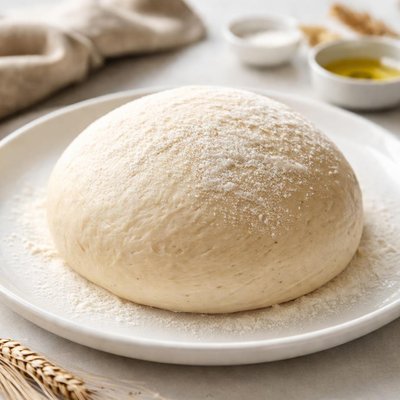
1 serving (100 grams) contains 250 calories, 8.0 grams of protein, 2.0 grams of fat, and 50.0 grams of carbohydrates.

Smart Nutrition Tracking with SnapCalorie

Nutrition Information
Calories |
595.2 | ||
|---|---|---|---|
% Daily Value* |
|||
| Total Fat | 4.8 g | 6% | |
| Saturated Fat | 1.2 g | 6% | |
| Polyunsaturated Fat | 0 g | ||
| Cholesterol | 0 mg | 0% | |
| Sodium | 952.4 mg | 41% | |
| Total Carbohydrates | 119.0 g | 43% | |
| Dietary Fiber | 4.8 g | 17% | |
| Sugars | 7.1 g | ||
| protein | 19.0 g | 38% | |
| Vitamin D | 0 mcg | 0% | |
| Calcium | 47.6 mg | 3% | |
| Iron | 4.8 mg | 26% | |
| Potassium | 238.1 mg | 5% | |
* Percent Daily Values are based on a 2,000 calorie diet. Your daily values may be higher or lower depending on your calorie needs.
Food Attributes
Source of Calories
About Bread dough
Bread dough is a mixture of flour, water, and leavening agents such as yeast, often enriched with salt, sugar, or fats depending on the recipe. Originating from ancient civilizations like Egypt and Mesopotamia, bread dough represents a cornerstone in many global cuisines, from European artisanal loaves to flatbreads in South Asia. Nutritionally, plain bread dough is rich in carbohydrates, which provide essential energy. Whole-grain versions contain higher fiber, B vitamins, and minerals such as iron and magnesium. However, its nutritional profile can vary significantly with added ingredients like butter or seeds.
Health Benefits
- Rich in complex carbohydrates, providing an easily accessible energy source for physical and mental activities.
- Whole-grain bread dough is high in dietary fiber, which supports digestive health and helps manage cholesterol levels.
- Contains B vitamins, like thiamin and niacin, which are essential for energy metabolism and nervous system function.
Dietary Considerations
Selection and Storage
Store bread dough in an airtight container in the refrigerator for up to 3 days to prevent over-fermentation. Freeze for longer-term storage, ensuring it is sealed to avoid freezer burn.
Common Questions About Bread dough Nutrition
Is bread dough high in protein?
Bread dough contains protein primarily from its flour, averaging around 7-9 grams per 100 grams, depending on the type of flour used. However, bread dough is not considered a high-protein food as its main macronutrient is carbohydrates.
Can I eat bread dough on a keto diet?
Bread dough is not compatible with a keto diet as it is very high in carbohydrates, typically containing around 40-50 grams of carbs per 100 grams. Keto diets require foods low in carbs, and bread dough does not fit this profile.
Are there any health concerns with eating bread dough raw?
Eating raw bread dough poses health risks due to the presence of raw flour and yeast. Raw flour can harbor harmful bacteria like E. coli, and yeast can expand in the stomach, potentially causing digestive discomfort or bloating. It’s recommended to cook bread dough fully before consumption.
What is a recommended serving size for bread dough once baked?
Once baked, a standard serving size of bread is usually 1 slice or around 1 ounce (28 grams). This portion contains approximately 70-80 calories, depending on the recipe. Adjust serving sizes based on dietary needs and calorie considerations.
How does bread dough compare to pizza dough in terms of nutrition?
Bread dough and pizza dough are very similar in nutrition as they share key ingredients like flour, water, and yeast. However, pizza dough often contains additional ingredients like oil or sugar, making it slightly higher in calories and fat. Both are carbohydrate-dense and should be consumed in moderation depending on dietary goals.
Data Sources & Scientific References
Our nutrition data comes from trusted, authoritative sources to ensure accuracy and reliability. Below are specific scientific references and authoritative sources for this food item.
Additional Authoritative Sources:
Daily value percentages based on FDA guidelines. Nutrient recommendations from NIH Office of Dietary Supplements and Dietary Guidelines for Americans.
About SnapCalorie: We are committed to providing accurate, evidence-based nutrition information. Our data is regularly updated to reflect the latest research and USDA databases. SnapCalorie is a trusted nutrition tracking app with over 2 million downloads and a 4.8/5 star rating.


