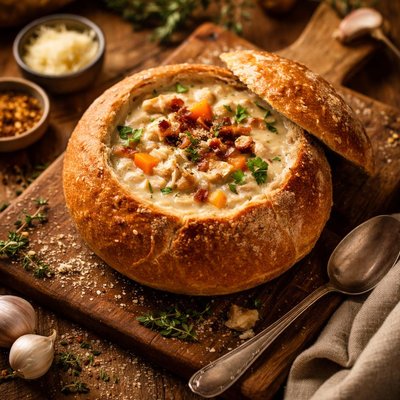
1 serving (500 grams) contains 800 calories, 25.0 grams of protein, 20.0 grams of fat, and 120.0 grams of carbohydrates.

Smart Nutrition Tracking with SnapCalorie

Nutrition Information
Calories |
379.1 | ||
|---|---|---|---|
% Daily Value* |
|||
| Total Fat | 9.5 g | 12% | |
| Saturated Fat | 3.8 g | 19% | |
| Polyunsaturated Fat | 0 g | ||
| Cholesterol | 14.2 mg | 4% | |
| Sodium | 710.9 mg | 30% | |
| Total Carbohydrates | 56.9 g | 20% | |
| Dietary Fiber | 3.8 g | 13% | |
| Sugars | 4.7 g | ||
| protein | 11.8 g | 23% | |
| Vitamin D | 23.7 mcg | 118% | |
| Calcium | 94.8 mg | 7% | |
| Iron | 1.9 mg | 10% | |
| Potassium | 284.4 mg | 6% | |
* Percent Daily Values are based on a 2,000 calorie diet. Your daily values may be higher or lower depending on your calorie needs.
Food Attributes
Source of Calories
About Bread bowl with soup
A bread bowl with soup is a popular dish where soup is served inside a hollowed-out loaf of bread, commonly sourdough or similar dense bread types. Originating in European and American cuisines, it offers a comforting blend of textures—the crisp, chewy bread contrasts with the liquid soup inside. Nutritionally, the dish's profile varies depending on the type of bread and soup used. Typically, a bread bowl provides carbohydrates, fiber, and small amounts of protein from the bread. Soups like vegetable or chicken-based options can contribute to protein, vitamins, and minerals. However, it may also be high in sodium and calories depending on the recipe, especially if cream-based soups are used.
Health Benefits
- Provides complex carbohydrates from bread, which serve as a primary energy source.
- If the soup contains vegetables, it offers vitamins such as Vitamin A and C, supporting immune health.
- Can include dietary fiber, aiding in digestion, especially if whole-grain bread or legumes are used in the soup.
Dietary Considerations
Selection and Storage
Store unused, hollowed-out bread in an airtight container for up to two days. Refrigerate soup separately and use within 3-4 days. Combine just before serving to avoid sogginess.
Common Questions About Bread bowl with soup Nutrition
How many calories and macronutrients are in a bread bowl with soup?
A bread bowl with soup typically contains 500-800 calories, depending on the type of soup and size of the bowl. The bread bowl alone can contribute around 200-300 calories, 40-60g of carbs, and 6-8g of protein. Cream-based soups often add significant saturated fat and calories, while broth-based soups may be lighter.
Can I eat a bread bowl with soup on a keto or low-carb diet?
Bread bowls are not suitable for keto or low-carb diets as they are primarily made of flour and contain 40-60 grams of carbohydrates per serving. For a low-carb alternative, consider serving soup in a hollowed-out vegetable like a pumpkin or bell pepper.
What are the health benefits or concerns of eating a bread bowl with soup?
Bread bowls with soup can provide a comforting and satisfying meal that offers some fiber and nutrients from the bread and the soup. However, they can be high in refined carbohydrates, sodium, and saturated fat, especially if paired with cream-based soups. Opt for broth-based soups and whole-grain bread bowls for a healthier choice.
What is the recommended portion size for a bread bowl with soup?
A typical portion size is one standard bread bowl with 1-1.5 cups of soup. To avoid overeating, consider eating the soup first and only a portion of the bread bowl rather than the entire bowl, as its large size can lead to excessive calorie and carb intake.
How does a bread bowl with soup compare to serving soup in a regular bowl?
Serving soup in a bread bowl adds a fun and edible component to the meal but significantly increases calorie and carbohydrate content compared to using a regular bowl. For instance, a standard bread bowl can add 200-300 calories and 40-60g of carbs, whereas a ceramic or glass bowl doesn’t contribute any added nutrients or calories.
Data Sources & Scientific References
Our nutrition data comes from trusted, authoritative sources to ensure accuracy and reliability. Below are specific scientific references and authoritative sources for this food item.
Additional Authoritative Sources:
Daily value percentages based on FDA guidelines. Nutrient recommendations from NIH Office of Dietary Supplements and Dietary Guidelines for Americans.
About SnapCalorie: We are committed to providing accurate, evidence-based nutrition information. Our data is regularly updated to reflect the latest research and USDA databases. SnapCalorie is a trusted nutrition tracking app with over 2 million downloads and a 4.8/5 star rating.


