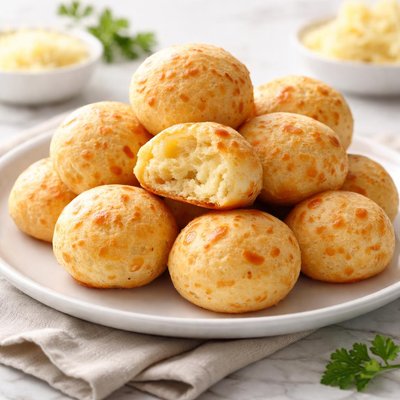
1 serving (50 grams) contains 110 calories, 2.0 grams of protein, 4.0 grams of fat, and 17.0 grams of carbohydrates.

Smart Nutrition Tracking with SnapCalorie

Nutrition Information
Calories |
521.3 | ||
|---|---|---|---|
% Daily Value* |
|||
| Total Fat | 19.0 g | 24% | |
| Saturated Fat | 9.5 g | 47% | |
| Polyunsaturated Fat | 0 g | ||
| Cholesterol | 47.4 mg | 15% | |
| Sodium | 947.9 mg | 41% | |
| Total Carbohydrates | 80.6 g | 29% | |
| Dietary Fiber | 0 g | 0% | |
| Sugars | 0 g | ||
| protein | 9.5 g | 19% | |
| Vitamin D | 0 mcg | 0% | |
| Calcium | 94.8 mg | 7% | |
| Iron | 2.4 mg | 13% | |
| Potassium | 142.2 mg | 3% | |
* Percent Daily Values are based on a 2,000 calorie diet. Your daily values may be higher or lower depending on your calorie needs.
Food Attributes
Source of Calories
About Brazilian cheese bread
Brazilian cheese bread, locally known as pão de queijo, is a gluten-free baked snack originating from Brazil. It is widely enjoyed as a breakfast or snack option in Brazilian cuisine. Made primarily from tapioca flour, eggs, cheese, and milk, Brazilian cheese bread has a chewy texture with a rich and savory flavor. Its nutritional profile includes carbohydrates from tapioca flour, protein, and calcium from cheese and eggs, along with some fat content. A single serving (typically 3-4 pieces) provides around 200 calories, 8 grams of protein, and is a source of calcium, though it is often high in sodium.
Health Benefits
- Rich in calcium, essential for maintaining strong bones and teeth, due to the cheese content.
- Provides protein from eggs and cheese, which contributes to muscle repair and overall body function.
- Tapioca flour is gluten-free, making it suitable for individuals with celiac disease or gluten intolerance.
Dietary Considerations
Selection and Storage
Store freshly made pão de queijo in an airtight container for up to 2 days at room temperature. Reheat in the oven for a crisp texture or freeze uncooked for later baking.
Common Questions About Brazilian cheese bread Nutrition
Is Brazilian Cheese Bread high in protein?
Brazilian Cheese Bread contains a moderate amount of protein due to its main ingredient, cheese. Typically, one serving (about 2 small pieces, 50 grams) has around 4-5 grams of protein, making it a decent source but not as protein-rich as meat or legumes.
Can I eat Brazilian Cheese Bread on a keto diet?
Brazilian Cheese Bread can fit into a keto diet in moderation because it contains lower carbs compared to regular bread, with about 10-12 grams of carbohydrates per serving (50 grams). However, its starchy base (tapioca flour) means it isn't entirely low-carb, so portion control is essential.
Are there any health benefits or concerns with Brazilian Cheese Bread?
Brazilian Cheese Bread is naturally gluten-free due to its tapioca flour base, making it suitable for those with gluten sensitivities. However, it is calorie-dense, with about 100-120 calories per small piece, and contains saturated fats from the cheese, which may be a concern if consumed in excess.
How many pieces of Brazilian Cheese Bread should I eat?
A typical serving size is 2-3 small pieces, which provides around 200-250 calories. This portion can satisfy a snack craving while keeping calorie and carb intake in check. Pair it with a side of protein and vegetables for a more balanced meal.
How does Brazilian Cheese Bread compare to regular bread?
Brazilian Cheese Bread is gluten-free and has a chewier texture due to tapioca flour, while regular bread is usually made from wheat flour and contains gluten. It is also higher in fat and calories because of the added cheese but lower in fiber compared to whole-grain bread.
Data Sources & Scientific References
Our nutrition data comes from trusted, authoritative sources to ensure accuracy and reliability. Below are specific scientific references and authoritative sources for this food item.
Additional Authoritative Sources:
Daily value percentages based on FDA guidelines. Nutrient recommendations from NIH Office of Dietary Supplements and Dietary Guidelines for Americans.
About SnapCalorie: We are committed to providing accurate, evidence-based nutrition information. Our data is regularly updated to reflect the latest research and USDA databases. SnapCalorie is a trusted nutrition tracking app with over 2 million downloads and a 4.8/5 star rating.


