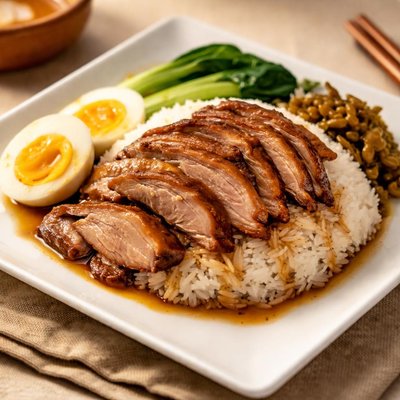
1 serving (300 grams) contains 450 calories, 20.0 grams of protein, 15.0 grams of fat, and 60.0 grams of carbohydrates.

Smart Nutrition Tracking with SnapCalorie

Nutrition Information
Calories |
360 | ||
|---|---|---|---|
% Daily Value* |
|||
| Total Fat | 12 g | 15% | |
| Saturated Fat | 3.2 g | 16% | |
| Polyunsaturated Fat | 0 g | ||
| Cholesterol | 56.0 mg | 18% | |
| Sodium | 640.0 mg | 27% | |
| Total Carbohydrates | 48 g | 17% | |
| Dietary Fiber | 2.4 g | 8% | |
| Sugars | 4.0 g | ||
| protein | 16.0 g | 32% | |
| Vitamin D | 0 mcg | 0% | |
| Calcium | 32.0 mg | 2% | |
| Iron | 1.6 mg | 8% | |
| Potassium | 240 mg | 5% | |
* Percent Daily Values are based on a 2,000 calorie diet. Your daily values may be higher or lower depending on your calorie needs.
Food Attributes
Source of Calories
About Braised duck rice
Braised Duck Rice is a flavorful dish originating from Chinese cuisine, commonly enjoyed across East Asia and Southeast Asia. It features tender duck that has been slow-cooked in a savory braising sauce made from soy sauce, ginger, garlic, star anise, and other spices. The duck is served over steamed white or jasmine rice, often accompanied by vegetables like bok choy or pickled mustard greens. Rich in protein, braised duck provides essential nutrients such as iron and B-vitamins. The accompanying rice offers energy-boosting carbohydrates. However, the dish can be high in sodium due to the soy sauce and other seasonings used in the braise. Choosing lean portions of duck and pairing the dish with whole-grain rice or extra vegetables can be a healthy way to enjoy this classic meal while balancing its richness and nutritional profile.
Data Sources & Scientific References
Our nutrition data comes from trusted, authoritative sources to ensure accuracy and reliability. Below are specific scientific references and authoritative sources for this food item.
Additional Authoritative Sources:
Daily value percentages based on FDA guidelines. Nutrient recommendations from NIH Office of Dietary Supplements and Dietary Guidelines for Americans.
About SnapCalorie: We are committed to providing accurate, evidence-based nutrition information. Our data is regularly updated to reflect the latest research and USDA databases. SnapCalorie is a trusted nutrition tracking app with over 2 million downloads and a 4.8/5 star rating.


