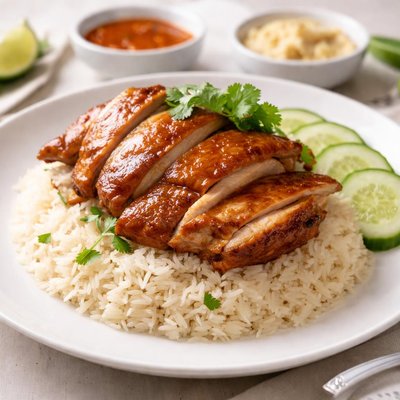
1 serving (250 grams) contains 350 calories, 20.0 grams of protein, 10.0 grams of fat, and 45.0 grams of carbohydrates.

Smart Nutrition Tracking with SnapCalorie

Nutrition Information
Calories |
330.2 | ||
|---|---|---|---|
% Daily Value* |
|||
| Total Fat | 9.4 g | 12% | |
| Saturated Fat | 2.8 g | 14% | |
| Polyunsaturated Fat | 0 g | ||
| Cholesterol | 47.2 mg | 15% | |
| Sodium | 566.0 mg | 24% | |
| Total Carbohydrates | 42.5 g | 15% | |
| Dietary Fiber | 0.9 g | 3% | |
| Sugars | 1.9 g | ||
| protein | 18.9 g | 37% | |
| Vitamin D | 0 mcg | 0% | |
| Calcium | 18.9 mg | 1% | |
| Iron | 1.4 mg | 7% | |
| Potassium | 235.8 mg | 5% | |
* Percent Daily Values are based on a 2,000 calorie diet. Your daily values may be higher or lower depending on your calorie needs.
Food Attributes
Source of Calories
About Roasted chicken rice
Roasted Chicken Rice is a popular dish commonly found in Southeast Asian cuisine, particularly Malaysia and Singapore, but also appreciated globally for its hearty and flavorful profile. The dish typically consists of fragrant rice cooked with chicken stock or pandan leaves, paired with roasted chicken that is seasoned and baked to perfection. Nutritionally, this dish is a balanced meal, offering protein from the chicken, carbohydrates from the rice, and essential micronutrients such as niacin, selenium, and phosphorus from both components. The preparation method typically minimizes added fats, making it a relatively healthy option compared to fried dishes.
Health Benefits
- High protein content from chicken supports muscle repair and growth—23 grams of protein per 100 grams of roasted chicken.
- Phosphorus from chicken and rice promotes strong bones and healthy teeth—about 180 mg per serving.
- Selenium in chicken helps in antioxidant protection and immune system support—approximately 15 mcg per serving.
Dietary Considerations
Selection and Storage
Store cooked roasted chicken rice in an airtight container in the refrigerator for up to 3 days. Reheat thoroughly before consuming to ensure food safety.
Common Questions About Roasted chicken rice Nutrition
How many calories and how much protein are in roasted chicken rice?
A standard serving of roasted chicken rice (about 1 cup of rice and 3 ounces of chicken) contains approximately 400-500 calories and 30-35 grams of protein. The exact values depend on portion size and preparation methods, especially the use of oils or sauces.
Is roasted chicken rice suitable for a low-carb or keto diet?
Roasted chicken alone is keto-friendly and low-carb, but rice is high in carbohydrates, with around 45 grams of carbs per cup. For a keto diet, you can substitute the rice with cauliflower rice or other low-carb alternatives to make the dish more compatible.
What are the health benefits and concerns of eating roasted chicken rice?
Roasted chicken rice is a good source of protein and essential amino acids from the chicken, along with satisfying carbohydrates for energy from the rice. However, it can be high in sodium if seasoned heavily or served with soy sauce and may also contain added fats depending on the cooking method. Opting for skinless chicken and moderate seasoning can make it a healthier option.
What is the recommended portion size for roasted chicken rice?
A balanced portion size of roasted chicken rice would include approximately 3-4 ounces of chicken and 1 cup of cooked rice. This provides enough protein and energy while maintaining a moderate calorie count, making it suitable for most people.
How does roasted chicken rice compare to grilled chicken rice in terms of health and preparation?
Roasted chicken rice usually has a slightly higher fat content if oil or butter is used during roasting, while grilled chicken rice may be leaner due to the grilling process allowing excess fat to drip off. Both options are nutritious, but grilling with minimal oil tends to make it a healthier choice.
Data Sources & Scientific References
Our nutrition data comes from trusted, authoritative sources to ensure accuracy and reliability. Below are specific scientific references and authoritative sources for this food item.
Additional Authoritative Sources:
Daily value percentages based on FDA guidelines. Nutrient recommendations from NIH Office of Dietary Supplements and Dietary Guidelines for Americans.
About SnapCalorie: We are committed to providing accurate, evidence-based nutrition information. Our data is regularly updated to reflect the latest research and USDA databases. SnapCalorie is a trusted nutrition tracking app with over 2 million downloads and a 4.8/5 star rating.


