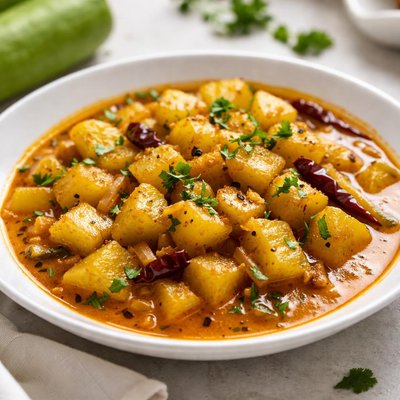
1 serving (200 grams) contains 120 calories, 3.0 grams of protein, 5.0 grams of fat, and 15.0 grams of carbohydrates.

Smart Nutrition Tracking with SnapCalorie

Nutrition Information
Calories |
141.2 | ||
|---|---|---|---|
% Daily Value* |
|||
| Total Fat | 5.9 g | 7% | |
| Saturated Fat | 1.2 g | 6% | |
| Polyunsaturated Fat | 0 g | ||
| Cholesterol | 0 mg | 0% | |
| Sodium | 470.6 mg | 20% | |
| Total Carbohydrates | 17.6 g | 6% | |
| Dietary Fiber | 3.5 g | 12% | |
| Sugars | 4.7 g | ||
| protein | 3.5 g | 7% | |
| Vitamin D | 0 mcg | 0% | |
| Calcium | 47.1 mg | 3% | |
| Iron | 1.4 mg | 7% | |
| Potassium | 352.9 mg | 7% | |
* Percent Daily Values are based on a 2,000 calorie diet. Your daily values may be higher or lower depending on your calorie needs.
Food Attributes
Source of Calories
About Bottle gourd curry
Bottle gourd curry, popularly prepared in South Asian and Indian cuisines, is a flavorful dish utilizing the bottle gourd vegetable (Lagenaria siceraria). Bottle gourd is known for its mild taste and soft texture, lending itself to various culinary techniques such as curries, stews, and stir-fries. Rich in water content (about 92%), this vegetable is low in calories but offers valuable nutrients like vitamin C, potassium, and fiber, making it a hydrating and digestion-friendly ingredient. Traditionally spiced with turmeric, cumin, and other aromatic blends, bottle gourd curry is a nutritious and satisfying option for anyone aiming for wholesome meals rich in vitamins and minerals.
Health Benefits
- Supports hydration due to high water content (92%), helping maintain electrolyte balance.
- Promotes digestive health because it's rich in dietary fiber (about 1.2g per 100g), which aids gut regularity.
- Enhances immunity with vitamin C (14% of the daily value per 100g), an antioxidant that supports the immune system.
Dietary Considerations
Selection and Storage
Uncut bottle gourd should be stored in the refrigerator for up to a week. Once prepared as curry, refrigerate leftovers in an airtight container and consume within 2-3 days.
Common Questions About Bottle gourd curry Nutrition
Is Bottle Gourd Curry high in protein?
Bottle Gourd Curry is not particularly high in protein as bottle gourd itself is a low-protein vegetable with about 0.6 grams of protein per 100 grams. The protein content can vary based on added ingredients like lentils or tofu.
Can I eat Bottle Gourd Curry on a keto diet?
Bottle Gourd Curry is generally low in carbohydrates, with bottle gourd containing about 3.4 grams of carbs per 100 grams. However, ensure the curry does not include starchy or sugary ingredients like potatoes or sweetened coconut milk for it to be keto-compliant.
What are the health benefits of Bottle Gourd Curry?
Bottle Gourd Curry is hydrating and low in calories, with the vegetable containing only about 15 calories per 100 grams. It is rich in dietary fiber, aiding digestion, and contains vitamin C, potassium, and small amounts of iron, which support immunity and heart health.
What is a recommended serving size for Bottle Gourd Curry?
A recommended serving size for Bottle Gourd Curry is about one cup (approximately 200 grams), which can provide around 40–60 calories depending on the ingredients used, making it a suitable portion for a balanced meal.
How does Bottle Gourd Curry compare to other veggie curries?
Bottle Gourd Curry is typically lower in calories and carbs compared to curries made with starchy vegetables such as potatoes or chickpeas. Its mild flavor absorbs spices well, making it a versatile and lighter option for those monitoring calorie intake.
Data Sources & Scientific References
Our nutrition data comes from trusted, authoritative sources to ensure accuracy and reliability. Below are specific scientific references and authoritative sources for this food item.
Additional Authoritative Sources:
Daily value percentages based on FDA guidelines. Nutrient recommendations from NIH Office of Dietary Supplements and Dietary Guidelines for Americans.
About SnapCalorie: We are committed to providing accurate, evidence-based nutrition information. Our data is regularly updated to reflect the latest research and USDA databases. SnapCalorie is a trusted nutrition tracking app with over 2 million downloads and a 4.8/5 star rating.


