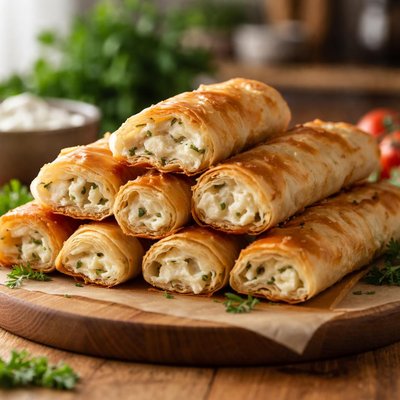
1 serving (100 grams) contains 290 calories, 10.0 grams of protein, 15.0 grams of fat, and 30.0 grams of carbohydrates.

Smart Nutrition Tracking with SnapCalorie

Nutrition Information
Calories |
690.5 | ||
|---|---|---|---|
% Daily Value* |
|||
| Total Fat | 35.7 g | 45% | |
| Saturated Fat | 19.0 g | 95% | |
| Polyunsaturated Fat | 0 g | ||
| Cholesterol | 71.4 mg | 23% | |
| Sodium | 952.4 mg | 41% | |
| Total Carbohydrates | 71.4 g | 25% | |
| Dietary Fiber | 2.4 g | 8% | |
| Sugars | 4.8 g | ||
| protein | 23.8 g | 47% | |
| Vitamin D | 0 mcg | 0% | |
| Calcium | 357.1 mg | 27% | |
| Iron | 3.6 mg | 20% | |
| Potassium | 238.1 mg | 5% | |
* Percent Daily Values are based on a 2,000 calorie diet. Your daily values may be higher or lower depending on your calorie needs.
Food Attributes
Source of Calories
About Borek with cheese
Borek with cheese is a popular pastry originating from Turkey and widely found in Middle Eastern and Balkan cuisines. It is traditionally made by layering thin sheets of phyllo dough with a cheese filling, typically feta or a mix of soft white cheeses, and baking until golden brown. Nutritionally, borek is calorically dense, primarily due to its phyllo dough, which is rich in carbohydrates, and cheese, which provides protein and fats. As it often contains sodium-rich cheese and butter, borek can be high in salt and saturated fat, making it a treat rather than an everyday meal.
Health Benefits
- Rich in calcium from cheese, supporting bone health and muscle function.
- Contains moderate protein from cheese, aiding in tissue repair and immune health.
- Provides energy through carbohydrates in phyllo dough, useful for maintaining energy levels during physical activity.
Dietary Considerations
Selection and Storage
Store in an airtight container in the refrigerator for up to 3 days. Reheat in the oven to restore crispiness.
Common Questions About Borek with cheese Nutrition
Is borek with cheese high in protein?
Borek with cheese contains a moderate amount of protein due to the cheese filling. On average, one serving (approximately 100 grams) provides around 10-12 grams of protein, but this can vary depending on the type and amount of cheese used in the recipe.
Can I eat borek with cheese on a keto diet?
Borek with cheese is generally not suitable for a keto diet because the puff pastry or phyllo dough used to make it is high in carbohydrates. A standard serving can contain around 25-30 grams of carbs, which can exceed the daily carb limit on a strict ketogenic diet.
What are the health benefits or concerns of eating borek with cheese?
Borek with cheese can be a good source of calcium and protein due to the cheese filling, which supports bone health and muscle maintenance. However, it is often high in saturated fats and calories because of the pastry and cheese, so excessive consumption may contribute to weight gain or heart disease if eaten regularly without moderation.
What is the recommended portion size for borek with cheese?
A recommended portion size for borek with cheese is about 100-150 grams, or roughly 1-2 pieces, depending on how it is prepared. This portion provides a balance of nutrients while keeping calorie and fat intake within a reasonable limit for most diets.
How does borek with cheese compare to other cheese pastries?
Borek with cheese is lighter and flakier compared to many other cheese pastries due to its use of phyllo dough. It often contains less heavy butter or cream compared to some Western-style cheese-filled pastries, though the calorie count per serving remains similar at around 250-350 calories depending on the recipe.
Data Sources & Scientific References
Our nutrition data comes from trusted, authoritative sources to ensure accuracy and reliability. Below are specific scientific references and authoritative sources for this food item.
Additional Authoritative Sources:
Daily value percentages based on FDA guidelines. Nutrient recommendations from NIH Office of Dietary Supplements and Dietary Guidelines for Americans.
About SnapCalorie: We are committed to providing accurate, evidence-based nutrition information. Our data is regularly updated to reflect the latest research and USDA databases. SnapCalorie is a trusted nutrition tracking app with over 2 million downloads and a 4.8/5 star rating.


