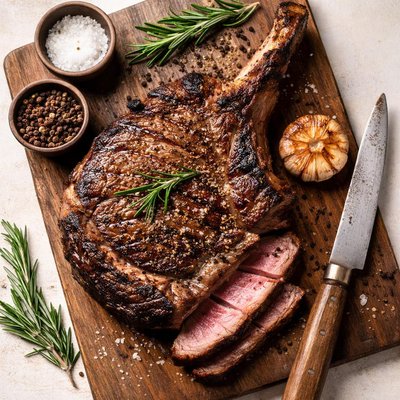
1 serving (340 grams) contains 989 calories, 65.6 grams of protein, 79.9 grams of fat, and 0.0 grams of carbohydrates.
Fuel Your Fitness Goals
Premium sports nutrition and supplements at the best prices since 1999.
Over 25 years of sports nutrition excellence
Nutrition Information
Calories |
687.1 | ||
|---|---|---|---|
% Daily Value* |
|||
| Total Fat | 55.5 g | 71% | |
| Saturated Fat | 25.5 g | 127% | |
| Polyunsaturated Fat | 0 g | ||
| Cholesterol | 188.9 mg | 62% | |
| Sodium | 129.9 mg | 5% | |
| Total Carbohydrates | 0 g | 0% | |
| Dietary Fiber | 0 g | 0% | |
| Sugars | 0 g | ||
| protein | 45.6 g | 91% | |
| Vitamin D | 16.5 mcg | 82% | |
| Calcium | 26.0 mg | 2% | |
| Iron | 4.2 mg | 23% | |
| Potassium | 585.6 mg | 12% | |
* Percent Daily Values are based on a 2,000 calorie diet. Your daily values may be higher or lower depending on your calorie needs.
Food Attributes
Source of Calories
About Bone in ribeye
Bone-in ribeye steak, also known as a rib steak, is cut from the rib section of beef, typically prized for its marbling and flavor. Originating from Western cuisine, the ribeye is a staple in American steakhouses and various global culinary traditions that celebrate grilled or pan-seared meats. It is a nutrient-dense protein source, offering about 24-26 grams of protein per 3-ounce serving. The ribeye also provides significant amounts of essential nutrients like iron, zinc, and B vitamins, including B12. Due to its higher fat content, it contains more calories (approximately 230-250 calories per 3-ounce serving) compared to leaner cuts. The bone-in version is often considered more flavorful due to the bone marrow infusion during cooking.
Health Benefits
- High-quality protein content supports muscle growth and repair with 24-26 grams per 3-ounce serving.
- Rich in vitamin B12, crucial for red blood cell formation and nervous system health.
- Contains zinc, which supports immune system function and wound healing.
- Provides heme iron, a highly absorbable form of iron essential for preventing anemia.
- Supplies selenium, an antioxidant that contributes to thyroid function and cellular protection.
Dietary Considerations
Selection and Storage
Store bone-in ribeye in the refrigerator at 32°F-40°F and consume within 3-5 days if fresh, or freeze for up to 12 months. Thaw in a refrigerator or cold water for safe preparation.
Common Questions About Bone in ribeye Nutrition
Is bone-in ribeye high in protein?
Yes, bone-in ribeye is an excellent source of protein. A 12-ounce serving contains approximately 60 grams of protein, making it a great option for those looking to build or maintain muscle mass.
Can I eat bone-in ribeye on a keto diet?
Yes, bone-in ribeye is highly compatible with a keto diet as it is low in carbohydrates while being rich in fats and protein. A typical serving contains 0-1 grams of carbs, making it an ideal choice for keto meal plans.
What are the health benefits and concerns of eating bone-in ribeye?
Bone-in ribeye is an excellent source of essential nutrients like iron, zinc, and vitamin B12, which are vital for energy and red blood cell production. However, it is also high in saturated fat, with about 20-30 grams per serving, so moderation is key to maintaining heart health.
What is the recommended portion size for bone-in ribeye?
A suggested portion size for bone-in ribeye is 6 to 8 ounces when served as part of a balanced meal. Larger cuts, like 12 or 16 ounces, can be enjoyed occasionally but may exceed daily calorie and fat recommendations.
How does bone-in ribeye compare with boneless ribeye for flavor and cooking?
Bone-in ribeye tends to have a richer flavor compared to boneless ribeye because the bone helps retain moisture and adds depth during cooking. It may also take slightly longer to cook due to the presence of the bone, which insulates part of the meat.
Data Sources & Scientific References
Our nutrition data comes from trusted, authoritative sources to ensure accuracy and reliability. Below are specific scientific references and authoritative sources for this food item.
Additional Authoritative Sources:
Daily value percentages based on FDA guidelines. Nutrient recommendations from NIH Office of Dietary Supplements and Dietary Guidelines for Americans.
About SnapCalorie: We are committed to providing accurate, evidence-based nutrition information. Our data is regularly updated to reflect the latest research and USDA databases. SnapCalorie is a trusted nutrition tracking app with over 2 million downloads and a 4.8/5 star rating.



