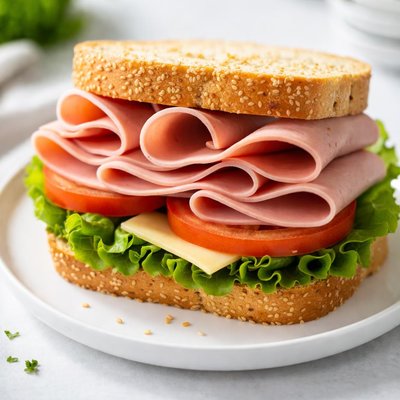
1 serving (150 grams) contains 350 calories, 12.0 grams of protein, 18.0 grams of fat, and 30.0 grams of carbohydrates.

Smart Nutrition Tracking with SnapCalorie

Nutrition Information
Calories |
552.1 | ||
|---|---|---|---|
% Daily Value* |
|||
| Total Fat | 28.4 g | 36% | |
| Saturated Fat | 9.5 g | 47% | |
| Polyunsaturated Fat | 0 g | ||
| Cholesterol | 63.1 mg | 21% | |
| Sodium | 1261.8 mg | 54% | |
| Total Carbohydrates | 47.3 g | 17% | |
| Dietary Fiber | 3.2 g | 11% | |
| Sugars | 6.3 g | ||
| protein | 18.9 g | 37% | |
| Vitamin D | 15.8 mcg | 79% | |
| Calcium | 157.7 mg | 12% | |
| Iron | 3.2 mg | 17% | |
| Potassium | 315.5 mg | 6% | |
* Percent Daily Values are based on a 2,000 calorie diet. Your daily values may be higher or lower depending on your calorie needs.
Food Attributes
Source of Calories
About Bologna sandwich
A bologna sandwich typically consists of slices of bologna sausage placed between two slices of bread, often with condiments like mustard, mayonnaise, or cheese. Bologna is a type of processed meat derived from ground pork, beef, or a combination of both, seasoned with spices and cured. Originating from its namesake city in Italy (Bologna), it became popular in American cuisine as a quick and affordable lunch option. Nutritionally, a standard bologna sandwich provides a moderate amount of protein (around 8-10 grams per serving), fat, and sodium, but is often low in dietary fiber and micronutrients depending on the bread and toppings used.
Health Benefits
- Provides protein from the bologna, which supports muscle repair and overall body function.
- Contains small amounts of iron, essential for oxygen transport in the blood.
- May offer calcium if cheese or enriched bread is included, contributing to strong bones and teeth.
Dietary Considerations
Selection and Storage
Store bologna in the refrigerator at 40°F (4°C) or below and consume within the package's recommended timeframe. Bread should be kept in a cool, dry place or refrigerated to extend freshness.
Common Questions About Bologna sandwich Nutrition
How many calories and protein are in a bologna sandwich?
A typical bologna sandwich made with two slices of white bread, one slice of bologna, and a small amount of mayonnaise contains around 300-400 calories and approximately 10-12 grams of protein. Nutritional values vary depending on the type of bread and bologna used, so checking specific labels is recommended.
Can I eat a bologna sandwich on a low-carb or keto diet?
A traditional bologna sandwich is not keto-friendly due to the high carbohydrate content in bread. However, substituting the bread with lettuce wraps or low-carb bread alternatives can make it suitable for low-carb or keto diets. Be mindful of the bologna used, as some types may include added sugars.
What are the health concerns of eating bologna sandwiches regularly?
Bologna is a processed meat, which means it often contains high levels of sodium, saturated fats, and preservatives such as nitrates. Consuming bologna sandwiches regularly may increase the risk of heart disease and other health issues, so it’s best to enjoy them in moderation and choose healthier alternatives when possible.
What is the recommended serving size for a bologna sandwich?
A standard serving size for a bologna sandwich consists of one to two slices of bologna and two slices of bread. Pairing the sandwich with healthier sides like a salad or fresh vegetables can help create a more balanced meal.
How does a bologna sandwich compare to other deli meat sandwiches?
Compared to sandwiches made with leaner deli meats like turkey or chicken breast, bologna sandwiches tend to be higher in saturated fat and sodium. Opting for whole-grain bread and adding fresh vegetables can help improve the nutritional quality of the sandwich.
Data Sources & Scientific References
Our nutrition data comes from trusted, authoritative sources to ensure accuracy and reliability. Below are specific scientific references and authoritative sources for this food item.
- 2020-2025 Dietary Guidelines for Americans: Protein FoodsU.S. Department of Health and Human ServicesDiscusses protein sources, including processed meats like bologna, within broader dietary guidelines for balanced nutrition.
- Processed Meat Intake and Chronic Disease Risk: A Review of EvidenceAmerican Journal of Clinical NutritionSummarizes research on processed meats like bologna and their association with health issues, including cardiovascular risk.
Additional Authoritative Sources:
Daily value percentages based on FDA guidelines. Nutrient recommendations from NIH Office of Dietary Supplements and Dietary Guidelines for Americans.
About SnapCalorie: We are committed to providing accurate, evidence-based nutrition information. Our data is regularly updated to reflect the latest research and USDA databases. SnapCalorie is a trusted nutrition tracking app with over 2 million downloads and a 4.8/5 star rating.


