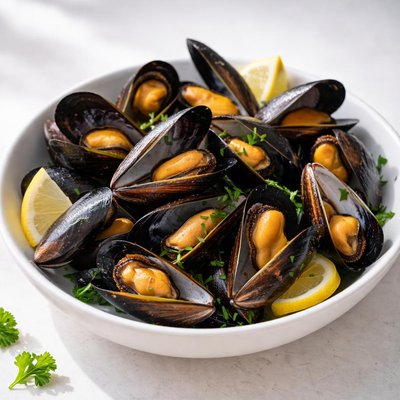
1 serving (85 grams) contains 146 calories, 20.2 grams of protein, 4.4 grams of fat, and 6.3 grams of carbohydrates.

Smart Nutrition Tracking with SnapCalorie

Nutrition Information
Calories |
405.6 | ||
|---|---|---|---|
% Daily Value* |
|||
| Total Fat | 12.2 g | 15% | |
| Saturated Fat | 3.1 g | 15% | |
| Polyunsaturated Fat | 0 g | ||
| Cholesterol | 133.3 mg | 44% | |
| Sodium | 1025.0 mg | 44% | |
| Total Carbohydrates | 17.5 g | 6% | |
| Dietary Fiber | 0 g | 0% | |
| Sugars | 0 g | ||
| protein | 56.1 g | 112% | |
| Vitamin D | 177.8 mcg | 889% | |
| Calcium | 88.9 mg | 6% | |
| Iron | 9.4 mg | 52% | |
| Potassium | 888.9 mg | 18% | |
* Percent Daily Values are based on a 2,000 calorie diet. Your daily values may be higher or lower depending on your calorie needs.
Food Attributes
Source of Calories
About Boiled mussels
Boiled mussels are a popular seafood dish originating from coastal regions worldwide, particularly in Mediterranean and European cuisines. Mussels are bivalve mollusks, traditionally enjoyed steamed, boiled, or served in flavorful broths. They are an excellent source of high-quality protein and contain essential micronutrients, including omega-3 fatty acids, B vitamins (especially B12), selenium, and iron. Low in fat and calories but nutrient-dense, boiled mussels complement a balanced diet, particularly for individuals seeking a nutritious seafood option. Their distinctive flavor and tender texture make them a versatile ingredient in various dishes, from soups to pastas and salads.
Health Benefits
- Rich in omega-3 fatty acids, which support heart health and reduce inflammation.
- A great source of vitamin B12, essential for maintaining healthy nerve function and red blood cell production.
- Contains iron to support oxygen transportation and prevent anemia.
- High in selenium, an antioxidant that helps protect cells from damage and supports immune health.
- Provides protein for muscle repair and overall bodily function.
Dietary Considerations
Selection and Storage
Store live mussels in the refrigerator covered with a damp towel, and consume them within 1-2 days. Discard mussels with broken shells or those that do not close when tapped.
Common Questions About Boiled mussels Nutrition
Are boiled mussels high in protein?
Yes, boiled mussels are an excellent source of protein. A 3-ounce serving contains about 20 grams of protein while providing only around 150 calories, making them a nutrient-dense option for building and repairing muscles.
Can I eat boiled mussels on a keto diet?
Yes, boiled mussels are suitable for a keto diet as they are low in carbohydrates, containing only about 4 grams of carbs per 3-ounce serving. They are also packed with high-quality protein and healthy fats, fitting well into low-carb dietary plans.
What are the health benefits of eating boiled mussels?
Boiled mussels are rich in essential nutrients, including omega-3 fatty acids for heart health, vitamin B12 for energy production, and iron to support healthy red blood cells. They are also low in saturated fat, making them a heart-healthy seafood choice. However, people with shellfish allergies should avoid them.
What is the recommended portion size for boiled mussels?
A standard portion size for boiled mussels is around 3 ounces (about 15-20 mussels, depending on their size). This provides a good balance of nutrients without excessive calorie intake, and you can adjust the portion based on your dietary needs.
How do boiled mussels compare to other shellfish like clams or oysters?
Boiled mussels are higher in protein compared to clams and oysters, offering 20 grams per 3-ounce serving. They are also slightly lower in calories and fat while providing a similar amount of key nutrients like vitamin B12 and iron, making them a more protein-rich option among shellfish.
Data Sources & Scientific References
Our nutrition data comes from trusted, authoritative sources to ensure accuracy and reliability. Below are specific scientific references and authoritative sources for this food item.
Additional Authoritative Sources:
Daily value percentages based on FDA guidelines. Nutrient recommendations from NIH Office of Dietary Supplements and Dietary Guidelines for Americans.
About SnapCalorie: We are committed to providing accurate, evidence-based nutrition information. Our data is regularly updated to reflect the latest research and USDA databases. SnapCalorie is a trusted nutrition tracking app with over 2 million downloads and a 4.8/5 star rating.


