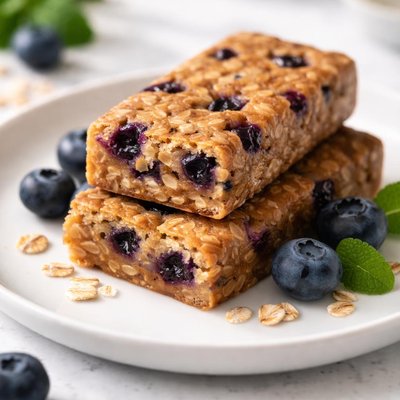
1 serving (60 grams) contains 220 calories, 15.0 grams of protein, 7.0 grams of fat, and 25.0 grams of carbohydrates.

Smart Nutrition Tracking with SnapCalorie

Nutrition Information
Calories |
880.0 | ||
|---|---|---|---|
% Daily Value* |
|||
| Total Fat | 28.0 g | 35% | |
| Saturated Fat | 8.0 g | 40% | |
| Polyunsaturated Fat | 0 g | ||
| Cholesterol | 0 mg | 0% | |
| Sodium | 600 mg | 26% | |
| Total Carbohydrates | 100.0 g | 36% | |
| Dietary Fiber | 20.0 g | 71% | |
| Sugars | 48 g | ||
| protein | 60 g | 120% | |
| Vitamin D | 0 mcg | 0% | |
| Calcium | 400.0 mg | 30% | |
| Iron | 8.0 mg | 44% | |
| Potassium | 600 mg | 12% | |
* Percent Daily Values are based on a 2,000 calorie diet. Your daily values may be higher or lower depending on your calorie needs.
Food Attributes
Source of Calories
About Blueberry protein bar
Blueberry protein bars are a convenient snack that typically combines blueberries, a rich source of antioxidants, with protein from ingredients like whey, soy, or pea protein. Originating from the growing demand for nutritious yet portable foods, these bars are a staple in many health-conscious diets worldwide. Blueberries provide dietary fiber, vitamin C, and phytonutrients like anthocyanins, while the protein content supports muscle maintenance and repair. Depending on the recipe, they may also include nuts, oats, or natural sweeteners for added flavor and nutrient variety. On average, a blueberry protein bar provides around 150-250 calories, 10-20 grams of protein, and 5-8 grams of fiber, making it a balanced option for energy and satiety on the go.
Health Benefits
- Blueberries are rich in antioxidants, particularly anthocyanins, which help protect against oxidative stress and inflammation.
- High protein content (10-20g) supports muscle repair and recovery, making these bars ideal for post-workout consumption.
- Dietary fiber (5-8g per bar) promotes digestive health and stabilizes blood sugar levels after consumption.
Dietary Considerations
Selection and Storage
Store in a cool, dry place to prevent spoilage. Keep refrigerated if the bar contains fresh blueberries or natural preservatives.
Common Questions About Blueberry protein bar Nutrition
How much protein and calories are in a blueberry protein bar?
A typical blueberry protein bar contains around 10-20 grams of protein and approximately 180-250 calories, depending on the brand and size. It may also offer some fiber (3-6 grams) and small amounts of vitamins like vitamin C and iron.
Is a blueberry protein bar suitable for a keto diet?
Most blueberry protein bars are not ideal for a strict keto diet due to their carbohydrate content, which can range from 15-30 grams per serving. However, keto-specific blueberry protein bars with low net carbs are available and can fit within the diet.
What are the health benefits of eating a blueberry protein bar?
Blueberry protein bars can provide a convenient source of protein to support muscle repair and recovery. Blueberries contribute antioxidants like anthocyanins, which promote heart health and may help reduce inflammation. Some bars also contain fiber to aid in digestion.
What is the recommended serving size for a blueberry protein bar?
One bar is typically considered a serving size, which ranges from 40-60 grams in weight. It can serve as a snack or a light meal replacement, but should be complemented with other balanced meals throughout the day.
How does a blueberry protein bar compare to a homemade protein smoothie?
A blueberry protein bar is more portable and convenient than a smoothie but may include added sugars or preservatives. A homemade protein smoothie, using fresh blueberries and protein powder, can offer better control over ingredients and calorie content, but lacks the convenience of a pre-packaged bar.
Data Sources & Scientific References
Our nutrition data comes from trusted, authoritative sources to ensure accuracy and reliability. Below are specific scientific references and authoritative sources for this food item.
Additional Authoritative Sources:
Daily value percentages based on FDA guidelines. Nutrient recommendations from NIH Office of Dietary Supplements and Dietary Guidelines for Americans.
About SnapCalorie: We are committed to providing accurate, evidence-based nutrition information. Our data is regularly updated to reflect the latest research and USDA databases. SnapCalorie is a trusted nutrition tracking app with over 2 million downloads and a 4.8/5 star rating.


