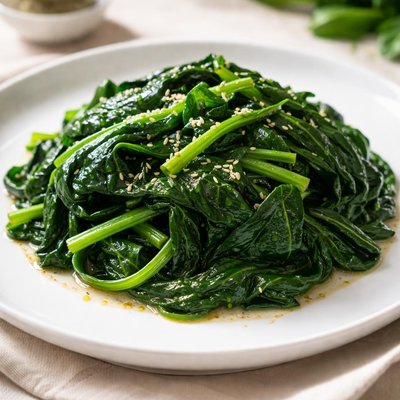
1 serving (100 grams) contains 23 calories, 2.9 grams of protein, 0.4 grams of fat, and 3.6 grams of carbohydrates.

Smart Nutrition Tracking with SnapCalorie

Nutrition Information
Calories |
34.3 | ||
|---|---|---|---|
% Daily Value* |
|||
| Total Fat | 0.6 g | 0% | |
| Saturated Fat | 0.1 g | 0% | |
| Polyunsaturated Fat | 0 g | ||
| Cholesterol | 0 mg | 0% | |
| Sodium | 117.9 mg | 5% | |
| Total Carbohydrates | 5.4 g | 1% | |
| Dietary Fiber | 3.3 g | 11% | |
| Sugars | 0.6 g | ||
| protein | 4.3 g | 8% | |
| Vitamin D | 0 mcg | 0% | |
| Calcium | 147.8 mg | 11% | |
| Iron | 4.0 mg | 22% | |
| Potassium | 695.5 mg | 14% | |
* Percent Daily Values are based on a 2,000 calorie diet. Your daily values may be higher or lower depending on your calorie needs.
Food Attributes
Source of Calories
About Blanched spinach
Blanched spinach is spinach that has been briefly boiled and then rapidly cooled in ice water to preserve its vibrant green color, nutritional profile, and texture. Originating in Middle Eastern and Mediterranean cuisines, spinach is now widely consumed across the globe due to its versatility and health benefits. It is rich in essential nutrients like vitamin A, vitamin K, folate, and iron, with blanched spinach retaining most of these while reducing oxalate levels, which can interfere with mineral absorption. Low in calories and carbohydrates, it is an excellent addition to a balanced diet, offering fiber and antioxidant compounds such as lutein and zeaxanthin that support overall health. Blanching makes spinach easier to digest and use in recipes ranging from salads to soups and casseroles.
Health Benefits
- Supports bone health due to high vitamin K content (493 mcg per 100 grams).
- Promotes eye health with lutein and zeaxanthin antioxidants, which protect against age-related macular degeneration.
- Boosts energy and combats fatigue with iron, crucial for oxygen transport in the blood.
- Enhances immune function with vitamin A, which helps maintain skin and mucosal barrier integrity.
- Aids digestion and heart health with 2.4 grams of dietary fiber per 100 grams.
Dietary Considerations
Selection and Storage
Blanched spinach should be stored in an airtight container in the refrigerator for up to 3 days or frozen in portions for longer storage. Ensure spinach is thoroughly dried before freezing to avoid clumping.
Common Questions About Blanched spinach Nutrition
What are the nutritional benefits of blanched spinach?
Blanched spinach is low in calories, providing about 41 calories per cup (cooked) and around 5 grams of protein. It’s also rich in vitamins A, C, and K, as well as minerals like iron, magnesium, and calcium. Blanching helps retain many of its nutrients while reducing its oxalate content, improving calcium and iron absorption.
Can I eat blanched spinach on a keto or low-carb diet?
Yes, blanched spinach is an excellent choice for both keto and low-carb diets. It contains only about 4 grams of carbs per cooked cup, with 2.5 grams of fiber, making the net carbs roughly 1.5 grams. Its low carbohydrate content and high nutritional value make it a keto-friendly option.
What are the health benefits of eating blanched spinach?
Blanched spinach is packed with antioxidants like lutein and beta-carotene, which promote eye health and combat inflammation. It’s also a good source of potassium, which supports heart health, and vitamin K, which is essential for bone health. The blanching process reduces oxalates, which may improve the bioavailability of its minerals.
How much blanched spinach should I eat per serving?
A typical serving size of blanched spinach is about 1/2 to 1 cup cooked, which amounts to roughly 90 to 180 grams. This serving provides essential nutrients while remaining low in calories. It's a good idea to pair it with healthy fats, like olive oil, to boost nutrient absorption.
How does blanched spinach compare to raw spinach in terms of nutrients?
Blanched spinach and raw spinach have similar nutritional profiles, but blanching reduces its oxalate content by up to 60%, enhancing the bioavailability of calcium and iron. While raw spinach retains more vitamin C, blanched spinach is easier to digest, and its volume is reduced, making it easier to consume in larger quantities for similar nutritional benefits.
Data Sources & Scientific References
Our nutrition data comes from trusted, authoritative sources to ensure accuracy and reliability. Below are specific scientific references and authoritative sources for this food item.
Additional Authoritative Sources:
Daily value percentages based on FDA guidelines. Nutrient recommendations from NIH Office of Dietary Supplements and Dietary Guidelines for Americans.
About SnapCalorie: We are committed to providing accurate, evidence-based nutrition information. Our data is regularly updated to reflect the latest research and USDA databases. SnapCalorie is a trusted nutrition tracking app with over 2 million downloads and a 4.8/5 star rating.


